Sheet Metal Bending Machine Guide: CNC Press Brake, Automation & Smart Manufacturing
Sheet metal bending is a manufacturing process used to transform flat metal sheets into specific angles, shapes, channels, boxes, brackets, and structural components. A sheet metal bending machine applies controlled force to a workpiece through tooling to create the required bend.
Among the most widely recognized technologies is the CNC press brake. CNC stands for Computer Numerical Control, meaning the machine uses programmed instructions to control movement, positioning, bending sequences, and other operating parameters.
Sheet metal bending machines are used with materials such as:
- Carbon steel
- Stainless steel
- Aluminum
- Copper
- Galvanized sheet
- Mild steel
- Specialized metal alloys
Traditional bending equipment relies heavily on manual positioning and operator adjustment. Modern CNC bending systems combine computerized controls, precision sensors, programmable back gauges, automated tooling, and production monitoring.
The development of these machines is closely connected with the broader growth of industrial automation, precision metal forming, and smart manufacturing.
Why Sheet Metal Bending Technology Matters
Modern manufacturing requires repeatable dimensions, controlled production processes, and efficient material handling. Sheet metal bending machines help manufacturers produce consistent components across different production volumes.
A CNC press brake can store programs for different components. This reduces repeated manual calculations and makes it easier to reproduce established bending sequences.
The technology is relevant to many industries, including:
- Automotive manufacturing
- Construction equipment
- Electrical equipment
- Industrial machinery
- HVAC equipment
- Aerospace components
- Renewable energy equipment
- Agricultural machinery
- Metal enclosures
- Transportation equipment
One important advantage of automated bending is repeatability. When a program is correctly prepared, the machine can follow the same sequence for multiple workpieces while maintaining programmed parameters.
Another important area is precision metal fabrication. Modern components often require several bends at specific angles. CNC controls can coordinate these operations and help reduce variation between individual parts.
Main Types Of Sheet Metal Bending Machines
Different bending technologies are selected according to material, thickness, component geometry, production requirements, and automation level.
| Machine Type | Main Characteristic | Typical Application |
|---|---|---|
| CNC Press Brake | Computer-controlled bending | Precision sheet fabrication |
| Hydraulic Press Brake | Hydraulic force generation | Heavy and general fabrication |
| Electric Press Brake | Electrically driven movement | Energy-efficient production |
| Mechanical Press Brake | Mechanical drive system | Established forming applications |
| Panel Bender | Automated panel forming | Boxes, cabinets, and panels |
| Robotic Bending Cell | Robot-assisted handling | Repetitive production |
| Hybrid Press Brake | Combined drive technologies | Precision and efficiency |
The correct machine depends on the required bending force, sheet dimensions, tooling configuration, bend length, production volume, and desired automation level.
How CNC Press Brakes Work
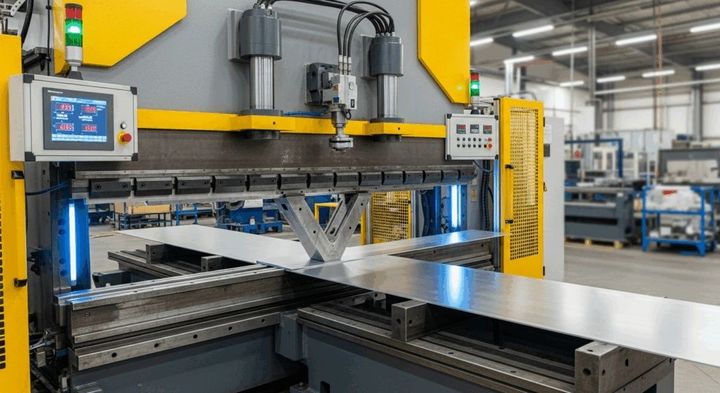
A CNC press brake generally consists of a frame, upper beam, lower bed, tooling, back gauge, control system, and drive mechanism.
During operation, a metal sheet is positioned between the upper and lower tooling. The upper tool moves toward the lower die and applies force to create the intended bend.
The CNC control system coordinates several machine movements. Depending on the equipment, these can include:
- Ram positioning
- Back-gauge movement
- Bend angle programming
- Multi-axis positioning
- Bend sequence management
- Tool selection
- Production monitoring
The operator or programmer normally enters the component dimensions and required bending sequence into the control system. Advanced systems can use graphical programming interfaces and automated calculations to simplify setup.
Important CNC Press Brake Features
Modern systems can include several technologies designed to improve repeatability and process control.
Common features include:
- Multi-axis CNC control
- Automatic back gauges
- Angle measurement systems
- Laser-based measurement
- Programmable tooling
- Automatic tool changers
- Digital production records
- Remote diagnostics
- Production monitoring
- Energy-efficient drive systems
These technologies are contributing to the transition from conventional fabrication toward smart manufacturing.
Automation And Robotic Bending
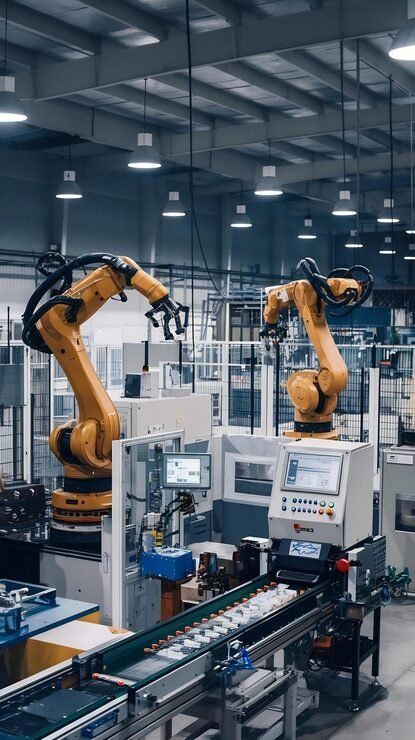
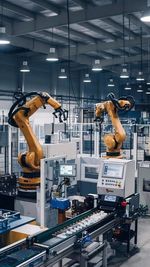
Automation is becoming increasingly important in sheet metal fabrication. Instead of relying entirely on manual loading and unloading, automated systems can combine a press brake with robots, material handling equipment, sensors, and production software.
A robotic bending cell may include a robot that picks up a sheet, positions it accurately, transfers the component between bending operations, and places the finished part into a designated area.
This approach can be particularly useful when components are repetitive or require multiple bending stages.
Benefits Of Automated Bending
Automation can help address several manufacturing challenges:
- Repetitive material handling
- Consistent positioning
- Reduced manual movement
- Better production tracking
- Repeatable bending sequences
- Integration with digital manufacturing systems
- Improved process monitoring
Robotic bending does not eliminate the need for skilled technical oversight. Programming, tooling selection, inspection, maintenance, safety procedures, and process verification remain important.
Smart Manufacturing And Digital Integration
The sheet metal industry is increasingly connected with Industry 4.0, industrial Internet of Things technologies, data analytics, and manufacturing software.
A smart bending machine can potentially communicate production information with other systems. Depending on the machine architecture, information can include program status, machine utilization, alarms, production counts, and maintenance indicators.
Digital integration can support a more connected manufacturing environment.
For example, a production workflow may connect:
CAD Design → Production Planning → CNC Programming → Bending → Inspection → Production Data
This type of digital workflow helps reduce repeated data entry and improves communication between engineering and production teams.
Recent Technology Trends
Several trends have become increasingly important during 2025 and 2026:
- Greater use of automated tool changing
- Robotic material handling
- Advanced bend-angle measurement
- Digital production monitoring
- Energy-efficient electric drive systems
- Connected manufacturing software
- Artificial intelligence-assisted process planning
- Automated programming
- More flexible manufacturing cells
These developments are part of a wider movement toward flexible and data-driven manufacturing rather than isolated machine operation.
Recent Updates In Sheet Metal Bending
During 2025 and 2026, automation and digital manufacturing have continued to influence the development of industrial bending equipment. Manufacturers are increasingly combining CNC controls with sensors, robotics, automated tooling, and production-data systems.
Another major development is the growing focus on machine safety and digital documentation.
In the European Union, Regulation (EU) 2023/1230 on machinery is scheduled to apply from 20 January 2027. The regulation updates the European machinery safety framework and includes requirements concerning machinery conformity, technical documentation, and safety-related technologies.
For manufacturers and users working with machinery intended for the European market, the transition period makes it important to monitor applicable conformity and documentation requirements.
The broader trend is toward machines that combine mechanical performance with software-based control, monitoring, and safety functions.
Laws, Regulations, And Machine Safety
Sheet metal bending involves moving tooling and significant mechanical force. Appropriate machine guarding and workplace procedures are therefore important.
Requirements vary by country and application. Businesses should always check the regulations applicable to their specific location, machine, and operation.
In the United States, OSHA's machine-guarding requirements include provisions intended to protect workers from hazards at the point of operation. OSHA specifically addresses safeguarding for power press brakes and identifies methods such as physical barriers and presence-sensing devices.
OSHA also states that machine points of operation that expose workers to injury must be appropriately guarded under its general machine-guarding requirements.
Important safety practices can include:
- Appropriate point-of-operation safeguarding
- Correct tooling installation
- Operator training
- Regular machine inspection
- Proper electrical protection
- Safe material handling
- Emergency-stop procedures
- Lockout and hazardous-energy procedures
- Preventive maintenance
- Following manufacturer instructions
Safety should not be treated as an optional addition to automation. Sensors, guards, controls, and other protective systems need appropriate installation, inspection, and maintenance.
Tools And Resources For Sheet Metal Bending
Several types of digital and technical resources can help users understand and plan bending operations.
Useful resources include:
- Bend allowance calculators
- Sheet thickness conversion charts
- Material property tables
- Press-brake tonnage calculators
- Bend deduction calculators
- CAD design software
- CAM programming software
- CNC simulation tools
- Digital maintenance checklists
- Machine inspection templates
- Tooling selection guides
- Operator training materials
- Workplace safety checklists
A bend allowance calculator can help estimate the developed length of a sheet before bending. A tonnage calculator can help determine the approximate forming force required for a particular material, thickness, bend length, and tooling configuration.
These calculations should be verified against the machine manufacturer's technical specifications and actual production conditions.
Comparing Manual And Automated Bending
| Factor | Conventional Bending | CNC Bending | Automated Bending |
|---|---|---|---|
| Control | Manual | Computer-controlled | Computer and robotic |
| Positioning | Operator dependent | Programmable | Automated |
| Repeatability | Variable | High | High |
| Material Handling | Manual | Mostly manual | Robotic or automated |
| Programming | Limited | Advanced | Integrated |
| Data Tracking | Limited | Available | Extensive |
| Flexibility | High for simple tasks | High | High for structured production |
The table shows why CNC and automated technologies are increasingly important in modern fabrication environments. However, the most advanced system is not automatically the best choice for every application. Machine selection should be based on actual component requirements, production characteristics, material specifications, available space, safety needs, and technical capabilities.
Frequently Asked Questions
What Is A Sheet Metal Bending Machine?
A sheet metal bending machine is industrial equipment used to form metal sheets into specific angles and shapes. Press brakes are among the most common machines used for this purpose.
What Is A CNC Press Brake?
A CNC press brake is a computer-controlled bending machine. Its control system manages programmed movements and bending sequences to produce repeatable results.
What Materials Can Be Bent?
Common materials include carbon steel, stainless steel, aluminum, copper, and galvanized sheet. The suitable material thickness depends on the machine's rated capacity, tooling, and bending method.
What Is Robotic Bending?
Robotic bending combines a bending machine with robotic material handling. The robot can position, rotate, transfer, and organize workpieces during a programmed production sequence.
Why Is Machine Safety Important?
Bending machines use substantial mechanical force and contain moving tooling. Proper guarding, training, inspection, and safe operating procedures help reduce exposure to machine hazards.
Conclusion
Sheet metal bending machines have developed from manually controlled forming equipment into highly integrated CNC and automated manufacturing systems. CNC press brakes provide programmable control and repeatable bending, while robotic cells can add automated material handling and production flexibility.