Five-Axis CNC Machining Technology: Industrial Uses and Key Facts
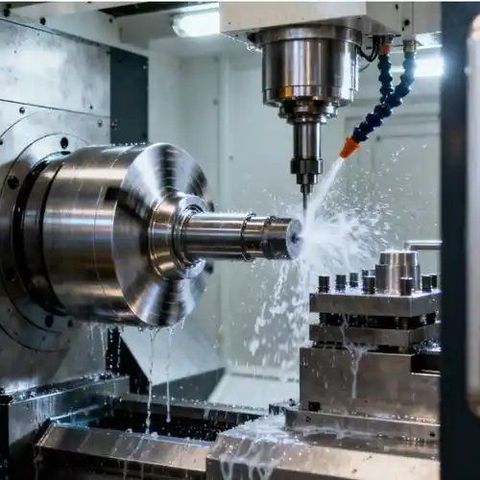
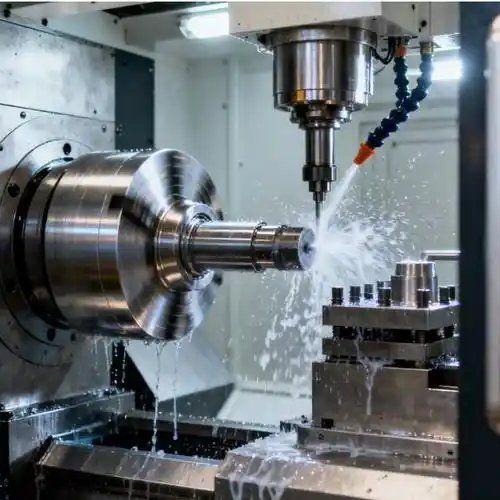
Five-axis computer numerical control (CNC) machining is a manufacturing process that uses computer-controlled movements to shape materials into accurate components. Unlike conventional three-axis machining, which moves along the X, Y, and Z linear directions, a five-axis machine adds two rotational movements. These additional movements allow the cutting tool or workpiece to approach a component from different angles.
Traditional three-axis machining generally moves along the X, Y, and Z directions. Five-axis systems add two rotational movements, commonly described as A, B, or C axes depending on the machine configuration. These additional movements allow the cutting tool to approach a component from different directions.
This technology is widely used in aerospace engineering, automotive manufacturing, medical device production, energy equipment, and precision industrial machinery. It is especially useful when components have curved surfaces, deep cavities, or complicated geometries that are difficult to machine using conventional equipment.
Five-axis CNC machining combines digital design, computer-aided manufacturing, motion control, cutting tools, and measurement systems. Together, these technologies help transform a digital component design into a finished physical part.
How Five-Axis CNC Machines Work
The machining process begins with a digital model created using computer-aided design (CAD) software. Computer-aided manufacturing (CAM) software then develops toolpaths that guide the machine through the required cutting operations.
The main steps include:
Digital design: Engineers create a three-dimensional model of the component.
Toolpath planning: CAM software calculates cutting movements, tool angles, and machining sequences.
Machine setup: Operators position the workpiece, select appropriate tools, and establish reference points.
Automated machining: The CNC controller coordinates linear and rotational movements.
Inspection: Measuring equipment checks dimensions, surface quality, and geometric accuracy.
The exact sequence depends on the component, material, machine configuration, and required tolerances. Careful setup and programming remain essential, even when the machining process is highly automated.
The Five Axes Explained
Axis | Movement | Main purpose |
|---|---|---|
X | Left to right | Horizontal positioning |
Y | Front to back | Crosswise positioning |
Z | Up and down | Vertical positioning |
A | Rotation around X | Tilting the tool or workpiece |
B or C | Rotation around another axis | Additional angular positioning |
Machine designs differ. Some rotate the cutting head, while others rotate the table holding the workpiece. Certain configurations use a combination of both. The letters assigned to rotational axes depend on the machine's coordinate system.
Importance of Five-Axis CNC Machining in Modern Manufacturing
Five-axis CNC machining is important because many modern products contain complex shapes that require precise cutting from multiple directions. Aerospace components, medical instruments, automotive parts, and energy equipment often have demanding geometric requirements.
Using additional rotational axes can reduce repeated workpiece repositioning. This may improve alignment between machining operations and help reduce setup time. However, actual results depend on machine condition, tool selection, programming quality, and operator experience.
Key Benefits of Five-Axis CNC Technology
Complex geometry: Machines can reach angled surfaces and curved features that are difficult to produce with simpler configurations.
Fewer setups: Multiple surfaces may be machined in one setup, reducing the need to reposition the workpiece.
Dimensional accuracy: Reduced repositioning can limit alignment errors when the machine and process are properly calibrated.
Improved surface finish: Appropriate tool orientation can help maintain better cutting conditions on complex surfaces.
Production flexibility: The same machine can process different component shapes through changes in programs, fixtures, and tools.
Digital integration: CAD, CAM, simulation, and inspection systems can share information across the manufacturing process.
These advantages do not automatically guarantee better results. A poorly designed toolpath, incorrect fixture, worn cutting tool, or inaccurate rotary axis can still cause defects.
Five-Axis Machining Compared With Three-Axis Machining
Feature | Three-axis CNC | Five-axis CNC |
|---|---|---|
Main movements | Three linear axes | Three linear and two rotational axes |
Complex curved parts | May need several setups | Often supports more flexible tool access |
Workpiece repositioning | More frequent for some parts | May be reduced |
Programming | Generally simpler | Usually more complex |
Operator knowledge | Depends on application | Often requires specialized training |
Typical applications | Flat surfaces, pockets, basic components | Turbine blades, complex molds, contoured parts |
The best choice depends on component geometry, production volume, accuracy requirements, and available technical expertise. Five-axis equipment is not necessary for every machining task.
Industrial Applications of Five-Axis CNC Machining
Aerospace and Aviation Manufacturing
Aerospace manufacturing is a major application area because aircraft and engine components often contain complex contours and lightweight structural features.
Five-axis machining is used to produce turbine blades, impellers, structural brackets, engine housings, and other precision components. Materials may include aluminum alloys, titanium alloys, and heat-resistant metals.
These materials require careful control of cutting forces, tool temperatures, vibration, and surface integrity. Components used in critical applications also require documented inspection and traceability.
Automotive and Electric Vehicle Production
Automotive manufacturers use CNC machining for engine components, transmission housings, molds, prototype parts, and specialized structural components.
Electric vehicle development creates additional requirements for motor housings, powertrain components, cooling channels, and lightweight structures. Five-axis machining can help produce complicated geometries while reducing repeated positioning during manufacturing.
The technology is also useful in motorsport engineering, where component shape and dimensional accuracy can influence mechanical performance.
Medical and Healthcare Equipment
Medical manufacturing uses precision machining for selected surgical instruments, orthopedic implants, dental components, and equipment parts.
Five-axis machining can support the production of curved surfaces and intricate features. Material selection depends on the intended application and may include titanium alloys, stainless steel, and certain biocompatible materials.
Medical components must meet applicable material, cleanliness, validation, and quality requirements. Machining accuracy alone does not establish that a component is safe for clinical use.
Energy and Power Generation
Power generation equipment contains complex components that must withstand demanding mechanical and thermal conditions.
Five-axis CNC systems are used to machine turbine blades, pump impellers, compressor components, and selected parts for renewable energy equipment. The ability to maintain controlled tool orientation is particularly useful when working with curved aerodynamic surfaces.
Mold, Die, and Precision Tool Manufacturing
Molds and dies often contain deep cavities, angled walls, and three-dimensional contours. Five-axis machining can provide better access to these features and may reduce the need for multiple fixtures.
Applications include injection molds, forming dies, casting molds, and precision tooling. Proper toolpath planning also helps prevent collisions between the cutting tool, workpiece, spindle, and machine structure.
Materials, Cutting Tools, and Quality Control
Five-axis CNC machines can process a wide range of materials, provided that the machine, spindle, tooling, and cutting parameters are suitable.
Material | Common applications | Important machining considerations |
|---|---|---|
Aluminum alloys | Aerospace structures, housings | Heat management and chip removal |
Titanium alloys | Aerospace and medical components | Heat concentration and tool wear |
Stainless steel | Industrial equipment, instruments | Cutting forces and work hardening |
Tool steel | Molds, dies, precision tooling | Hardness and tool selection |
Nickel-based alloys | Turbine and high-temperature parts | Heat resistance and cutting difficulty |
Why Measurement and Calibration Matter
Five-axis machining involves coordinated movement between linear and rotational axes. Small positioning errors can affect the cutting tool's location, particularly when machining complex surfaces.
Quality control may include:
Coordinate measuring machines (CMMs) for dimensional inspection.
Touch probes for workpiece alignment and in-process measurement.
Tool presetters for checking tool length and geometry.
Laser measurement systems for selected machine calibration tasks.
Surface measurement instruments for evaluating finish quality.
Statistical process control for monitoring production variation.
Inspection methods should be selected according to the component's design, tolerances, and applicable industry requirements.
Recent Updates and Trends in Five-Axis CNC Machining
Five-axis machining continues to develop through improvements in CNC control systems, digital manufacturing, machine calibration, and automated inspection. These developments aim to improve consistency and make complex machining processes easier to plan and monitor.
Artificial Intelligence and Smart Manufacturing
Manufacturing systems increasingly use data analysis to monitor machine performance, identify unusual operating conditions, and support maintenance planning. In CNC environments, these methods can help operators recognize vibration changes, monitor tool wear, and investigate production variation.
Artificial intelligence does not eliminate the need for engineering judgment. Its effectiveness depends on reliable data, suitable models, and careful validation.
Digital Twins and Machining Simulation
A digital twin is a digital representation of a physical machine, component, or manufacturing process. When connected to suitable operating data, it can help engineers compare planned and actual machine behavior.
In June 2026, ISO published ISO 23247-5:2026, which addresses the digital thread connecting manufacturing digital twins throughout the product life cycle. This development reflects the growing importance of connected information across design, production planning, machining, and testing.
Improved Machine Accuracy and Integrated Programming
On August 24, 2026, a new industry initiative was announced to improve coordination between five-axis machine tools, CNC functions, CAM systems, and post-processors. The aim is to support more consistent machining, accuracy, and productivity when producing complex components.
Other important developments include:
More advanced toolpath simulation and collision detection.
Better calibration methods for rotational axes.
Automated workpiece measurement and tool monitoring.
Greater integration between production data and inspection records.
Increased attention to energy use, material waste, and machine utilization.
These are continuing developments rather than guarantees of improved performance in every factory.
Laws, Policies, and Manufacturing Standards
Five-axis CNC machining is affected by machine safety rules, workplace regulations, product-quality requirements, and technical standards. The exact requirements depend on the country, industry, component, and intended application.
China: Updated Five-Axis Machine Tool Standards
China introduced revised national standards for five-axis machining centers in 2025. The GB/T 34880-2025 series covers machine accuracy testing and technical conditions.
The updated standards took effect on February 1, 2026, replacing earlier editions of the relevant documents. They address areas such as geometric accuracy, positioning accuracy, repeatability, and machine performance testing.
Manufacturers and quality teams working in China should determine which standard parts apply to their machine configuration and inspection requirements.
International Quality and Safety Practices
Depending on the application, manufacturers may need to consider:
Machine safety: Risk assessment, protective enclosures, interlocks, and safe operating procedures.
Quality management: Documented processes, inspection records, calibration, and corrective actions.
Geometric accuracy: Suitable test methods for linear and rotational axes.
Product-specific requirements: Additional controls for aerospace, medical, automotive, or other regulated components.
Export controls: Restrictions that may apply to certain advanced machine tools, technologies, destinations, or end users.
International standards provide technical frameworks, but they do not automatically replace national laws. Manufacturers should verify the current requirements that apply to their operations.
Tools and Resources for Five-Axis CNC Machining
A combination of engineering software, measurement equipment, and structured documentation helps teams manage five-axis manufacturing.
Digital Design and Programming Tools
CAD software: Creates three-dimensional component models and engineering drawings.
CAM software: Generates toolpaths and machining instructions.
Machine simulation: Checks tool movement, machine travel, and possible collisions before production.
CNC programming references: Help explain coordinate systems, tool offsets, feed rates, and spindle settings.
Inspection and Process Monitoring
Coordinate measuring equipment: Checks component dimensions and geometric features.
Tool measurement systems: Verify tool length, diameter, and relevant geometry.
Machine calibration records: Track measurement results and machine condition.
Process monitoring dashboards: Display spindle load, vibration, operating status, and selected production indicators.
Useful Manufacturing Templates
Production teams can maintain simple documents to improve consistency:
Machine setup checklist.
Tool selection and tool-life log.
Workpiece inspection report.
CNC program revision record.
Preventive maintenance schedule.
Nonconformance and corrective-action report.
These resources help maintain traceability and make it easier to investigate defects. Documentation should match the complexity of the operation and applicable quality requirements.
Frequently Asked Questions
What is five-axis CNC machining?
Five-axis CNC machining is a computer-controlled manufacturing process that combines three linear movements with two rotational movements. It enables the production of complex components with multiple angled and curved surfaces.
What industries use five-axis CNC machines?
Common applications include aerospace, automotive manufacturing, medical component production, energy equipment, precision molds, and industrial machinery. The appropriate application depends on component geometry, material, and accuracy requirements.
Is five-axis CNC machining more accurate than three-axis machining?
Not automatically. Five-axis machining can reduce repositioning and alignment errors for certain components. However, accuracy depends on machine calibration, structural rigidity, tool condition, programming, workholding, and inspection methods.
Which materials can five-axis CNC machines process?
Suitable machines can process aluminum, stainless steel, titanium, tool steel, nickel-based alloys, and other materials. Cutting parameters and tooling must be selected according to material properties and machine capabilities.
What skills are needed to operate a five-axis CNC machine?
Operators and programmers benefit from knowledge of CNC coordinates, CAD/CAM programming, toolpath simulation, workholding, cutting tools, machine calibration, and dimensional inspection. Practical training is important because rotational movements introduce additional programming and setup challenges.
Conclusion
Five-axis CNC machining technology plays an important role in modern precision manufacturing. Its additional rotational movements help manufacturers create complex geometries, access multiple surfaces, and reduce repeated workpiece setups.