Intelligent Industrial Sorting Machines: A Complete Guide to AI, Automation, and Applications
Industrial sorting is the process of separating materials according to specific characteristics, such as size, shape, color, weight, composition, or quality. Traditional sorting methods often depend on manual inspection, mechanical screens, magnets, or basic sensors. Intelligent industrial sorting machines combine these methods with advanced digital technologies to improve identification and material handling.
These machines are used across manufacturing, recycling, food processing, mining, pharmaceutical production, and electronic waste management. Their main purpose is to handle large quantities of materials with consistent classification and less dependence on manual inspection.
For example, a recycling facility may use an optical sorting machine to distinguish different plastic types. A manufacturing plant may use machine vision to identify defective components before they reach the next production stage.
How Intelligent Sorting Technology Developed
Traditional sorting methods relied on human inspection, screens, magnets, and mechanical separators. These approaches remain useful, but they may struggle when materials have similar appearances or move rapidly through a production line.
Modern industrial sorting systems integrate several technologies:
Machine vision: Captures images and identifies visible characteristics.
Artificial intelligence: Recognizes patterns and classifies materials using trained models.
Optical sensors: Detect color, reflectivity, and other optical properties.
Spectroscopic sensors: Help distinguish materials through their interaction with specific wavelengths.
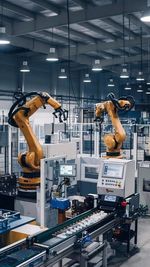
Robotics: Moves selected items into designated locations.
Programmable logic controllers (PLCs): Coordinate equipment movements and control sequences.
Industrial networking: Connects sorting equipment with monitoring systems and production software.
The exact combination depends on the material, required accuracy, operating environment, and production volume.
Why Intelligent Industrial Sorting Machines Matter Today
Improving Manufacturing Quality
Product quality is important in industries where a small defect can affect the performance of a finished product. Intelligent sorting machines can inspect components and separate items that do not meet defined requirements.
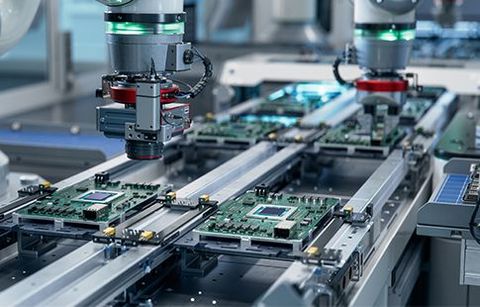
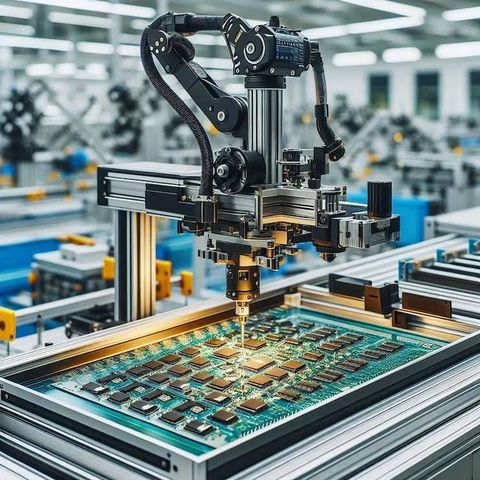
In electronics manufacturing, for example, automated vision systems can identify misplaced components, surface irregularities, and incorrect dimensions. In metal processing, suitable inspection systems can classify parts according to shape or visible defects.
Automated inspection does not eliminate every quality problem. Its performance depends on sensor capability, inspection conditions, product variation, and the quality of the classification model.
Supporting Recycling and Resource Recovery
Waste management facilities handle mixed materials that can be difficult to separate manually. Intelligent sorting systems can recognize selected plastics, paper, metals, glass, and electronic components.
Better material separation can improve the quality of recovered materials and reduce contamination in recycling streams. This is particularly relevant to circular manufacturing, where materials are recovered and returned to production processes.
However, successful recycling also depends on collection methods, material cleanliness, local processing capacity, and the availability of suitable recovery pathways.
Increasing Production Consistency
Manual sorting can vary according to workload, lighting, fatigue, and individual judgment. Automated equipment applies defined inspection rules consistently while operating within its designed capacity.
Potential benefits include:
More consistent material classification.
Continuous monitoring of production flows.
Reduced repetitive manual handling.
Earlier identification of defects.
Improved traceability through recorded inspection data.
Better coordination between inspection and material handling.
These benefits are not automatic. Equipment must be correctly configured, maintained, and evaluated against measurable production requirements.
Comparing Traditional and Intelligent Sorting
Feature | Traditional sorting | Intelligent sorting |
|---|---|---|
Main decision method | Mechanical rules or manual inspection | Sensors, software, and classification models |
Material recognition | Often limited to simple characteristics | Can combine multiple material characteristics |
Process monitoring | May require separate inspection | Can include real-time monitoring |
Adaptability | Depends on mechanical adjustments | May support software or model updates |
Data collection | Often limited | Can record classifications and process results |
Maintenance needs | Mechanical wear and adjustment | Mechanical, sensor, and software maintenance |
The table presents general differences. Actual capabilities vary according to the equipment design and application.
Recent Developments in Industrial Sorting Technology
Artificial Intelligence and Machine Vision
During 2025 and 2026, AI-based inspection, machine vision, and automated material recognition continued to be important areas of industrial development. These technologies help manufacturers distinguish objects with similar visual features and adjust classification methods to changing material conditions.
Modern systems may combine high-resolution cameras with deep-learning models. The software analyzes images and assigns classifications based on patterns learned from training data. Some systems can also flag uncertain results for further inspection.
Important developments include:
Improved material recognition: Combining visual information with other sensor measurements.
Robotic sorting: Using robotic arms to pick and separate selected objects.
Edge computing: Processing inspection data near the production equipment to reduce communication delays.
Predictive maintenance: Monitoring vibration, temperature, and operating data to identify possible equipment problems.
Digital traceability: Recording inspection results, rejected items, and production information for quality analysis.
These capabilities are application-dependent. An AI model trained for one product or material may need additional training before it can classify a different material reliably.
Greater Attention to Recycling and Packaging
Regulatory developments are also influencing the design of sorting systems. On 12 August 2026, the European Commission announced that new EU packaging and packaging-waste rules had begun applying. The framework includes requirements related to packaging composition, recyclability, labeling, and waste reduction. Such changes increase the importance of reliable material identification and effective sorting infrastructure.
For manufacturers and recycling facilities, this creates a practical reason to assess whether existing sorting equipment can recognize newer packaging materials and separate mixed waste streams appropriately.
Practical Trends to Watch
Technology trend | Potential industrial application |
|---|---|
AI vision inspection | Identifying defects and classifying components |
Hyperspectral imaging | Distinguishing materials with similar appearances |
Robotic picking | Separating irregular objects from mixed streams |
Connected sensors | Monitoring equipment condition and performance |
Digital quality records | Tracking rejects and reviewing sorting accuracy |
Organizations should assess these technologies against actual operating conditions instead of assuming that newer equipment will automatically deliver better results.
Laws and Policies Affecting Industrial Sorting Machines
Environmental Regulations in India
In India, industrial sorting machines may support compliance with environmental regulations, especially in recycling and waste processing. The relevant requirements depend on the materials handled, the facility's activities, and its location.
The E-Waste (Management) Rules, 2022, came into force on 1 April 2023. They establish an Extended Producer Responsibility (EPR) framework and requirements for relevant producers, manufacturers, refurbishers, and recyclers. The Central Pollution Control Board (CPCB) administers the associated registration and tracking system.
Intelligent sorting equipment can help separate electronic components and recover selected materials, but installing a machine does not by itself establish regulatory compliance. Facilities must follow the applicable registration, handling, reporting, and environmental requirements.
Other relevant Indian frameworks include:
Plastic Waste Management Rules and applicable amendments.
Battery Waste Management Rules and applicable EPR requirements.
Air pollution and water pollution control legislation.
Factory safety requirements and applicable state-level regulations.
Waste-specific requirements for storage, transportation, processing, and disposal.
For example, a battery recycling facility may need to separate different battery types and manage hazardous materials under appropriate procedures. Sorting technology should be selected and operated in a way that supports these obligations.
Workplace Safety and Machine Operation
Industrial sorting machines contain moving belts, robotic arms, cutting mechanisms, electrical components, and sometimes compressed-air systems. Their operation requires suitable risk assessment and protective measures.
Common safety practices include:
Installing guards around dangerous moving parts.
Providing emergency-stop controls and suitable isolation procedures.
Training operators to handle jams and maintenance tasks safely.
Controlling dust, noise, and exposure to hazardous materials.
Reviewing applicable electrical, machinery, and occupational safety standards.
Companies operating internationally should also check the rules in each destination market. Requirements can differ according to machine type, installation, and intended use.
Tools and Resources for Planning Sorting Systems
Machine Vision and AI Software
Machine vision software helps inspect images, locate objects, measure dimensions, and identify visible defects. AI development tools can support classification models when a simple rule-based system is not sufficient.
Before selecting a system, users should consider image quality, model accuracy, processing speed, integration requirements, and how the software handles uncertain classifications.
Sensor Selection and Testing Tools
Sensor selection depends on the material and the property that needs to be detected.
Useful options include:
Optical sensors for color and surface characteristics.
Inductive sensors for detecting suitable metal objects.
Magnetic separators for recovering magnetic materials.
Spectroscopic equipment for distinguishing certain material compositions.
Weighing and dimensional measurement systems for size or mass classification.
Testing representative samples is important because dirt, moisture, lighting, material overlap, and surface damage can affect detection results.
Production Monitoring and Maintenance Tools
Industrial monitoring platforms can record machine availability, throughput, rejection rates, and equipment faults. Maintenance checklists help operators inspect belts, sensors, actuators, guards, and other important components.
A basic performance dashboard can track the following indicators:
Performance indicator | What it measures |
|---|---|
Throughput | Material processed per hour |
Sorting accuracy | Correct classifications compared with verified results |
Purity rate | Proportion of the target material in the output stream |
Recovery rate | Proportion of target material successfully recovered |
Reject rate | Proportion of incoming material rejected |
Downtime | Time when the equipment cannot operate |
These indicators should be defined consistently. For example, sorting accuracy and recovery rate measure different aspects of performance and should not be treated as interchangeable.
Choosing the Right Sorting Solution
Before integrating intelligent industrial sorting machines, organizations should define the sorting objective and test the equipment under realistic conditions.
A useful evaluation checklist includes:
Material types, dimensions, and expected variation.
Required throughput and acceptable classification errors.
Available floor space and integration with existing conveyors.
Operator training and maintenance requirements.
Data security and software update procedures.
Environmental conditions, including dust, heat, and moisture.
A controlled pilot test can help identify limitations before a system is introduced across an entire production line.
Frequently Asked Questions
What are intelligent industrial sorting machines used for?
They identify, classify, and separate materials in manufacturing, recycling, mining, food processing, and electronics production. Their functions depend on the sensors, software, and mechanical equipment installed.
How does AI improve industrial sorting accuracy?
AI models can recognize patterns in images and sensor data, helping distinguish materials or defects that are difficult to identify through simple mechanical methods. Actual accuracy depends on training data, sensor quality, and operating conditions.
Which industries use automated sorting equipment?
Common users include recycling facilities, automotive manufacturers, electronics producers, food processors, pharmaceutical manufacturers, and mining operations. Each industry uses different sorting methods according to its materials and quality requirements.
Can intelligent sorting machines support recycling?
Yes. They can separate selected plastics, metals, electronic components, and other recyclable materials. Their effectiveness depends on material condition, sensor capabilities, contamination levels, and the design of the recycling process.
What should manufacturers consider before installing a sorting machine?
They should evaluate material characteristics, throughput, sorting accuracy, integration requirements, safety, maintenance, and regulatory obligations. Testing representative materials can help establish whether the equipment meets the intended application requirements.
Conclusion
Intelligent industrial sorting machines are becoming an important part of modern manufacturing, automated quality inspection, and material recovery. By combining machine vision, AI, sensors, robotics, and industrial controls, these systems can improve classification consistency and help manage complex material flows.