Industrial Drying Machines: Advanced Processing Technology and Applications
Industrial drying machines are specialized systems designed to remove moisture from solid materials, powders, granules, liquids, and other process materials. Drying may involve removing water, solvents, or other volatile substances, depending on the material and the production process.
Industrial drying machines are essential processing systems used to remove moisture or other unwanted liquids from materials during manufacturing. They help prepare products for storage, packaging, further processing, or final use. These machines are found in industries such as food processing, pharmaceuticals, chemicals, textiles, agriculture, ceramics, and metal manufacturing.
Drying may appear simple, but industrial operations require careful control of temperature, airflow, humidity, and processing time. Different materials respond differently to heat. Some can withstand high temperatures, while others may lose their strength, colour, texture, or chemical properties when exposed to excessive heat.
Industrial drying technology addresses these differences by providing controlled conditions that support consistent product quality.
What Is the Purpose of Industrial Drying Equipment?
The main purpose of industrial drying equipment is to reduce moisture to a suitable level for a particular manufacturing process. The required level depends on the material, its intended application, and the conditions under which it will be stored or handled.
Common objectives include:
Improving product stability during storage.
Preparing raw materials for additional manufacturing stages.
Reducing moisture-related deterioration.
Supporting consistent product texture and quality.
Making powders, granules, and solid materials easier to handle.
Controlling moisture levels in industrial ingredients and components.
How Industrial Drying Machines Work
Most industrial dryers use heat and moving air to encourage moisture to evaporate. Some systems use vacuum conditions, direct contact with heated surfaces, or other methods to remove moisture more efficiently for particular materials.
A typical drying process includes several stages:
Material preparation: The material is inspected and prepared for drying.
Loading: Materials enter the drying chamber, conveyor, drum, or processing vessel.
Moisture removal: Heat or another drying mechanism encourages moisture to leave the material.
Moisture monitoring: Sensors or sampling procedures help determine whether the desired condition has been reached.
Cooling and discharge: The dried material is cooled when necessary and moved to the next production stage.
The exact sequence depends on the machine design and the properties of the material.
Types of Industrial Drying Machines and Their Applications
Industrial drying machines are designed around the material being processed, the moisture level that must be removed, and the required production conditions. Selecting the right technology helps maintain product quality and process consistency.
Common Industrial Dryer Types
Dryer type | Working principle | Typical applications |
|---|---|---|
Tray dryer | Materials rest on trays inside a heated chamber | Chemicals, herbs, laboratory batches |
Rotary dryer | A rotating drum moves material through a heated environment | Minerals, fertilizers, biomass |
Spray dryer | Liquid feed is atomized into fine droplets | Food powders, detergents, pharmaceutical ingredients |
Fluidized bed dryer | Air suspends and mixes particles during drying | Granules, powders, chemical products |
Belt dryer | Materials travel continuously along a heated conveyor | Food products, agricultural materials |
Vacuum dryer | Reduced pressure helps moisture evaporate at lower temperatures | Heat-sensitive ingredients, specialty chemicals |
Freeze dryer | Frozen moisture is removed mainly through sublimation | Sensitive biological and pharmaceutical materials |
Each type has different operating requirements. A spray dryer, for example, is suitable for converting certain liquid mixtures into powders, while a tray dryer is often used for smaller batches of solid materials.
Choosing the Appropriate Drying Technology
The selection process should consider more than the machine's capacity. Important factors include:
Material characteristics: Particle size, moisture content, sensitivity to heat, and chemical composition.
Production volume: Whether the process involves individual batches or continuous operation.
Temperature requirements: The acceptable temperature range for maintaining product quality.
Moisture targets: The required final moisture content or water activity.
Environmental conditions: Dust generation, exhaust humidity, ventilation, and possible emissions.
Cleaning requirements: Whether the equipment must support frequent cleaning or prevent cross-contamination.
For example, pharmaceutical powders may require precise temperature control and strict hygiene procedures. Mineral materials may tolerate higher temperatures but need equipment capable of handling abrasive particles.
Why Industrial Drying Machines Matter Today
Industrial drying equipment supports several stages of modern production. Moisture can affect product stability, physical strength, processing behaviour, and storage conditions. A controlled drying process helps manufacturers manage these variables.
Improving Product Quality and Consistency
Uneven drying can create problems such as surface hardening, cracking, clumping, discolouration, or excessive residual moisture. Automated temperature and humidity monitoring can help operators identify these conditions earlier.
Consistent drying is particularly important in industries where small variations can influence the performance of the final product.
Supporting Industrial Productivity
Drying often connects multiple stages of a production line. If a dryer operates too slowly or produces inconsistent results, the entire process may be affected.
Industrial drying systems can support productivity through:
Continuous material movement.
Automated temperature adjustments.
Controlled airflow and moisture removal.
Integrated sensors and monitoring systems.
Repeatable processing conditions.
Automation does not remove the need for skilled supervision. Operators still need to inspect materials, review process data, and respond to equipment faults.
Energy Efficiency and Environmental Considerations
Heating and moving air can require substantial energy. Poor insulation, excessive exhaust temperatures, and unsuitable operating settings can increase energy losses.
Industrial plants can assess efficiency by monitoring energy consumption per kilogram or tonne of water removed. Other useful measures include exhaust heat recovery, insulation improvements, variable-speed fans, and heat-pump-assisted drying.
These improvements should be evaluated against material quality, production requirements, and the energy sources available at the facility.
Recent Updates in Industrial Drying Technology
Developments during 2025 and 2026 have placed greater attention on electrification, heat recovery, process monitoring, and reducing industrial emissions.
Heat Pumps and Waste Heat Recovery
On 25 February 2026, the International Energy Agency's Heat Pumping Technologies programme highlighted practical considerations for integrating heat-pump drying into industrial processes. The approach can recover heat from moist exhaust air and reuse it to support drying, depending on the process conditions.Heat-pump systems are particularly relevant where moderate-temperature drying is possible and suitable waste heat is available. However, their performance depends on the material, required temperature, humidity, and system design.
Superheated Steam and Electric Drying
On 3 August 2026, researchers at Fraunhofer IGB reported progress on an industrial drying approach that combines electrically generated superheated steam, heat pumps, and intelligent controls. Pilot systems were being used to investigate applications involving materials such as minerals, construction materials, food, and animal feed.
Smart Sensors and Process Automation
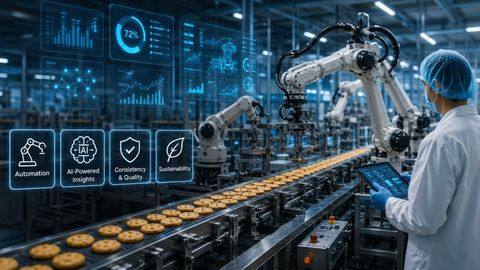
Digital monitoring is also becoming more important in modern drying systems. Sensors can measure temperature, humidity, airflow, pressure, and other operating variables. Control systems use this information to adjust the process within defined limits.
Emerging applications include:
Predictive maintenance based on operating data.
Automated adjustment of drying conditions.
Remote monitoring of equipment performance.
Digital records for quality assurance.
Models that estimate moisture removal during processing.
These developments can improve process visibility, although reliable sensors, appropriate calibration, and operator oversight remain essential.
Laws, Policies, and Industrial Safety Requirements
Industrial drying machines may be subject to machinery safety, electrical safety, environmental protection, workplace health, and industry-specific regulations. The applicable requirements depend on the country, equipment design, and material being processed.
Machinery and Electrical Safety in India
In India, the Ministry of Heavy Industries has issued regulatory orders concerning the safety of machinery and electrical equipment. The regulatory position has changed through amendments and subsequent notices, including a withdrawal notice dated 16 January 2026 for the 2024 Machinery and Electrical Equipment Safety Omnibus Technical Regulation Order. Manufacturers and plant operators should check the latest official notifications before determining which requirements apply to a particular machine.
Applicable Bureau of Indian Standards requirements.
Electrical protection, earthing, and emergency shutdown systems.
Machine guarding and safe maintenance procedures.
Factory safety and occupational health obligations.
Environmental permissions for emissions, dust, and wastewater, where applicable.
Special hygiene and contamination controls for food and pharmaceutical production.
Requirements can differ for imported machinery, pressure-containing equipment, hazardous-area installations, and dryers processing combustible dust or flammable substances. Compliance should be confirmed with qualified safety personnel and the relevant regulatory authorities.
Workplace Safety During Dryer Operation
Industrial dryers can involve hot surfaces, moving components, pressurized systems, and combustible materials. Safe operation requires appropriate engineering controls and documented procedures.
Essential precautions include:
Inspecting guards, electrical connections, and temperature controls.
Maintaining ventilation and suitable dust collection.
Preventing unsafe accumulation of combustible dust.
Using lockout procedures before maintenance.
Training operators to recognize overheating and abnormal vibration.
Keeping emergency stops and fire protection systems accessible.
Regular inspection and preventive maintenance help reduce equipment failures and workplace hazards.
Tools and Resources for Industrial Drying
Several general-purpose tools help engineers and production teams evaluate drying processes, plan maintenance, and monitor product quality.
Useful Technical Tools
Moisture content calculators: Estimate moisture levels before and after drying. Calculations should specify whether moisture is measured on a wet or dry basis.
Heat and energy calculators: Estimate the thermal energy needed to evaporate water, while accounting for material heating and process losses.
Temperature and humidity data loggers: Record operating conditions and help identify variations between production batches.
Process simulation tools: Model airflow, heat transfer, evaporation, and equipment performance during the design or improvement stage.
Maintenance checklists: Organize inspections of fans, filters, heaters, belts, bearings, seals, and safety controls.
Quality control templates: Record batch numbers, initial moisture, final moisture, temperature profiles, drying duration, and inspection results.
When selecting tools, teams should check measurement accuracy, calibration requirements, compatibility with existing equipment, and the reliability of the underlying calculations.
Frequently Asked Questions
What is an industrial drying machine?
An industrial drying machine is equipment designed to remove moisture from materials using methods such as heated air, heated surfaces, vacuum, or sublimation. It is used in manufacturing, food processing, pharmaceuticals, agriculture, and many other industries.
Which industrial dryer is suitable for heat-sensitive materials?
Vacuum dryers and freeze dryers are commonly considered for heat-sensitive materials. The appropriate choice depends on the material's properties, required final moisture, processing conditions, and product quality requirements.
How can industrial drying energy efficiency be improved?
Energy efficiency can often be improved through better insulation, optimized airflow, appropriate temperature settings, heat recovery, automated controls, and suitable heat-pump technology. Actual results depend on the operating conditions and equipment design.
What maintenance do industrial drying machines require?
Typical maintenance includes inspecting heaters, fans, filters, conveyors, bearings, seals, sensors, and electrical components. Cleaning schedules, lubrication, calibration, and safety checks should follow the manufacturer's instructions and the facility's maintenance plan.
Are industrial drying machines suitable for continuous production?
Yes. Belt dryers, rotary dryers, and some fluidized bed and spray drying systems can support continuous processing. The choice depends on material properties, production volume, moisture requirements, and the design of the surrounding production line.
Conclusion
Industrial drying machines are an important part of modern manufacturing because they help control moisture, preserve material quality, and prepare products for subsequent processing or storage. Tray, rotary, spray, fluidized bed, belt, vacuum, and freeze dryers each serve different operational needs.