Rice Milling Technology Guide for Productivity and Quality Improvement
Rice milling technology refers to the equipment, processing systems, and operational methods used to convert harvested paddy rice into edible rice while maintaining grain quality and minimizing losses. Modern rice milling combines mechanical processing, automation, digital monitoring, sorting technologies, and energy-efficient systems to improve output consistency and operational productivity.
The topic has gained importance in recent years because global food demand continues to rise while agricultural producers face pressure to reduce waste, improve energy efficiency, and maintain food safety standards. Rice remains one of the most consumed staple foods worldwide, making milling efficiency directly connected to food supply chains and agricultural sustainability.
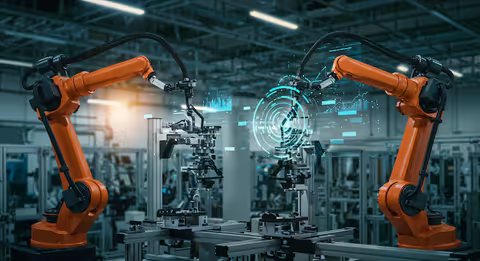
Recent developments in the sector include automated grading systems, optical color sorting, AI-assisted monitoring, moisture management technologies, and low-energy milling equipment. Many rice processors are also adopting digital tools that allow real-time machine monitoring and predictive maintenance. These technologies help reduce grain breakage, improve yield recovery, and support better inventory management.
As governments and food industries place stronger emphasis on food quality, traceability, and sustainability, rice milling technology continues evolving from basic mechanical processing toward data-driven industrial operations focused on productivity and quality improvement.
Who It Affects and What Problems It Solves
Rice milling technology affects a wide range of stakeholders across agricultural and food supply chains. Farmers depend on efficient mills to maximize the market value of harvested rice. Mill owners use advanced systems to reduce operational costs, increase output, and improve product consistency. Food distributors and retailers benefit from better-quality rice with fewer impurities and longer shelf life. Consumers also indirectly benefit through improved food safety and standardized grain quality.
Small and medium-sized milling businesses are increasingly adopting semi-automated technologies to remain competitive. Larger industrial processors often invest in integrated milling plants that combine cleaning, drying, polishing, grading, and packaging into a single workflow. Equipment manufacturers, logistics providers, and agricultural policymakers are also closely connected to developments in this sector.
Common Problems Solved by Modern Rice Milling Technology
| Problem | Technology-Based Solution | Operational Benefit |
|---|---|---|
| High grain breakage | Precision rubber roll shellers | Improved whole grain recovery |
| Inconsistent rice quality | Optical color sorting systems | Better product consistency |
| High energy consumption | Energy-efficient motors and automation | Reduced operational costs |
| Moisture imbalance | Digital moisture monitoring | Lower spoilage risk |
| Manual labor dependency | Automated conveyors and controls | Faster processing |
| Contamination risks | Multi-stage cleaning systems | Improved food safety |
| Machine downtime | Predictive maintenance systems | Higher productivity |
| Waste generation | Husk and bran utilization systems | Better sustainability |
Modern milling systems also help improve traceability and inventory control. Data collection tools now allow operators to monitor processing speed, grain quality, and machine performance in real time. This shift supports better decision-making and operational planning.
Recent Updates and Industry Trends
The rice milling industry has seen several important technological and operational trends over the past year. Automation remains one of the fastest-growing areas, especially in medium and large-scale milling facilities. Smart control systems are increasingly used to optimize machine speed, monitor grain flow, and reduce energy waste.
Growth of Optical Sorting Technology
Optical color sorting systems have become more accessible and accurate. These machines use cameras and AI-supported image recognition to detect damaged, discolored, or foreign particles in rice. Improved sorting precision has helped mills enhance export-quality standards while reducing manual inspection requirements.
Energy Efficiency and Sustainability
Energy costs continue to influence operational decisions. Many milling facilities are upgrading to variable-frequency drives (VFDs), energy-efficient motors, and automated power management systems. Rice husk biomass utilization has also expanded, allowing some facilities to generate thermal energy from by-products.
Digital Monitoring and Predictive Maintenance
Internet-connected sensors and cloud-based monitoring tools are becoming more common in industrial milling operations. Predictive maintenance systems analyze vibration, temperature, and operational patterns to identify equipment issues before breakdowns occur. This reduces unplanned downtime and maintenance expenses.
Focus on Food Safety and Traceability
Food safety regulations have encouraged investment in hygienic processing environments, dust control systems, and digital traceability tools. Some processors now integrate QR-based tracking systems to monitor rice batches throughout production and distribution.
Increasing Use of Compact Milling Systems
Compact and modular milling units are gaining popularity among smaller operators due to lower installation costs and easier maintenance. These systems support localized rice processing and reduce transportation requirements in rural agricultural regions.
Comparison of Modern Rice Milling Technologies
| Technology Type | Primary Function | Key Advantage | Limitation | Suitable Scale |
|---|---|---|---|---|
| Traditional Milling | Basic rice processing | Lower setup cost | Higher grain breakage | Small-scale |
| Semi-Automated Milling | Partial automation | Better consistency | Moderate maintenance | Medium-scale |
| Fully Automated Milling | Integrated processing | High productivity | Higher investment | Large-scale |
| Optical Color Sorting | Grain quality selection | Export-grade quality | Requires calibration | Medium to large |
| AI Monitoring Systems | Performance analysis | Predictive insights | Digital skill requirement | Industrial |
| Energy-Efficient Milling | Reduced energy usage | Lower operating cost | Upgrade expenses | All scales |
| Compact Modular Units | Flexible operations | Space efficiency | Limited capacity | Small to medium |
| Biomass Utilization Systems | Waste energy recovery | Sustainability benefits | Infrastructure needs | Large-scale |
Productivity and Quality Indicators
| Performance Indicator | Traditional Systems | Modern Automated Systems |
|---|---|---|
| Grain Recovery Efficiency | Moderate | High |
| Broken Rice Percentage | Higher | Lower |
| Labor Requirement | High | Reduced |
| Energy Efficiency | Limited | Improved |
| Quality Consistency | Variable | Stable |
| Maintenance Monitoring | Manual | Predictive |
| Processing Speed | Slower | Faster |
Laws, Policies, and Government Programs
Rice milling operations are influenced by food safety regulations, environmental policies, energy efficiency standards, and agricultural modernization programs. Regulations vary by country, but several common policy areas affect milling technology adoption globally.
Food Safety Regulations
Most countries require rice processors to follow hygiene standards related to contamination prevention, dust control, storage conditions, and equipment sanitation. Food safety frameworks often align with systems such as Hazard Analysis and Critical Control Points (HACCP) and broader agricultural quality standards.
Environmental and Emission Policies
Governments increasingly encourage industries to reduce emissions and improve waste management. Rice milling facilities may face regulations regarding dust emissions, wastewater management, and energy consumption. Biomass recycling initiatives are also being promoted in several agricultural economies.
Agricultural Modernization Programs
Many governments provide support programs aimed at improving agricultural productivity and reducing post-harvest losses. These initiatives may include:
- Subsidies for modern milling equipment
- Training programs for operators
- Rural processing infrastructure support
- Energy-efficiency incentives
- Digital agriculture development programs
Practical Guidance for Different Situations
| Situation | Recommended Approach |
|---|---|
| Small rural mill | Focus on compact and energy-efficient systems |
| Export-oriented operation | Invest in optical sorting and traceability |
| High electricity costs | Adopt biomass energy recovery |
| Frequent machine downtime | Use predictive maintenance tools |
| Labor shortage | Increase automation gradually |
| Quality inconsistency | Implement moisture and grading controls |
Compliance with local regulations is important because non-compliance can affect product certification, export eligibility, and operational licensing.
Tools and Resources for Rice Milling Operations
Modern rice milling increasingly relies on digital tools, monitoring systems, and operational software. These resources support productivity, maintenance planning, and quality management.
Helpful Tools and Technologies
| Tool or Resource | Purpose |
|---|---|
| Moisture Meters | Measure grain moisture levels |
| Optical Color Sorters | Remove defective grains |
| Grain Quality Analyzers | Evaluate rice appearance and grading |
| PLC Automation Systems | Control automated workflows |
| Predictive Maintenance Software | Monitor machine health |
| ERP Systems | Manage inventory and production |
| Energy Monitoring Tools | Track electricity consumption |
| Dust Collection Systems | Improve air quality and safety |
Useful Digital Resources
| Resource Type | Benefit |
|---|---|
| Agricultural Research Portals | Access technical studies |
| Government Agriculture Websites | Learn regulations and subsidy programs |
| Equipment Manufacturer Guides | Understand machinery specifications |
| Food Safety Training Platforms | Improve compliance knowledge |
| Industrial Automation Tutorials | Learn operational optimization |
Operational Best Practices
- Regularly calibrate sorting and grading systems
- Monitor moisture levels before storage
- Maintain preventive maintenance schedules
- Train operators on automation systems
- Analyze production data for efficiency improvements
- Reduce unnecessary grain handling to prevent breakage
Frequently Asked Questions
What is the main purpose of rice milling technology?
Rice milling technology is designed to remove husk and bran layers from paddy rice while improving grain quality, reducing waste, and increasing processing efficiency.
How does automation improve rice milling productivity?
Automation helps reduce manual intervention, improves machine coordination, lowers downtime, and increases processing speed with more consistent results.
Why is grain moisture important in rice milling?
Improper moisture levels can increase grain breakage, spoilage, and processing inefficiency. Moisture control supports better milling recovery and storage quality.
What are optical color sorters used for?
Optical color sorters identify and remove damaged, discolored, or foreign materials from rice using cameras and image-processing systems.
Are energy-efficient milling systems important for small mills?
Yes. Energy-efficient motors and optimized processing systems can help small mills reduce operational costs and improve long-term sustainability.
Conclusion
Rice milling technology has evolved significantly from traditional mechanical systems toward automated, data-driven processing environments focused on productivity, quality control, and sustainability. Modern technologies such as optical sorting, predictive maintenance, digital monitoring, and energy-efficient systems are helping milling facilities reduce grain losses and improve operational consistency.
Industry trends indicate growing adoption of automation, food safety systems, and smart monitoring tools across both large industrial operations and smaller regional mills. As agricultural supply chains become increasingly quality-focused, investments in modern milling infrastructure are expected to continue expanding.
For smaller operators, gradual modernization through compact automation and energy-efficient upgrades may provide practical operational improvements. Larger facilities may benefit more from integrated digital systems and predictive analytics. The most effective approach depends on production scale, energy availability, labor conditions, and quality requirements.