Pharmaceutical Machinery Explained: Types, Uses, and Working Process
Pharmaceutical machinery plays a major role in modern medicine production.
These machines help manufacturers prepare tablets, capsules, syrups, powders, and many other medical products with accuracy and consistency. Without advanced machinery, large-scale medicine production would be slow and difficult.
Today, pharmaceutical manufacturing depends heavily on automation, precision engineering, and hygienic processing systems. From mixing raw ingredients to packaging finished medicines, every stage uses specialized equipment designed for safe and efficient operations.
Pharmaceutical machinery is important because medicines must meet strict quality standards. Even a small mistake during production can affect the final product. This is why industries use advanced industrial machines and automated production systems to maintain cleanliness, accuracy, and stable output.
Understanding how these machines work helps people learn how modern healthcare products are created safely and efficiently.
Understanding the Concept
Pharmaceutical machinery refers to equipment used in medicine manufacturing and processing. These machines handle different tasks such as:
- Mixing ingredients
- Granulating powders
- Compressing tablets
- Filling capsules
- Coating medicines
- Packaging products
Each machine performs a specific function within the production line. Together, they create a complete pharmaceutical manufacturing process.
For example, when producing tablets, raw materials first go into mixing machines. After proper blending, granulation equipment creates uniform particles. Tablet compression machines then press the mixture into solid tablets. Finally, packaging machines prepare the finished product for distribution.
Modern pharmaceutical equipment is designed to maintain:
- High accuracy
- Clean processing conditions
- Uniform product quality
- Faster production speed
- Reduced human handling
Many pharmaceutical industries also use industrial automation systems to improve productivity and minimize production errors.
Key Types or Categories
Pharmaceutical machinery includes several categories based on production stages.
Mixing and Blending Machines
These machines combine powder ingredients evenly before further processing. Uniform mixing is important because every tablet or capsule must contain the same amount of active ingredients.
Common examples include:
- Ribbon blenders
- Double cone mixers
- High-speed mixers
In a practical scenario, vitamin powder manufacturers use blending machines to ensure each dose contains balanced nutrients.
Granulation Equipment
Granulation machines convert fine powder into larger particles called granules. Granules improve flow properties and make tablet production easier.
Main types include:
- Wet granulators
- Dry granulators
- Rapid mixer granulators
Granulation is widely used in tablet manufacturing plants because loose powders are difficult to compress directly.
Tablet Compression Machines
Tablet presses transform granules into tablets using controlled pressure. These machines can produce thousands of tablets within a short period.
Features often include:
- Adjustable pressure settings
- Automatic feeding systems
- High-speed rotation mechanisms
Large pharmaceutical production units depend on tablet compression technology for continuous manufacturing.
Capsule Filling Machines
Capsule filling machines place medicine powder or pellets inside empty capsules. These systems help maintain accurate dosage levels.
Capsule machinery may operate:
- Manually
- Semi-automatically
- Fully automatically
Automatic capsule fillers are common in advanced pharmaceutical manufacturing environments.
Coating Machines
Coating equipment adds a protective layer around tablets. This layer can improve appearance, stability, taste, or controlled release.
Different coating methods include:
- Film coating
- Sugar coating
- Enteric coating
For example, some medicines use enteric coatings so tablets dissolve in the intestine instead of the stomach.
Packaging Machinery
Packaging machines prepare medicines for transportation and storage. Proper packaging protects products from moisture, contamination, and physical damage.
Popular pharmaceutical packaging systems include:
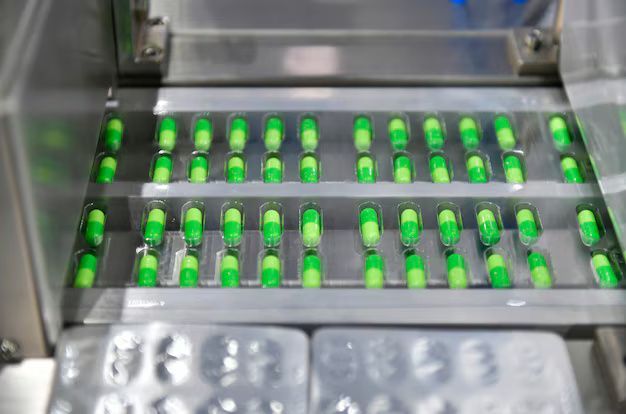
- Blister packaging machines
- Bottle filling units
- Labeling machines
- Cartoning machines
Automated packaging equipment improves efficiency and reduces manual handling.
How It Works
The pharmaceutical manufacturing process follows several organized stages. Each stage uses different machinery to complete specific tasks.
Step 1: Raw Material Handling
Manufacturers first collect active ingredients and supporting materials. These materials enter storage containers designed for hygienic handling.
Machines transport powders through enclosed systems to avoid contamination.
Step 2: Mixing and Blending
Blending machines mix ingredients thoroughly. Uniform mixing ensures equal distribution of medicinal compounds.
For example, if headache tablets contain pain-relief ingredients, every tablet must contain the same measured quantity.
Step 3: Granulation
After blending, granulation equipment converts fine powder into granules. Granules improve stability and help machines process materials smoothly.
Some processes use moisture, while others rely on pressure-based methods.
Step 4: Drying Process
Granules often contain moisture after processing. Drying machines remove excess moisture to maintain product stability.
Fluid bed dryers are commonly used because they provide fast and even drying.
Step 5: Tablet Compression or Capsule Filling
At this stage:
- Tablet presses create tablets
- Capsule filling systems fill capsules
Advanced industrial machines monitor pressure, speed, and weight continuously during production.
Step 6: Coating
Some medicines move into coating machines for protective layering. Coating can also improve swallowing comfort and appearance.
Step 7: Inspection and Packaging
Inspection systems check products for defects before packaging.
Automated packaging machinery then seals medicines into:
- Blister packs
- Bottles
- Sachets
- Cartons
Modern pharmaceutical packaging lines often include barcode printing and tracking systems for inventory management.
Benefits and Advantages
Pharmaceutical machinery provides many practical advantages in medicine production.
Improved Accuracy
Machines help maintain precise dosage measurements. Accurate dosage is essential for medicine safety and effectiveness.
Faster Production
Automated systems can produce large quantities in less time compared to manual methods.
Better Hygiene
Stainless steel equipment and enclosed systems help maintain clean manufacturing conditions.
Consistent Quality
Machines repeat the same process continuously, which improves uniformity across products.
Reduced Material Waste
Modern pharmaceutical equipment reduces production losses through controlled operations.
Enhanced Industrial Automation
Automation systems monitor production performance and help maintain stable operations throughout the manufacturing cycle.
Real-World Examples or Applications
Pharmaceutical machinery is used in many healthcare-related industries worldwide.
Tablet Manufacturing Plants
Factories producing pain relief tablets use mixers, granulators, tablet presses, and packaging machines together in a continuous production line.
Syrup Production Units
Liquid medicine production involves:
- Mixing tanks
- Filtration systems
- Bottle filling equipment
- Sealing machines
These systems help maintain consistent liquid formulation quality.
Nutritional Supplement Industry
Vitamin and protein supplement manufacturers use capsule filling and powder blending machinery extensively.
Vaccine Production Facilities
Advanced pharmaceutical manufacturing plants use sterile processing equipment to maintain controlled environments during vaccine preparation.
Herbal Medicine Processing
Herbal medicine producers also depend on grinding, extraction, and packaging equipment for large-scale production.
Important Factors to Understand
Several important factors influence pharmaceutical machinery performance and reliability.
Cleanliness Standards
Machines must remain clean to avoid contamination. Many systems use stainless steel because it resists corrosion and supports hygienic operations.
Production Capacity
Different industries require different production volumes. Small laboratories may use compact equipment, while large factories use fully automated systems.
Energy Efficiency
Modern industrial machines focus on reducing energy consumption while maintaining productivity.
Maintenance Requirements
Regular inspection and maintenance help machines operate smoothly and reduce unexpected downtime.
Automation Integration
Many pharmaceutical industries now integrate digital monitoring systems for improved production tracking and process control.
Safety Features
Pharmaceutical equipment often includes:
- Emergency stop systems
- Pressure monitoring
- Temperature controls
- Automatic shutdown mechanisms
These features help maintain safe operations during manufacturing.
Future Trends and Industry Insights
The pharmaceutical machinery industry continues to evolve with new technologies and smarter manufacturing systems.
Smart Manufacturing
Modern factories increasingly use smart sensors and automated monitoring systems. These technologies help track machine performance in real time.
Artificial Intelligence in Production
Artificial intelligence is improving pharmaceutical manufacturing through predictive analysis and process optimization.
For example, AI systems can detect machine performance changes before major issues occur.
Robotics and Automation
Robotic systems are becoming more common in packaging and material handling operations. Robotics helps improve speed and reduce direct human contact with products.
Sustainable Manufacturing
Industries are focusing on energy-efficient machinery and environmentally responsible production methods.
Manufacturers are also working to reduce water use and production waste.
Advanced Packaging Technology
Modern packaging systems now include digital tracking, tamper detection, and improved moisture protection.
Continuous Manufacturing
Traditional batch production is gradually shifting toward continuous manufacturing systems. These systems improve efficiency and support uninterrupted production flow.
Conclusion
Pharmaceutical machinery is a vital part of modern medicine production. These machines help industries maintain quality, accuracy, hygiene, and efficiency throughout the manufacturing process.
From mixing ingredients to packaging finished medicines, every production stage depends on specialized equipment. Tablet presses, capsule fillers, granulators, coating systems, and packaging machinery all work together to create reliable healthcare products.
As industrial automation and smart manufacturing continue to advance, pharmaceutical equipment is becoming faster, safer, and more efficient. Future developments in robotics, artificial intelligence, and sustainable production will likely shape the next generation of pharmaceutical manufacturing systems.
Understanding these machines provides valuable insight into how modern healthcare products are produced and delivered with consistency and precision.