Noodle Making Machines Details: Automation, Quality, and Production Efficiency
Noodle making machines are specialized food processing equipment designed to produce different varieties of noodles efficiently and consistently. These machines automate several production stages, including dough preparation, rolling, sheet formation, cutting, steaming, drying, cooling, and packaging, depending on the production line configuration.
Modern noodle manufacturing equipment is widely used by food manufacturers, commercial kitchens, research facilities, and large-scale production plants. Automation helps improve production consistency while reducing manual handling and maintaining food quality standards.
As global demand for convenience foods continues to grow, manufacturers are adopting advanced food processing equipment that supports higher productivity, improved hygiene, and precise process control.
How Noodle Making Machines Work
The production process follows a structured sequence designed to maintain product consistency and food safety.
| Production Stage | Purpose |
|---|---|
| Ingredient Mixing | Combines flour, water, salt, and other ingredients |
| Dough Kneading | Develops proper dough texture |
| Dough Resting | Improves elasticity and consistency |
| Sheet Rolling | Creates uniform dough sheets |
| Thickness Adjustment | Produces the required noodle thickness |
| Cutting | Forms noodles into desired shapes and sizes |
| Cooking or Steaming | Used for selected noodle varieties |
| Drying or Cooling | Extends shelf life or prepares fresh noodles |
| Packaging | Protects finished products for storage and distribution |
The exact sequence varies depending on the noodle type and manufacturing requirements.
Importance of Noodle Making Machines
Food manufacturers require consistent product quality while maintaining efficient production workflows. Automated noodle manufacturing equipment helps achieve these objectives through controlled processing and standardized operations.
These machines contribute to:
- Consistent noodle thickness
- Uniform product appearance
- Improved production efficiency
- Better hygiene practices
- Reduced ingredient variation
- Stable product quality
- Lower manual handling
- Easier production monitoring
- Repeatable manufacturing processes
- Support for food safety compliance
Automation also assists manufacturers in meeting increasing consumer demand while maintaining consistent production standards.
Key Components of Noodle Making Machines
Dough Mixing System
The mixing unit blends flour and liquid ingredients to create a homogeneous dough suitable for further processing.
Dough Kneading Section
This section develops gluten structure and improves dough elasticity for better texture.
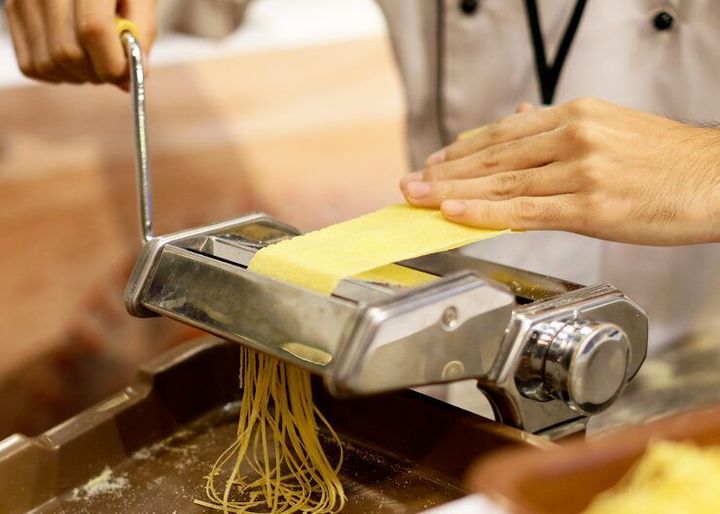
Roller Assembly
Multiple rollers gradually reduce dough thickness while maintaining uniformity.
Thickness Adjustment Unit
Operators can adjust sheet thickness according to production specifications.
Cutting Unit
Specialized cutting rollers produce different noodle widths and styles.
Steaming System
Certain noodle varieties require steaming before drying or packaging.
Drying Equipment
Drying systems reduce moisture content to improve storage stability.
Cooling Section
Cooling prepares noodles for safe handling and packaging.
Conveyor System
Conveyors transport products between different production stages while minimizing manual contact.
Control Panel
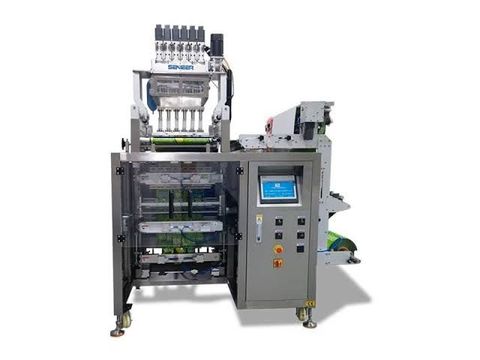
Modern machines include digital control systems for monitoring production parameters and machine performance.
Types of Noodle Making Machines
Manual Machines
Suitable for small-scale production or educational demonstrations.
Semi-Automatic Machines
Combine automated processing with operator assistance during selected production stages.
Fully Automatic Machines
Perform nearly all manufacturing operations with minimal manual intervention.
Instant Noodle Production Lines
Designed specifically for high-volume production involving frying or hot-air drying.
Fresh Noodle Production Lines
Produce refrigerated noodles intended for shorter storage periods.
Dried Noodle Production Lines
Include advanced drying systems to increase shelf stability.
Specialty Noodle Machines
Configured for products such as rice noodles, ramen, udon, soba, egg noodles, and gluten-free varieties.
Common Industrial Applications
Noodle making machines support numerous sectors within the food manufacturing industry.
Food Manufacturing Plants
Large-scale production of packaged noodle products.
Commercial Food Production
Preparation of fresh noodles for restaurants and institutional kitchens.
Export-Oriented Manufacturing
Production lines designed for standardized international food products.
Research and Development Facilities
Testing new formulations, ingredients, and manufacturing processes.
Educational Institutions
Training students in food engineering and food processing technology.
Pilot Production Facilities
Evaluating new product concepts before commercial manufacturing.
Features of Modern Noodle Manufacturing Equipment
Recent equipment incorporates advanced automation technologies to improve operational efficiency.
Common Features
- PLC-based automation
- Touchscreen human-machine interfaces
- Variable speed control
- Stainless steel construction
- Automated ingredient feeding
- Precision cutting systems
- Energy-efficient motors
- Continuous production capability
- Hygienic equipment design
- Digital monitoring systems
- Automatic fault detection
- Recipe management
- Data recording capabilities
- Modular production lines
- Easy cleaning design
These features help manufacturers improve production consistency while simplifying equipment management.
Problems Solved by Noodle Making Machines
Manual production may introduce variations in dough preparation, cutting accuracy, and production speed.
Modern manufacturing equipment helps address these challenges by providing:
- Uniform noodle dimensions
- Consistent dough quality
- Reduced production interruptions
- Improved hygiene control
- Better process repeatability
- Increased production capacity
- Lower product variation
- Improved operational efficiency
- Easier production planning
- Enhanced quality monitoring
Automation supports more predictable manufacturing outcomes across different production batches.
Recent Trends and Developments (2025–2026)
The food processing industry continues adopting advanced manufacturing technologies to improve efficiency and sustainability.
Recent developments include:
Smart Manufacturing
Many new production systems now integrate Industrial Internet of Things (IIoT) technology for real-time equipment monitoring and predictive maintenance.
Artificial Intelligence Integration
Artificial intelligence is increasingly used for production optimization, quality inspection, and equipment diagnostics.
Vision Inspection Systems
Machine vision technology automatically detects product defects, improving quality control.
Energy-Efficient Equipment
Manufacturers are introducing motors, heating systems, and production designs that reduce energy consumption.
Hygienic Equipment Design
Equipment increasingly follows sanitary engineering principles that simplify cleaning and reduce contamination risks.
Digital Production Analytics
Cloud-connected monitoring platforms provide detailed production reports and maintenance information.
Sustainable Manufacturing
Manufacturers continue improving water efficiency, reducing waste generation, and optimizing production resources throughout 2025 and 2026.
Food Safety Standards and Regulations
Food manufacturing equipment should comply with applicable national and international food safety requirements.
Important considerations include:
- Food-grade contact materials
- Hygienic equipment construction
- Good Manufacturing Practices (GMP)
- Hazard Analysis and Critical Control Points (HACCP)
- ISO 22000 Food Safety Management principles
- Cleaning and sanitation procedures
- Worker safety requirements
- Electrical safety standards
- Equipment maintenance documentation
- Product traceability practices
Regulatory requirements vary depending on the country, production scale, and intended market.
Useful Tools, Platforms, and Learning Resources
Professionals interested in noodle manufacturing technology often use the following resources.
Engineering Software
- AutoCAD
- SolidWorks
- Autodesk Inventor
Automation Platforms
- Siemens TIA Portal
- Rockwell Studio 5000
- Mitsubishi GX Works
Food Safety Resources
- HACCP guidance documents
- ISO 22000 documentation
- Good Manufacturing Practices references
Learning Resources
- Food engineering textbooks
- Manufacturing technology journals
- Food processing research publications
- University food engineering programs
- Industrial automation training platforms
These resources support continuous learning in food manufacturing, automation, and production management.
Frequently Asked Questions
What is a noodle making machine?
A noodle making machine is food processing equipment that automates dough preparation, rolling, cutting, and other manufacturing stages to produce consistent noodle products.
Which industries commonly use noodle making machines?
Food manufacturing plants, commercial food producers, research organizations, educational institutions, and industrial food processing facilities commonly use these machines.
What materials are commonly used to manufacture noodle making machines?
Most modern equipment uses food-grade stainless steel because it provides durability, corrosion resistance, and supports hygienic food processing.
Can modern noodle making machines support automation?
Yes. Many production systems include programmable controllers, touchscreen interfaces, sensors, automated monitoring, and digital production management.
Why is food safety important in noodle production?
Food safety practices help maintain product quality, reduce contamination risks, support regulatory compliance, and ensure consistent manufacturing standards.
Conclusion
Noodle making machines have become an essential part of modern food manufacturing by combining automation, precision, and hygienic design. These systems improve production consistency, support quality management, and help manufacturers meet growing consumer demand for a wide range of noodle products.
Advances in artificial intelligence, industrial automation, digital monitoring, and sustainable manufacturing continue to shape the future of noodle production. As technology evolves throughout 2025 and 2026, manufacturers are increasingly adopting intelligent production systems that improve operational efficiency while supporting food safety and environmental responsibility. Understanding the structure, working principles, applications, and emerging innovations of noodle making machines provides valuable knowledge for professionals, students, and organizations involved in food processing technology.