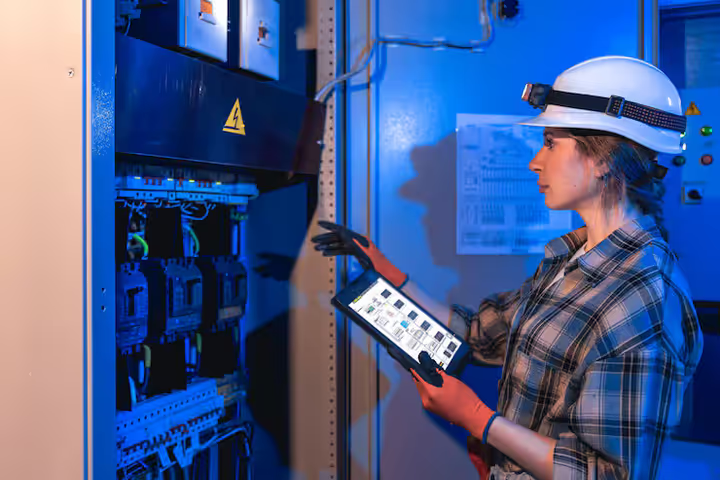
Explore Switchgear Testing Machines for Reliable Power Equipment Verification
Switchgear testing machines are specialized electrical testing systems used to evaluate the safety, performance, reliability, and operational condition of switchgear equipment. Switchgear is responsible for controlling, protecting, and isolating electrical circuits in power generation, transmission, distribution, commercial buildings, manufacturing facilities, renewable energy plants, and utility substations.
Testing machines help engineers verify that switchgear components operate correctly before installation, during scheduled maintenance, and after repairs or upgrades. These systems identify insulation weaknesses, faulty circuit breakers, relay problems, contact resistance issues, and other electrical defects before they develop into equipment failures.
Modern switchgear testing machines combine digital measurement technology, automated testing procedures, and advanced data analysis to improve testing accuracy while reducing inspection time.
How Switchgear Testing Machines Work
Switchgear testing machines generate controlled electrical signals or currents to evaluate different components inside electrical switchgear.
Depending on the required test, the machine may:
- Inject high current into a circuit breaker
- Apply high voltage to insulation systems
- Measure contact resistance
- Verify relay operation
- Test timing sequences
- Analyze protective devices
- Record electrical measurements digitally
Testing results are compared with manufacturer specifications, maintenance standards, and industry regulations to determine whether equipment remains suitable for operation.
Many modern systems include touchscreen interfaces, automated reporting software, digital storage, and communication capabilities for maintenance documentation.
Why Switchgear Testing Is Important
Reliable electrical infrastructure depends on properly functioning switchgear.
Regular testing helps organizations:
- Prevent unexpected electrical failures
- Improve workplace safety
- Detect hidden insulation deterioration
- Verify protective relay accuracy
- Reduce equipment downtime
- Extend equipment lifespan
- Improve maintenance planning
- Support regulatory compliance
- Reduce operational risks
- Improve overall power system reliability
Without routine testing, minor electrical defects may gradually develop into major equipment failures that interrupt power distribution.
Common Applications
Switchgear testing machines are widely used across many industries.
Key Applications
- Electrical substations
- Power generation facilities
- Renewable energy plants
- Industrial manufacturing
- Oil and gas facilities
- Chemical processing plants
- Mining operations
- Railway electrical systems
- Commercial buildings
- Hospitals
- Airports
- Data centers
- Water treatment facilities
- Utility maintenance operations
- Educational laboratories
Main Types of Switchgear Testing Machines
Different testing machines are designed for specific inspection tasks.
| Testing Machine Type | Primary Purpose | Typical Application |
|---|---|---|
| Primary Injection Test System | High-current verification | Circuit breaker testing |
| Secondary Injection Test System | Relay testing | Protection system verification |
| Insulation Resistance Tester | Insulation condition assessment | Preventive maintenance |
| Contact Resistance Tester | Contact quality measurement | Switchgear maintenance |
| Circuit Breaker Analyzer | Mechanical performance testing | Breaker diagnostics |
| High Voltage Test System | Dielectric strength testing | Factory and field testing |
| Timing Analyzer | Opening and closing analysis | Breaker performance evaluation |
| Partial Discharge Detector | Early insulation defect detection | Condition monitoring |
Major Components
Most switchgear testing machines include several essential components.
Core Components
- High-current generator
- High-voltage generator
- Digital measurement unit
- Voltage sensors
- Current sensors
- Timing measurement system
- Data acquisition hardware
- Control software
- Safety protection circuits
- Test leads and connectors
- Display interface
- Reporting software
- Internal calibration system
- Communication ports
Each component contributes to accurate and repeatable electrical testing.
Key Features of Modern Systems
Recent generations of switchgear testing machines include numerous digital capabilities.
Common Features
- Automated testing procedures
- High measurement accuracy
- Digital result storage
- Touchscreen operation
- Wireless connectivity
- USB data export
- Cloud-compatible reporting
- Multi-language interfaces
- Self-diagnostic functions
- Portable field operation
- Battery-powered models
- Remote monitoring support
- Built-in safety protection
- Fast report generation
These features improve productivity while reducing manual errors.
Testing Methods Performed
Switchgear testing machines support a wide variety of electrical tests.
Common Testing Methods
- Insulation resistance testing
- Contact resistance measurement
- Primary current injection
- Secondary current injection
- Circuit breaker timing analysis
- Relay calibration
- Dielectric withstand testing
- Functional operation testing
- Mechanical operation testing
- Partial discharge analysis
- Earth continuity testing
- Voltage ratio verification
- Thermal performance assessment
- Protective device verification
Each testing method evaluates different aspects of switchgear performance.
Problems These Machines Help Solve
Electrical equipment naturally experiences wear, environmental stress, and aging.
Switchgear testing machines help identify:
Common Issues
- Loose electrical connections
- Damaged insulation
- Contact deterioration
- Incorrect relay settings
- Circuit breaker timing problems
- Excessive resistance
- Internal moisture contamination
- Mechanical wear
- Overheating components
- Hidden electrical faults
- Aging insulation materials
- Poor grounding connections
Early detection allows maintenance teams to correct issues before they affect electrical system reliability.
Industries That Depend on Switchgear Testing
Reliable electrical protection is essential in many sectors.
Industries
- Power utilities
- Renewable energy
- Manufacturing
- Mining
- Marine engineering
- Transportation
- Aviation
- Healthcare
- Telecommunications
- Construction
- Smart infrastructure
- Government facilities
- Educational institutions
- Heavy engineering
- Semiconductor manufacturing
These industries rely on continuous electrical operation with minimal interruption.
Recent Trends and Developments (2025–2026)
Switchgear testing technology has continued to evolve over the past year.
Recent developments include:
Industry Developments
- Greater use of artificial intelligence for predictive maintenance
- Expanded integration with Industrial Internet of Things (IIoT) monitoring systems
- Cloud-based testing reports for centralized maintenance management
- Wireless communication between testing instruments and maintenance software
- Higher accuracy digital sensors for field testing
- Portable lightweight testing equipment for remote locations
- Automated comparison of historical test records
- Increased cybersecurity features for connected testing devices
- Digital twin integration for equipment diagnostics
- Improved battery-powered testing systems for field engineers
Throughout 2025 and into 2026, many manufacturers have continued improving automation, data analytics, and predictive maintenance capabilities to support smarter electrical asset management.
Standards and Regulations
Switchgear testing follows internationally recognized technical standards to improve safety and consistency.
Common Standards
- IEC 62271 series for high-voltage switchgear and controlgear
- IEC 60060 for high-voltage testing techniques
- IEC 60255 for measuring relays and protection equipment
- IEEE C37 standards for switchgear equipment
- IEC 60529 for enclosure protection classifications
- ISO 9001 quality management practices in manufacturing
- Workplace electrical safety regulations established by national authorities
Organizations typically follow manufacturer maintenance recommendations alongside applicable national electrical codes.
Useful Software, Tools, and Learning Resources
Engineers use various digital tools to support testing activities.
Helpful Resources
- Electrical equipment diagnostic software
- Relay configuration software
- Power system simulation platforms
- Digital maintenance management systems (CMMS)
- Calibration management software
- Technical documentation from switchgear manufacturers
- Electrical engineering reference books
- Utility maintenance manuals
- Professional engineering associations
- Industrial training institutes
- Electrical standards publications
- Manufacturer technical webinars
Continuous learning helps maintenance professionals remain familiar with evolving testing technologies.
Advantages of Modern Switchgear Testing Machines
Modern equipment provides several operational benefits.
Benefits
- Improved testing accuracy
- Faster inspections
- Better equipment reliability
- Enhanced workplace safety
- Reduced unexpected outages
- Consistent test documentation
- Automated reporting
- Easier preventive maintenance
- Better regulatory compliance
- Long-term equipment condition monitoring
These advantages contribute to efficient electrical asset management.
Frequently Asked Questions
What are switchgear testing machines used for?
They evaluate the condition, safety, and performance of electrical switchgear by performing tests such as insulation resistance, current injection, contact resistance, relay verification, and timing analysis.
How often should switchgear be tested?
Testing frequency depends on equipment type, operating environment, manufacturer recommendations, maintenance schedules, and applicable industry regulations. Critical infrastructure is often inspected more frequently than standard installations.
What is the difference between primary and secondary injection testing?
Primary injection testing applies high current directly through the primary circuit to verify the complete protection system. Secondary injection testing checks protective relays and control circuits without energizing the primary equipment.
Can modern switchgear testing machines generate automated reports?
Yes. Most current systems automatically record measurements, generate digital reports, store historical results, and export maintenance documentation for future analysis.
Which industries benefit the most from switchgear testing?
Power utilities, manufacturing facilities, renewable energy plants, transportation systems, hospitals, mining operations, data centers, and large commercial buildings all depend on regular switchgear testing to maintain reliable electrical operation.
Conclusion
Switchgear testing machines play an essential role in maintaining safe, reliable, and efficient electrical power systems. By verifying insulation integrity, protective relay operation, circuit breaker performance, and overall equipment condition, these systems help prevent unexpected failures while supporting preventive maintenance programs.
Continuous advances in digital diagnostics, automation, cloud connectivity, and predictive maintenance technologies have significantly improved testing accuracy and operational efficiency during 2025 and 2026. As electrical infrastructure becomes increasingly intelligent and interconnected, switchgear testing machines will remain fundamental tools for ensuring dependable power distribution, workplace safety, and long-term equipment reliability across industrial, commercial, and utility environments.