Industrial Automation Manufacturing Explained: Smart Systems, Robotics & Modern Production Technologies
Manufacturing has changed dramatically over the past few decades. What once depended heavily on manual labor and repetitive processes is now driven by intelligent machines, advanced software, and connected production systems. As industries strive for greater efficiency, consistency, and productivity, industrial automation manufacturing has become a key part of modern production environments.
Today’s factories use smart technologies to streamline operations, improve product quality, and optimize resource utilization. From robotic assembly lines to automated quality inspection systems, automation is helping manufacturers meet growing market demands while maintaining high production standards.
In this guide, we'll explore industrial automation manufacturing, the technologies behind it, and how smart systems are shaping the future of modern industry.
What Is Industrial Automation Manufacturing?
Industrial automation manufacturing refers to the use of technology, control systems, and intelligent machinery to perform production tasks with minimal manual intervention. These systems are designed to improve efficiency, reduce operational errors, and maintain consistent production quality.
Rather than relying entirely on human-operated processes, automated manufacturing environments use software, sensors, controllers, and robotics to manage production activities.
At its core, industrial automation focuses on three key objectives:
- Increasing production efficiency
- Improving product consistency
- Enhancing operational reliability
By automating repetitive and complex tasks, manufacturers can achieve greater productivity while maintaining high standards of accuracy.
Why Automation Is Transforming Manufacturing
Modern industries face increasing pressure to produce high-quality products quickly and efficiently. Traditional manufacturing methods often struggle to keep pace with rising demand and complex production requirements.
Automation helps manufacturers address these challenges by creating smarter and more responsive production systems.
For example, an automotive manufacturing facility may use automated assembly systems to produce thousands of components with consistent accuracy. This level of precision would be difficult to achieve through manual processes alone.
As global competition continues to grow, automation has become a valuable tool for maintaining operational efficiency and improving production performance.
Understanding Smart Manufacturing Systems
Smart manufacturing systems combine advanced technologies that communicate and work together in real time. These systems collect data, analyze performance, and automatically adjust operations when necessary.
Unlike traditional production environments, smart factories use connected technologies to improve visibility across the entire manufacturing process.
Key Features of Smart Manufacturing
Modern smart systems typically include:
- Real-time production monitoring
- Automated process control
- Digital data collection
- Predictive maintenance capabilities
These technologies allow manufacturers to make faster decisions and improve overall operational efficiency.
For instance, if a production machine begins showing signs of wear, the system can detect the issue early and alert maintenance teams before a major disruption occurs.
Core Components of Industrial Automation
Automation systems rely on several important components working together to create a seamless production environment.
Sensors and Monitoring Devices
Sensors collect information from machines and production lines. They monitor variables such as temperature, pressure, speed, and position.
This information helps automation systems understand what is happening throughout the manufacturing process.
Programmable Logic Controllers (PLCs)
PLCs act as the brains of many automation systems. They process information from sensors and control machine operations based on programmed instructions.
These controllers help maintain consistent and reliable production processes.
Human-Machine Interfaces (HMIs)
HMIs allow operators to monitor equipment and interact with automated systems through user-friendly displays.
This improves visibility while simplifying production management.
Industrial Software Platforms
Software platforms connect different systems and provide centralized operational oversight. These solutions help manufacturers track performance, manage workflows, and analyze production data.
The Role of Robotics in Modern Manufacturing
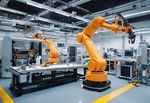
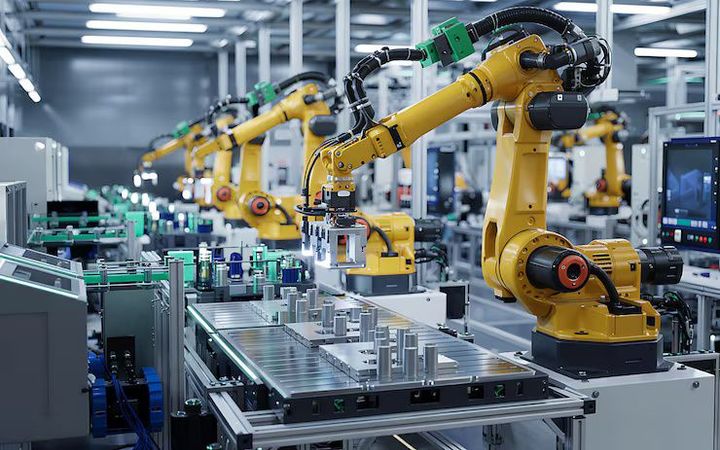
Robotics has become one of the most visible aspects of industrial automation. Modern robots perform a wide range of tasks with speed and precision.
Unlike traditional machinery, robots can often be programmed for multiple functions, making them highly adaptable within manufacturing environments.
Common Robotic Applications
Robotic systems are frequently used for:
- Assembly operations
- Material handling
- Packaging processes
- Welding applications
- Quality inspections
For example, robotic arms in an electronics manufacturing facility can assemble delicate components with exceptional accuracy and consistency.
This level of precision helps improve product quality while supporting efficient production workflows.
Advanced Production Technologies
Industrial automation continues to evolve as new technologies become available. These innovations are helping manufacturers create more efficient and intelligent production systems.
Artificial Intelligence
Artificial intelligence helps analyze production data and identify opportunities for improvement. AI-powered systems can detect patterns, predict equipment issues, and optimize manufacturing processes.
As a result, manufacturers can improve productivity while reducing unexpected downtime.
Internet of Things (IoT)
The Industrial Internet of Things connects machines, sensors, and production systems through digital networks.
This connectivity allows real-time communication between equipment and provides greater visibility into manufacturing operations.
Machine Vision Systems
Machine vision technology enables automated inspection and quality control processes.
These systems use cameras and advanced software to identify defects, verify dimensions, and maintain product quality standards.
Cloud-Based Manufacturing Platforms
Cloud technologies allow manufacturers to access operational information from multiple locations.
This supports centralized monitoring and more efficient management of production activities.
Applications Across Industries
Industrial automation manufacturing is used across a wide range of sectors. Each industry benefits from improved efficiency, consistency, and operational control.
Automotive Manufacturing
Automotive production facilities use automation extensively for assembly, welding, painting, and quality control.
These systems help maintain the precision required for modern vehicle production.
Electronics Manufacturing
The electronics industry depends on automation to produce highly detailed and compact components.
Automated equipment helps ensure accuracy during assembly and inspection processes.
Pharmaceutical Production
Pharmaceutical manufacturing requires strict control over production environments and quality standards.
Automation supports consistency while helping maintain regulatory compliance.
Food and Beverage Processing
Food manufacturers use automated systems for packaging, sorting, labeling, and production management.
These technologies help improve efficiency while maintaining product quality.
Benefits of Industrial Automation Manufacturing
The adoption of automation technologies provides numerous advantages for manufacturers seeking long-term operational improvements.
Improved Production Efficiency
Automated systems can operate continuously and perform repetitive tasks with consistent accuracy.
This helps increase output while reducing production delays.
Better Product Quality
Automation reduces variability in manufacturing processes, leading to more consistent product quality.
Quality improvements often contribute to stronger customer satisfaction and operational performance.
Enhanced Workplace Safety
Many automated systems perform tasks that may involve repetitive motions or challenging working conditions.
This helps create safer manufacturing environments.
Greater Operational Visibility
Connected systems provide valuable production data that supports better planning and decision-making.
Managers can identify inefficiencies and make informed improvements based on real-time information.
Challenges of Industrial Automation
While automation provides significant benefits, implementation requires careful planning.
One common challenge is integrating new technologies with existing production infrastructure. Manufacturers must ensure that different systems work together effectively.
Another consideration is ongoing maintenance and system optimization. Advanced automation environments require regular monitoring to maintain peak performance.
Organizations must also invest in training and technical knowledge to fully utilize modern automation technologies.
Future Trends in Automation Manufacturing
The future of manufacturing is becoming increasingly intelligent and connected. Emerging technologies are expected to further transform industrial operations.
Key Trends Shaping the Industry
- AI-driven production optimization
- Collaborative robotic systems
- Smart factory development
- Advanced predictive maintenance
- Real-time manufacturing analytics
These innovations will continue improving efficiency, flexibility, and production performance across industries.
As technology advances, factories will become more adaptive and capable of responding quickly to changing production requirements.
Conclusion
Industrial automation manufacturing is revolutionizing modern production by combining smart systems, robotics, and advanced digital technologies. These solutions help manufacturers improve efficiency, maintain consistent quality, and optimize operations across a wide range of industries.
From automotive and electronics production to pharmaceutical and food processing facilities, automation is driving the next generation of manufacturing innovation. As smart technologies continue to evolve, industrial automation will remain a critical force shaping the future of global production and industrial growth.