Industrial Machinery Explained: Machine Types, Manufacturing Technologies, Global Manufacturers, Suppliers and Industrial Applications
Industrial machinery is essential to modern manufacturing, construction, energy production, material processing and infrastructure development. These machines perform operations such as cutting, forming, drilling, lifting, pumping, mixing, packaging, assembling and transporting materials.
Industrial machinery ranges from precision CNC machines and robotic systems to heavy construction equipment, industrial pumps, compressors and automated production lines. Each machine is designed for particular operating conditions, production requirements and material characteristics.
What Is Industrial Machinery?
Industrial machinery refers to mechanical, electrical and electromechanical equipment used to manufacture products, process materials and support industrial operations. Machines can operate independently or as part of an integrated production system.
Some equipment performs a single operation, such as milling or grinding, while more complex systems combine several processes within automated production lines.
Industrial machinery commonly includes:
Metalworking and CNC machining equipment
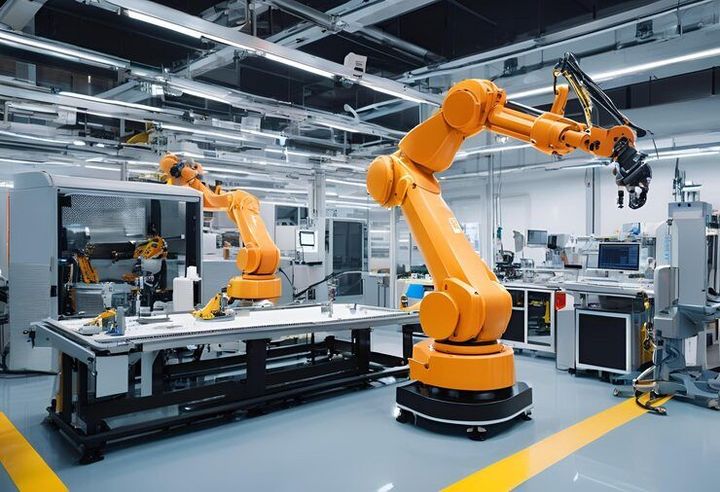
Industrial automation and robotics
Material-handling and lifting machinery
Pumps, compressors and fluid-processing equipment
Packaging and filling machinery
Construction and earthmoving equipment
Industrial power-generation machinery
Inspection, measurement and testing equipment
Food, pharmaceutical and chemical processing machinery
The selection of machinery depends on production capacity, precision, material properties, energy consumption, operating environment, safety requirements and maintenance needs.
Major Types of Industrial Machinery
1. CNC Machines and Metalworking Equipment
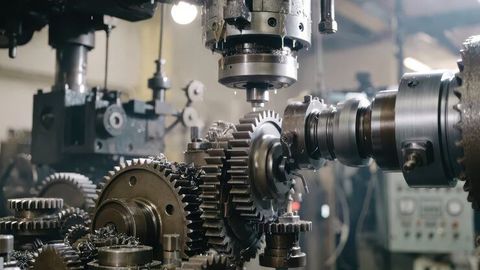
Computer numerical control (CNC) machines use programmed instructions to control machining operations. They manufacture components from metals, plastics and other engineering materials.
Common types include:
CNC turning centres
CNC milling machines
CNC machining centres
CNC grinding machines
CNC drilling machines
Electrical discharge machining systems
Laser cutting machines
Waterjet cutting machines
Sheet metal bending and forming machines
CNC equipment is widely used in automotive manufacturing, aerospace engineering, industrial component production, medical equipment manufacturing and precision engineering.
Machine selection depends on workpiece dimensions, material hardness, dimensional tolerances, spindle speed, tooling configuration and production volume.
2. Industrial Automation and Robotics
Industrial automation machinery combines mechanical equipment, sensors, controllers and software to perform manufacturing tasks with reduced manual intervention.
Common technologies include robotic arms, programmable logic controllers, machine-vision systems, automated assembly machines, servo drives and industrial communication networks.
Robots can perform welding, painting, pick-and-place operations, material transfer and repetitive assembly tasks. Automated inspection systems can measure components and identify selected defects during production.
Automation design must account for cycle time, payload, operating accuracy, equipment compatibility, safety systems and integration with existing production lines.
3. Material-Handling Machinery
Material-handling machinery moves, positions, stores and transfers raw materials, components and finished products within factories, warehouses, ports and construction sites.
Major equipment types include:
Belt and roller conveyors
Overhead cranes
Electric hoists
Forklifts
Bucket elevators
Industrial elevators
Automated guided vehicles
Palletisers and depalletisers
Bulk-material handling systems
These machines are selected according to load capacity, movement distance, material characteristics, required throughput and operating conditions.
Conveyors and automated transport systems are especially important in manufacturing facilities where materials must move continuously between production stages.
4. Industrial Pumps and Compressors
Industrial pumps transport liquids through pipelines and process systems, while compressors increase the pressure of gases.
Common pump types include centrifugal, positive-displacement, diaphragm, metering and submersible pumps. Compressor technologies include reciprocating, screw, centrifugal and scroll designs.
These machines support water treatment, chemical processing, industrial refrigeration, power generation, food manufacturing, pharmaceutical production and petroleum processing.
Important selection factors include flow rate, operating pressure, fluid or gas properties, temperature, energy requirements and maintenance accessibility.
5. Packaging and Processing Machinery
Packaging machinery prepares products for storage, transport and distribution. Processing machinery performs operations that change the physical or chemical properties of raw materials.
Common packaging equipment includes filling machines, labelling machines, cartoning machines, sealing machines, wrapping machines, strapping machines and automated packaging lines.
Processing equipment includes industrial mixers, granulators, dryers, extruders, filtration systems, reactors and thermal-processing machines.
These systems are used in food and beverage production, pharmaceuticals, chemicals, consumer products, plastics manufacturing and industrial materials processing.
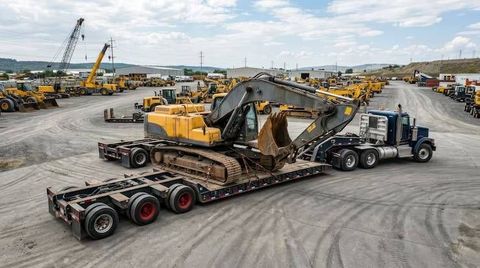
6. Construction and Earthmoving Machinery
Construction machinery performs excavation, lifting, material transport, compaction and site preparation.
Common equipment includes excavators, bulldozers, wheel loaders, motor graders, crawler cranes, road rollers, concrete batching plants and asphalt production equipment.
Heavy machinery is selected according to ground conditions, lifting requirements, working radius, machine capacity, mobility and site constraints.
Construction equipment also includes specialised machines for tunnelling, drilling, demolition, foundation work and road maintenance.
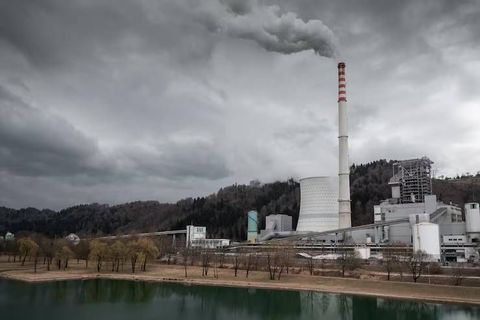
7. Industrial Boilers and Power Machinery
Power-related industrial machinery generates electricity, produces steam or supplies mechanical power for industrial processes.
Equipment can include industrial boilers, steam turbines, gas turbines, generators, heat exchangers, condensers and auxiliary pumps.
These systems are used in power plants, refineries, chemical facilities, manufacturing complexes and combined heat and power installations.
Equipment selection depends on the required output, fuel type, operating pressure, temperature, thermal efficiency and applicable environmental requirements.
8. Industrial Refrigeration and Chillers
Industrial chillers remove heat from liquids or process equipment to maintain required operating temperatures.
Common configurations include air-cooled chillers, water-cooled chillers, screw chillers, centrifugal chillers and absorption chillers.
They are used in plastics manufacturing, pharmaceutical production, food processing, chemical plants, data centres and industrial cooling applications.
System design considers cooling capacity, temperature range, refrigerant characteristics, heat rejection, energy consumption and operating conditions.
9. Plastic and Rubber Processing Machinery
Plastic and rubber manufacturing uses specialised machines to transform raw polymers into finished or semi-finished products.
Major machine types include injection moulding machines, extrusion lines, blow moulding machines, thermoforming machines, rubber mixers, compression moulding presses and pelletising systems.
The equipment is used to manufacture packaging, pipes, automotive components, electrical enclosures, consumer products, industrial seals and rubber components.
Selection depends on polymer type, mould design, product dimensions, output rate, temperature control and material-handling requirements.
10. Inspection and Testing Machinery
Inspection and testing machinery measures dimensions, detects defects and verifies product performance.
Examples include coordinate measuring machines, optical inspection systems, hardness testers, tensile testing machines, ultrasonic testing equipment, industrial X-ray systems and automated machine-vision stations.
These technologies are important in industries where component accuracy, structural integrity and product consistency must be verified.
Testing equipment may be integrated directly into production lines or used in dedicated quality-control laboratories.
Comparison of Major Industrial Machinery Categories
Machinery category | Main function | Common equipment | Major applications |
|---|---|---|---|
CNC and metalworking | Component machining and forming | CNC lathes, mills, laser cutters | Automotive, aerospace, precision engineering |
Automation and robotics | Automated production tasks | Robotic arms, PLC systems | Assembly, welding, inspection |
Material handling | Movement and storage | Conveyors, cranes, forklifts | Warehousing, manufacturing, ports |
Pumps and compressors | Fluid and gas movement | Centrifugal pumps, screw compressors | Water treatment, chemicals, energy |
Packaging and processing | Product preparation and processing | Fillers, mixers, extruders | Food, pharmaceuticals, plastics |
Construction machinery | Excavation and site operations | Excavators, loaders, graders | Construction, mining, infrastructure |
Power machinery | Heat and electricity generation | Boilers, turbines, generators | Power plants, industrial facilities |
Refrigeration equipment | Heat removal and temperature control | Chillers, cooling systems | Food processing, chemicals, manufacturing |
Polymer processing | Plastic and rubber production | Injection moulders, extruders | Packaging, automotive, consumer goods |
Inspection and testing | Quality measurement and verification | CMMs, testing machines, vision systems | Manufacturing, laboratories, engineering |
Manufacturing Technologies Used in Industrial Machinery
Industrial machinery manufacturing combines engineering design, material processing, precision fabrication, mechanical assembly and quality verification.
1. Computer-Aided Design and Engineering
Manufacturers use computer-aided design (CAD) software to create machine components, assemblies and production drawings. Computer-aided engineering tools support structural analysis, thermal calculations, motion studies and simulation.
These technologies help engineers assess component geometry, mechanical loads, clearances and equipment interfaces before physical manufacturing begins.
2. Casting and Forging
Casting produces metal components by pouring molten material into a mould. It is used for machine bases, housings, pump casings, valve bodies and other components with complex shapes.
Forging shapes heated or cold metal through compressive forces. It is commonly used for shafts, gears, connecting components and parts requiring suitable strength and structural integrity.
3. CNC Machining
CNC machining removes material from a workpiece using programmed cutting tools. Turning, milling, drilling, boring and grinding are common operations.
Precision machining is important for bearings, shafts, gears, housings, moulds, turbine components and machine-tool parts.
4. Sheet Metal Fabrication
Sheet metal manufacturing includes cutting, punching, bending, rolling, forming and welding.
Laser cutting, plasma cutting and waterjet cutting are used for different material types and thicknesses. Press brakes and forming machines shape components into required geometries.
These processes are common in machine enclosures, electrical cabinets, industrial frames, ducts and equipment panels.
5. Welding and Joining
Welding joins metal components through heat, pressure or a combination of both. Common methods include gas metal arc welding, gas tungsten arc welding, shielded metal arc welding and laser welding.
Other joining methods include bolting, riveting, adhesive bonding and press fitting. The selected process depends on material compatibility, component design, strength requirements and production conditions.
6. Heat Treatment and Surface Finishing
Heat treatment changes the mechanical properties of metals through controlled heating and cooling. Processes include hardening, tempering, annealing and case hardening.
Surface finishing may involve grinding, polishing, coating, painting, plating and specialised surface treatments. These operations can improve wear resistance, corrosion protection, surface quality or component performance.
7. Electrical and Control-System Integration
Modern industrial machinery incorporates motors, drives, sensors, controllers, electrical panels and safety devices.
Integration includes wiring, programming, communication configuration and verification of machine operating sequences. Complex equipment may use programmable logic controllers, human-machine interfaces and industrial networks.
8. Assembly and Quality Inspection
Manufactured components are assembled into machines or equipment modules. Assembly activities can include bearing installation, shaft alignment, lubrication-system integration, motor fitting and precision adjustment.
Quality checks may include dimensional measurement, vibration testing, electrical testing, pressure testing, load testing and verification of safety functions.
The testing requirements depend on the machinery type and its intended operating environment.
Global Industrial Machinery Manufacturers and Suppliers
The industrial machinery market includes manufacturers specialising in machine tools, automation, construction equipment, power systems, pumps, compressors and processing machinery.
Examples of internationally recognised companies in these sectors include:
Company | Country of origin | Relevant machinery sectors |
|---|---|---|
Siemens | Germany | Industrial automation, drives and control systems |
ABB | Switzerland and Sweden | Robotics, automation and electrification |
FANUC | Japan | CNC systems and industrial robotics |
DMG MORI | Germany and Japan | CNC machine tools and machining centres |
Mazak | Japan | CNC machining and metalworking equipment |
Komatsu | Japan | Construction and mining machinery |
Caterpillar | United States | Heavy construction and earthmoving equipment |
Atlas Copco | Sweden | Compressors, vacuum systems and industrial equipment |
KSB | Germany | Industrial pumps and valves |
Grundfos | Denmark | Pumping systems and fluid technology |
Mitsubishi Heavy Industries | Japan | Power-generation and industrial machinery |
Bosch Rexroth | Germany | Industrial automation, drives and motion control |
These companies operate in different machinery segments. Their product portfolios, technical specifications and regional availability vary by application.
When evaluating a manufacturer or supplier, industrial buyers should consider machine specifications, production capacity, quality certifications, spare-parts availability, technical documentation, installation requirements and maintenance support.
Industrial Applications of Machinery
Automotive Manufacturing
Automotive factories use industrial robots, CNC machining centres, presses, welding systems, conveyors and inspection equipment.
These machines support body fabrication, component machining, painting, assembly and final quality verification.
Aerospace Manufacturing
Aerospace production requires precision machining, specialised forming, composite processing and inspection equipment.
CNC systems, five-axis machining centres, coordinate measuring machines and non-destructive testing equipment are used to manufacture and verify complex components.
Food and Beverage Processing
Food manufacturing uses mixers, grinders, pasteurisers, filling machines, packaging lines, refrigeration systems and automated material-handling equipment.
Machinery must be suitable for the processed materials, cleaning procedures, hygiene requirements and operating temperatures.
Pharmaceutical and Medical Manufacturing
Pharmaceutical production involves blending, granulation, tablet compression, capsule filling, sterile processing and packaging.
Equipment selection considers process control, cleanability, material compatibility, traceability and contamination prevention.
Chemical and Petrochemical Industries
Chemical facilities use reactors, industrial pumps, compressors, heat exchangers, mixers, filtration systems and process-control equipment.
Machinery must be compatible with the chemicals handled, operating pressure, temperature and relevant safety requirements.
Construction and Infrastructure
Construction projects use excavators, cranes, concrete batching plants, road-building equipment, compactors and drilling machinery.
Equipment requirements depend on site access, soil conditions, project scale and the materials being handled.
Energy and Utilities
Power plants and utility facilities rely on turbines, generators, pumps, compressors, boilers, cooling systems and environmental-control equipment.
These machines support electricity generation, water circulation, fuel handling and emissions management.
Warehousing and Logistics
Warehouses use conveyors, forklifts, palletisers, automated storage systems and robotic picking equipment.
Automation can improve material movement and inventory handling when integrated with appropriate warehouse-control systems.
Benefits of Industrial Machinery
Industrial machinery supports a wide range of manufacturing and infrastructure activities.
Production consistency: Machines can perform repeated operations using defined parameters.
Higher throughput: Automated and specialised equipment can process materials continuously or at high speed.
Precision: CNC systems and inspection equipment help achieve specified dimensions and tolerances.
Worker safety: Suitable machinery can reduce exposure to heavy lifting, hazardous processes and repetitive manual tasks.
Process integration: Connected equipment can coordinate material movement and production stages.
Resource utilisation: Properly selected machinery can reduce material waste and unnecessary energy use.
Quality monitoring: Sensors and testing systems can identify selected process deviations and defects.
Actual benefits depend on machine design, installation, operating practices, maintenance and integration with the wider production process.
Challenges in Industrial Machinery Operations
Initial System Complexity
Large machinery installations may require foundations, utilities, safety barriers, control systems and modifications to existing production areas.
Energy Consumption
Motors, compressors, heating systems, hydraulic equipment and cooling systems can consume substantial energy. Appropriate sizing, efficient drives and regular maintenance help manage consumption.
Maintenance Requirements
Wear, vibration, lubrication problems, contamination and component fatigue can affect machine reliability. Maintenance schedules should reflect the manufacturer's instructions and actual operating conditions.
Skills and Training
Operators and maintenance teams need suitable training in machine operation, programming, troubleshooting, safety and equipment inspection.
Integration with Existing Equipment
Different machines may use incompatible communication protocols, control architectures or mechanical interfaces. Integration planning helps reduce commissioning difficulties.
Downtime and Spare Parts
Equipment failures can interrupt production. Spare-parts planning, condition monitoring and preventive maintenance can help reduce disruption.
Factors to Consider When Selecting Industrial Machinery
Selecting machinery requires a clear understanding of the process and production objectives.
Application requirements: Define the operations the machine must perform.
Production capacity: Estimate required output, cycle time and expected operating hours.
Material compatibility: Confirm that the machine can process the intended materials safely and accurately.
Precision and quality: Establish dimensional tolerances, surface-finish requirements and inspection needs.
Energy and utilities: Check electrical supply, compressed air, water, cooling and other utility requirements.
Available space: Review the plant layout, foundations, access routes and maintenance clearances.
Automation level: Determine whether manual, semi-automatic or fully automated operation is appropriate.
Safety compliance: Verify guarding, emergency stops, interlocks and relevant machine-safety requirements.
Maintenance access: Assess service intervals, spare parts, lubrication points and replacement procedures.
Expansion capability: Consider future production increases and compatibility with additional equipment.
A complete technical assessment should evaluate the machine alongside its tooling, auxiliary systems, control equipment and installation requirements.
Maintenance and Safety Considerations
Regular maintenance helps industrial machinery operate reliably and reduces the likelihood of unexpected failures.
Common maintenance activities include lubrication, filter replacement, belt inspection, bearing checks, electrical inspection, vibration analysis and cleaning of critical components.
Condition-monitoring systems can track temperature, vibration, pressure, current and other operating indicators to identify potential problems before a failure occurs.
Machine safety procedures should address moving parts, pinch points, electrical hazards, hot surfaces, pressurised systems and suspended loads. Appropriate guarding, lockout procedures, operator training and scheduled safety inspections are essential.
Maintenance and inspection activities should follow the manufacturer's documentation and applicable workplace safety requirements.
Frequently Asked Questions
What is industrial machinery?
Industrial machinery includes mechanical and electromechanical equipment used for manufacturing, processing, material handling, construction, energy generation and other industrial activities.
What are the main types of industrial machinery?
Major categories include CNC machines, automation systems, material-handling equipment, pumps, compressors, packaging machines, construction machinery, industrial boilers and inspection equipment.
What is the difference between industrial machinery and industrial equipment?
The terms overlap. Machinery generally refers to machines with moving or interacting mechanical components, while industrial equipment can also include auxiliary systems, instruments, tanks, electrical panels and other supporting installations.
Which industries use industrial machinery?
Automotive, aerospace, food processing, pharmaceuticals, chemicals, construction, energy, mining, logistics and many other sectors depend on industrial machinery.
How is industrial machinery manufactured?
Manufacturing can involve engineering design, casting, forging, CNC machining, sheet metal fabrication, welding, heat treatment, surface finishing, assembly and quality inspection.
What factors affect industrial machinery selection?
Key factors include application, production capacity, material compatibility, precision, energy requirements, available space, automation, safety and maintenance.
How can industrial machinery efficiency be improved?
Efficiency can be improved through appropriate machine sizing, preventive maintenance, suitable automation, energy-efficient motors, optimised operating parameters and condition monitoring.
What is the role of automation in industrial machinery?
Automation uses controllers, sensors, software and mechanical systems to coordinate operations, reduce repetitive manual work and maintain consistent process parameters.
Conclusion
Industrial machinery forms the foundation of modern manufacturing, processing, construction and energy production. From CNC machining centres and robotic systems to industrial pumps, compressors and heavy construction equipment, each category performs specialised tasks that support industrial operations.
Manufacturing technologies such as precision machining, casting, forging, welding and automated assembly enable the production of complex machinery for different applications. Effective equipment selection requires attention to operating requirements, production capacity, material compatibility, safety, energy use and maintenance.
As industrial facilities adopt advanced controls, connected sensors and robotics, machinery systems are increasingly integrated with production monitoring and data-driven maintenance. Proper engineering, manufacturing quality and planned maintenance remain essential for reliable industrial performance.