Industrial 3D Printing vs Traditional Manufacturing: Explore Differences, Benefits, Facts, Tips, and Expert Insights
Manufacturing technologies continue to evolve as industries seek greater efficiency, flexibility, and innovation. Two major production approaches dominate discussions today: industrial 3D printing and traditional manufacturing. While both methods are used to create products and components, they differ significantly in process, materials, scalability, and application.
Understanding these differences helps businesses, engineers, students, researchers, and technology enthusiasts evaluate how modern manufacturing is changing and where each approach provides value.
Understanding Industrial 3D Printing and Traditional Manufacturing
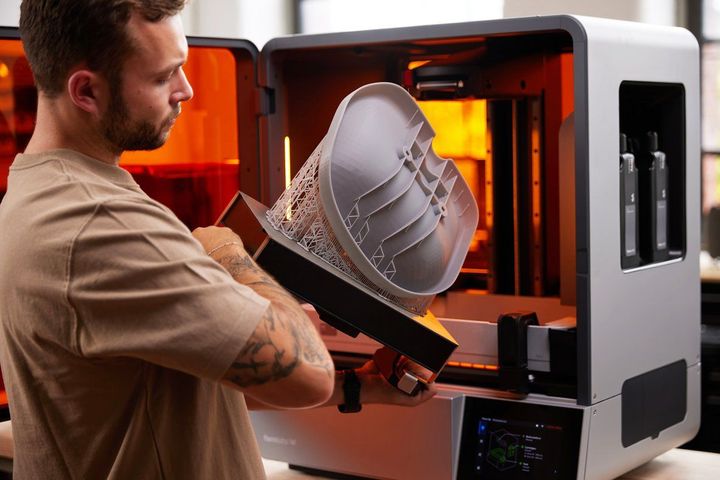
Industrial 3D printing, also known as additive manufacturing, creates objects layer by layer using digital design files. Materials such as metals, polymers, composites, and ceramics can be used to build complex structures directly from computer models.
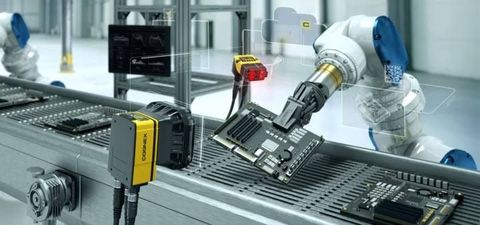
Traditional manufacturing refers to established production methods including machining, casting, molding, forging, and stamping. These techniques generally remove material, shape raw materials, or form products through molds and tooling.
The following table highlights the fundamental differences:
| Feature | Industrial 3D Printing | Traditional Manufacturing |
|---|---|---|
| Production Method | Additive (layer-by-layer) | Subtractive or formative |
| Tooling Requirement | Minimal | Often extensive |
| Design Complexity | High flexibility | Limited by tooling |
| Material Waste | Typically lower | Often higher |
| Customization | Highly adaptable | More challenging |
| Production Volume | Small to medium batches | Large-scale production |
| Lead Time | Faster for prototypes | Efficient for mass production |
| Initial Setup | Lower tooling needs | Significant tooling preparation |
Industrial 3D printing emerged to address challenges such as long development cycles, expensive tooling, and limited design flexibility. Traditional manufacturing remains essential because it supports large-scale production with consistent quality and efficiency.
Why Manufacturing Technology Matters Today
Manufacturing affects nearly every industry, including aerospace, automotive, healthcare, energy, construction, electronics, and consumer products.
Organizations increasingly face challenges such as:
- Supply chain disruptions
- Demand for product customization
- Sustainability requirements
- Faster innovation cycles
- Material optimization goals
- Digital transformation initiatives
Industrial 3D printing helps address several of these challenges by enabling localized production, rapid prototyping, and complex geometries that may be difficult using conventional methods.
Traditional manufacturing continues to provide advantages where high-volume production, standardized quality, and established workflows are required.
Key Benefits Comparison
| Area | Industrial 3D Printing | Traditional Manufacturing |
|---|---|---|
| Product Development | Rapid iteration | Slower changes |
| Design Freedom | Excellent | Moderate |
| Mass Production | Limited | Excellent |
| Custom Components | Strong capability | Less flexible |
| Repeatability | Improving rapidly | Highly established |
| Production Speed for Large Volumes | Moderate | Very high |
Expert Insights on Manufacturing Selection
Industry experts often emphasize that industrial 3D printing is not a complete replacement for traditional manufacturing. Instead, many organizations combine both approaches.
For example:
- Prototypes may be produced through additive manufacturing.
- Final large-scale production may use injection molding or machining.
- Specialized components may be 3D printed while standard parts are manufactured conventionally.
This hybrid manufacturing strategy allows organizations to leverage the strengths of both technologies.
Manufacturing Trends and Recent Updates
The manufacturing landscape has experienced notable developments during 2025 and early 2026.
Several major trends have influenced industrial production:
- Increased adoption of metal additive manufacturing for aerospace and defense applications.
- Expanded use of artificial intelligence in production monitoring.
- Growth in digital twin technology for manufacturing simulation.
- Greater focus on sustainable manufacturing practices.
- Improved industrial-grade printing materials.
- Expansion of automated production systems.
Recent industry reports published during 2025 highlighted continued growth in additive manufacturing adoption across sectors including healthcare, automotive engineering, and industrial equipment production.
Another important trend involves distributed manufacturing networks. Organizations are increasingly exploring digital inventory models where parts are produced closer to end-use locations rather than stored in large warehouses.
Growth Areas in Industrial 3D Printing
Industrial Applications Growth Trend

Healthcare           ████████████
Aerospace            ███████████████
Automotive           █████████████
Industrial Equipment ███████████
Construction         █████████
Energy               ████████
The graph illustrates how aerospace, automotive, and healthcare continue to be among the strongest adopters of advanced additive manufacturing technologies.
Environmental and Sustainability Considerations
Sustainability has become a major factor in manufacturing decisions.
Industrial 3D printing may contribute to:
- Reduced material waste
- Lightweight product designs
- Optimized material utilization
- Localized production opportunities
- Reduced inventory requirements
Traditional manufacturing also supports sustainability through:
- High-volume efficiency
- Established recycling systems
- Energy-efficient production lines
- Long-term operational optimization
The environmental impact ultimately depends on material selection, energy usage, transportation requirements, and production scale.
Manufacturing Regulations and Policy Considerations
Manufacturing technologies are influenced by a variety of regulations and standards worldwide.
Common regulatory areas include:
- Product safety requirements
- Quality management standards
- Environmental compliance regulations
- Workplace safety standards
- Material certification requirements
- Industry-specific production guidelines
For industrial 3D printing, additional considerations may include:
- Material traceability
- Digital file security
- Certification of printed components
- Process validation requirements
Industries such as aerospace, medical devices, and energy often require rigorous testing and certification before manufactured parts can be deployed.
Governments in many regions have also introduced advanced manufacturing programs supporting:
- Smart manufacturing initiatives
- Industrial automation adoption
- Digital transformation projects
- Research and development activities
- Workforce training programs
Organizations should always review applicable national and regional regulations relevant to their industry sector.
Helpful Tools and Resources
Several tools and resources can help professionals understand or work with manufacturing technologies.
Design and Engineering Software
- Computer-Aided Design (CAD) platforms
- Product lifecycle management systems
- Simulation software
- Engineering analysis tools
Manufacturing Planning Resources
- Production scheduling tools
- Digital manufacturing platforms
- Material selection databases
- Quality management systems
Additive Manufacturing Resources
- Build preparation software
- Material compatibility guides
- Print validation tools
- Design-for-additive-manufacturing templates
Educational Resources
- Manufacturing research publications
- Technical standards documentation
- Engineering training platforms
- Industrial technology journals
Practical Tips for Understanding Manufacturing Methods
When comparing industrial 3D printing and traditional manufacturing, consider the following factors:
- Evaluate production volume requirements.
- Assess component complexity.
- Review material performance needs.
- Consider quality and certification requirements.
- Analyze supply chain flexibility.
- Examine sustainability objectives.
- Understand lifecycle maintenance needs.
- Consider digital manufacturing integration opportunities.
Experts generally recommend selecting manufacturing methods based on specific project requirements rather than assuming one technology is universally superior.
Frequently Asked Questions
What is the biggest difference between industrial 3D printing and traditional manufacturing?
Industrial 3D printing builds objects layer by layer from digital models, while traditional manufacturing typically shapes, removes, or forms material using established processes such as machining, casting, or molding.
Is industrial 3D printing replacing traditional manufacturing?
No. Most experts view additive manufacturing as a complementary technology. Many organizations use a combination of both methods depending on production goals, complexity requirements, and volume needs.
Which industries use industrial 3D printing most frequently?
Aerospace, healthcare, automotive, industrial equipment, energy, and construction sectors are among the most active users of industrial additive manufacturing technologies.
Why is industrial 3D printing important for innovation?
It allows engineers and designers to create complex geometries, rapidly test prototypes, reduce development cycles, and explore design possibilities that may be difficult with conventional production methods.
What role does digital manufacturing play in modern industry?
Digital manufacturing connects design, simulation, production, quality control, and data analytics into an integrated workflow, helping organizations improve efficiency and decision-making.
Conclusion
Industrial 3D printing and traditional manufacturing each play vital roles in modern production environments. Additive manufacturing offers exceptional design flexibility, rapid prototyping capabilities, and opportunities for customization, while traditional manufacturing remains highly effective for large-scale production and established industrial workflows.
As manufacturing technology continues to evolve through automation, digitalization, artificial intelligence, and advanced materials, organizations increasingly adopt hybrid strategies that combine the strengths of both approaches. Understanding the differences, benefits, trends, regulations, and available resources enables better decision-making in an increasingly advanced manufacturing landscape.