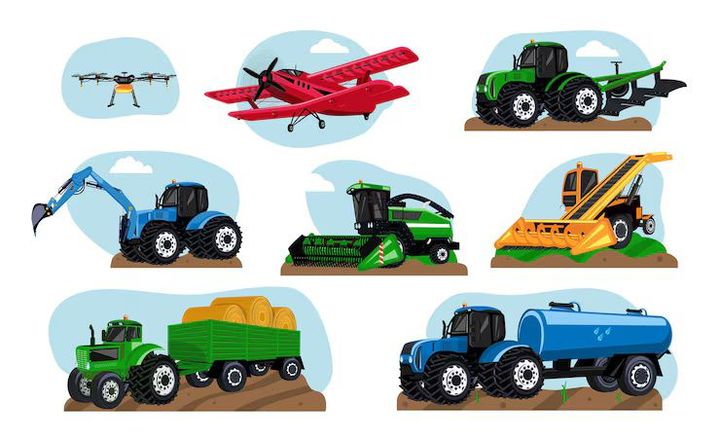
Farming Machinery Guide: Explore Modern Agricultural Equipment
Farming Machinery plays an important role in modern agriculture by helping farmers complete tasks more efficiently and accurately. Machines such as the Tractor, Harvester, Cultivator, Seeder, Rotavator, Sprayer, and Plough support different farming activities throughout the crop cycle. These tools help improve productivity, reduce manual labor, and support better land management.
Agricultural equipment has changed significantly over the years. Traditional farming methods relied heavily on manual work and animal power, while modern systems use advanced machinery and technology. Today, many farms use equipment with automated controls, GPS tracking, and fuel-efficient systems to improve field operations.
Context
Farming machinery refers to mechanical equipment used in agricultural activities such as soil preparation, planting, irrigation, crop protection, and harvesting. Different machines are designed for specific tasks and help farmers manage larger areas of land more effectively.
Common Types of Farming Machinery
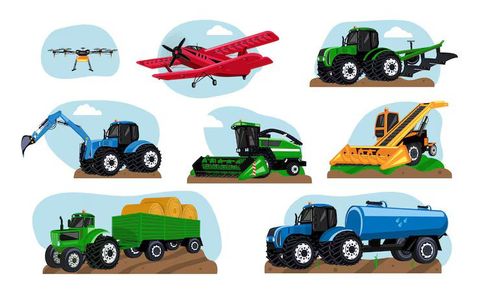
- Tractor – used for pulling equipment and transporting materials
- Harvester – used to collect mature crops from fields
- Cultivator – helps loosen soil and remove weeds
- Seeder – places seeds into the soil at proper depth and spacing
- Rotavator – prepares soil by breaking and mixing it
- Sprayer – applies fertilizers and crop protection materials
- Plough – turns and loosens soil before planting
Modern agricultural equipment is used in small farms as well as large commercial farming operations. Machinery selection usually depends on crop type, land size, and soil conditions.
Evolution of Agricultural Equipment
Earlier farming systems depended mainly on simple hand tools. Over time, engines and mechanical systems improved farming speed and accuracy. Today, many machines include digital monitoring systems and automated steering technologies.
Some modern developments include:
- Precision farming tools
- GPS-enabled Tractor systems
- Sensor-based Sprayer equipment
- Fuel-efficient Harvester models
- Smart Seeder technologies
These advancements aim to improve productivity while reducing resource waste.
Importance
Farming machinery supports agricultural production in many ways. It allows farmers to complete seasonal tasks within shorter time periods, which is especially important during planting and harvesting seasons.
Benefits of Modern Farming Machinery
| Machinery | Main Purpose | Agricultural Benefit |
|---|---|---|
| Tractor | Pulling and transport | Improves operational efficiency |
| Harvester | Crop collection | Reduces harvesting time |
| Cultivator | Soil preparation | Supports weed management |
| Seeder | Seed placement | Improves planting accuracy |
| Rotavator | Soil mixing | Creates better seedbeds |
| Sprayer | Crop treatment | Supports crop protection |
| Plough | Soil turning | Improves soil aeration |
Modern machinery also helps reduce physical strain on workers. In regions with labor shortages, equipment can help maintain agricultural output without relying entirely on manual work.
The use of machines also affects:
- Food production systems
- Rural economies
- Farm productivity
- Resource management
- Crop quality and consistency
Efficient machinery use can contribute to better water use, reduced fuel consumption, and improved field management practices.
Recent Updates
The agricultural equipment industry has experienced several developments between 2024 and 2026. Many manufacturers and agricultural organizations are focusing on sustainability, automation, and digital agriculture.
Technology Trends in 2024–2026
One major trend is the use of smart farming systems. Modern Tractor and Harvester models now include GPS navigation, automated steering, and real-time monitoring systems. These technologies help improve precision during field operations.
Electric and hybrid farming machinery has also gained attention. Some companies are developing lower-emission equipment to reduce environmental impact and improve fuel efficiency.
Additional developments include:
- AI-supported crop monitoring
- Drone-assisted Sprayer systems
- Autonomous field machinery
- Data-driven farming software
- Compact equipment for small farms
Many agricultural equipment manufacturers are also improving machine safety systems and operator comfort.
Sustainable Agriculture Practices
Environmental concerns are influencing machinery development. New equipment designs focus on reducing soil damage, fuel usage, and chemical waste.
Examples include:
- Low-pressure tires to reduce soil compaction
- Precision Seeder systems for accurate seed use
- Smart Sprayer technology to minimize overapplication
- Fuel-efficient Rotavator and Plough designs
These improvements support long-term soil health and more sustainable agricultural practices.
Laws or Policies
Agricultural machinery use is influenced by national and regional regulations. Governments often create policies related to safety standards, emissions, and agricultural modernization programs.
Common Regulatory Areas
Some important policy areas include:
- Equipment safety standards
- Engine emission regulations
- Farm subsidy programs
- Agricultural mechanization schemes
- Operator training requirements
Many countries also encourage modern farming practices through financial assistance programs for agricultural equipment adoption.
In India, agricultural mechanization initiatives support farmers through machinery access programs and technology awareness campaigns. Government departments also promote efficient water use and sustainable farming techniques through agricultural development policies.
Environmental regulations are becoming stricter in many regions. Machinery manufacturers must meet updated emission standards for engines and fuel systems. These rules aim to reduce air pollution and improve environmental sustainability.
Tools and Resources
Farmers and agricultural students often use digital platforms and planning tools to improve farm management and equipment understanding.
Useful Agricultural Resources
- Weather forecasting platforms
- Soil health monitoring applications
- Crop planning calculators
- Fuel usage tracking tools
- Farm management software
Educational institutions and agricultural departments also publish:
- Machinery maintenance guides
- Safety manuals
- Crop-specific farming recommendations
- Training materials for equipment handling
Digital agriculture platforms now help farmers monitor crop conditions, track machine performance, and manage farm records more efficiently.
Machinery Maintenance Tips
Regular maintenance helps improve machine lifespan and operational efficiency.
Basic maintenance practices include:
- Checking engine oil regularly
- Cleaning Seeder and Sprayer components
- Inspecting tires and hydraulic systems
- Monitoring fuel and coolant levels
- Replacing worn-out parts when necessary
Proper storage and scheduled inspections also help reduce equipment downtime during farming seasons.
FAQs
What is the main purpose of Farming Machinery?
Farming Machinery helps farmers perform agricultural tasks more efficiently, including soil preparation, planting, spraying, and harvesting.
How does a Tractor support farm operations?
A Tractor provides power for pulling equipment, transporting materials, and operating multiple agricultural tools in the field.
What is the difference between a Cultivator and a Rotavator?
A Cultivator mainly loosens soil and removes weeds, while a Rotavator breaks and mixes soil to prepare seedbeds.
Why is a Seeder important in farming?
A Seeder places seeds at proper depth and spacing, which helps improve crop growth and planting consistency.
What factors affect machinery selection?
Important factors include land size, crop type, soil condition, fuel efficiency, and operational requirements.
Conclusion
Farming machinery has become an essential part of modern agriculture. Equipment such as the Tractor, Harvester, Cultivator, Seeder, Rotavator, Sprayer, and Plough helps improve efficiency and supports better crop management practices. Technological advancements between 2024 and 2026 continue to shape agricultural operations through automation, precision farming, and sustainable equipment development.
Government policies, environmental standards, and digital tools are also influencing the future of agricultural machinery. As farming methods continue to evolve, modern equipment will remain important for improving productivity, resource management, and long-term agricultural sustainability.