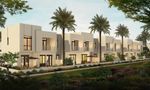
This housing design developed as cities expanded and required more efficient use of residential land. Townhouses provide more interior space than many apartment units while remaining more compact than large detached houses. Because of this balance, they are commonly included in organized suburban communities.
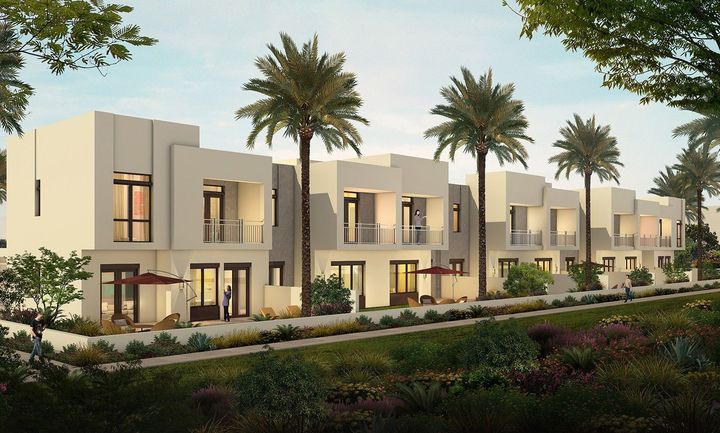
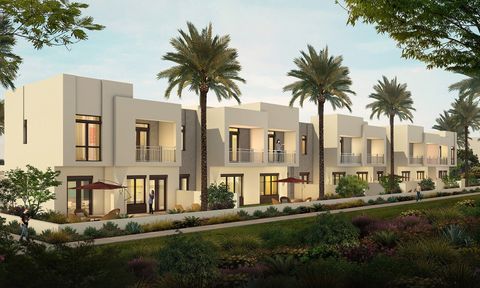
In Dubai, townhouse developments are often located within master-planned residential districts designed with internal road networks, green spaces, and pedestrian areas. These neighborhoods typically feature structured layouts where houses are arranged along landscaped streets.
Townhouses usually contain multiple floors. The ground floor commonly includes living spaces and kitchen areas, while upper levels are used for bedrooms and private rooms. Some homes also include rooftop terraces or small garden spaces connected to the living area.
Urban planners frequently use townhouse layouts to create neighborhoods that feel open and organized while still supporting moderate population density. This makes them a common housing form in expanding residential zones around Dubai.
Why Townhouse Communities Are Important Today
Townhouse housing models have gained attention in many cities because they support balanced urban development. They provide a middle option between compact apartment living and large standalone homes.
Several factors explain why townhouse communities have become significant in modern urban planning.
Efficient land use
Townhouses allow cities to house more residents without building extremely tall residential towers. This creates neighborhoods with moderate density while still maintaining spacious street layouts.
Community-focused environments
Many townhouse communities are planned with shared neighborhood features that encourage interaction and everyday convenience.
Common features include:
These elements help form organized residential environments where daily activities occur within the same district.
Flexible living arrangements
Townhouses often include multiple floors and separate rooms that support different living arrangements. This layout provides greater interior flexibility than many single-level residences.
Typical townhouse layouts may include:
Urban expansion support
Cities experiencing population growth often introduce townhouse communities in newly developed areas. These neighborhoods allow urban expansion while maintaining structured infrastructure and transportation connections.Recent Trends in Townhouse Development
Over the past year, housing development in Dubai has continued evolving as the city expands residential infrastructure and introduces new planning strategies.
Several trends observed during 2024 and 2025 illustrate how townhouse communities are changing.
Growth of master-planned residential districts
New residential zones are being developed with integrated planning. These communities are designed with transportation access, public spaces, and neighborhood facilities already included in the layout.
Townhouses are commonly used within these developments to create residential blocks that combine private homes with shared amenities.
Focus on sustainable housing design
Many newer developments include environmental planning considerations. These may include:
-
Energy-efficient cooling systems
-
Improved building insulation
-
Water-efficient landscaping
-
Solar-ready rooftops
These design features aim to improve long-term sustainability in residential districts.
Smart home infrastructure
Modern townhouse communities increasingly include digital infrastructure. Some homes are designed to support:
These technologies reflect broader changes in urban housing where digital tools are integrated into residential environments.
Neighborhood walkability
Urban planners are increasingly focusing on walkable communities. Townhouse neighborhoods often include connected pathways that link homes with parks, schools, and retail areas within the same district.
Housing Regulations and Planning Policies
Residential development in Dubai operates under a structured regulatory system that oversees construction standards, land use, and housing policies.
Government authorities responsible for housing and urban development ensure that residential projects meet planning guidelines and infrastructure requirements.
Key areas regulated through housing policies include:
Land registration and property records
Residential property registration systems maintain official records of land ownership and development approvals. These records help ensure transparency and legal documentation within the housing sector.
Urban zoning regulations
City planning authorities establish zoning guidelines that determine how land can be used. These rules influence the placement of residential communities, infrastructure, and public spaces.
Construction standards
Housing developments must comply with building regulations related to structural safety, environmental standards, and infrastructure connections.
These policies help ensure that townhouse communities include essential services such as roads, drainage systems, utilities, and public facilities.
Community infrastructure planning
Planning policies also require large residential developments to include supporting infrastructure such as:
-
Schools
-
Healthcare facilities
-
Parks and open spaces
-
Transportation access
This approach helps create self-contained neighborhoods that support everyday living within the same district.
Helpful Tools and Resources for Housing Research
People researching townhouse communities often use a variety of digital tools and informational resources to understand residential environments and urban planning structures.
Several types of tools can assist with housing research and location analysis.
Urban planning information portals
Government planning portals and public data platforms provide information about land development, zoning rules, and residential planning frameworks.
These portals often include community maps, infrastructure plans, and planning guidelines.
Digital mapping platforms
Mapping tools allow users to explore neighborhood layouts, nearby facilities, and transportation networks.
Common uses include:
-
Viewing residential layouts
-
Identifying parks and public spaces
-
Exploring nearby schools or facilities
-
Analyzing transportation routes
Urban research publications
Urban development reports and housing research studies provide insights into population growth, residential density, and long-term planning strategies.
These publications help readers understand how townhouse communities fit into broader city expansion plans.
Housing comparison tools
Some research platforms provide calculators and comparison templates that allow users to evaluate different housing structures such as apartments, townhouses, and detached homes based on layout, density, and neighborhood design.Example Layout of a Typical Townhouse Community
| Feature | Description |
|---|
| Residential Layout | Row houses with shared side walls |
| Floors | Usually two or three levels |
| Outdoor Areas | Small gardens, terraces, or courtyards |
| Shared Spaces | Parks, walkways, and playgrounds |
| Infrastructure | Roads, utilities, and parking areas |
Housing Density Comparison
| Housing Type | Density Level | Typical Design |
|---|
| Apartment Buildings | High density | Multi-story vertical housing |
| Townhouses | Medium density | Row homes with multiple floors |
| Detached Houses | Low density | Standalone homes on larger plots |
Urban planners often combine these housing types to create balanced residential neighborhoods.
Frequently Asked Questions
What is a townhouse in residential planning?
A townhouse is a multi-level home that shares side walls with neighboring houses but maintains a private entrance and often includes outdoor space such as a terrace or small garden.
Why are townhouses used in urban development?
Townhouses help cities accommodate population growth while maintaining organized neighborhoods. They provide moderate housing density without requiring high-rise buildings.
How are townhouse communities usually designed?
Most townhouse communities include internal roads, landscaped parks, pedestrian paths, and shared recreational areas. These features create structured residential environments.
Are townhouse communities part of master-planned neighborhoods?
Yes. Many townhouse developments are included in large residential districts that also contain schools, public services, and transportation connections.
How do townhouse developments support sustainable planning?
Townhouses allow efficient land use while maintaining comfortable living spaces. Many modern developments also include energy-efficient building designs and green spaces.
Conclusion
Townhouse living has become an important housing model within Dubai’s expanding residential landscape. These homes provide a balanced approach to urban living by combining private residential space with organized community environments.
As the city continues growing, townhouse communities play a key role in supporting structured neighborhood development. Their design allows planners to maintain moderate residential density while incorporating parks, walkways, and local infrastructure.
Recent development trends highlight increasing attention to sustainability, smart-home technology, and walkable neighborhoods. These changes reflect broader shifts in urban planning aimed at improving the quality and efficiency of residential areas.
Understanding townhouse living helps illustrate how modern cities adapt housing strategies to support population growth, environmental planning, and long-term urban development.