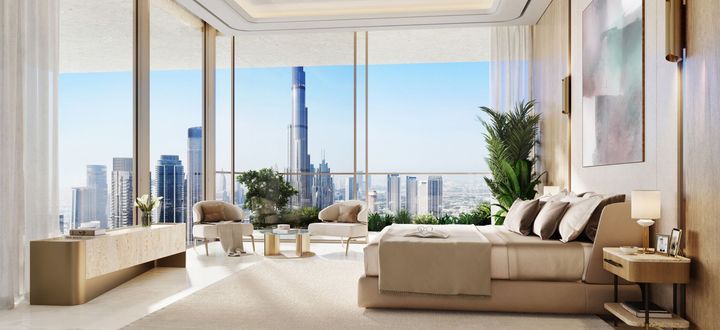
The concept of apartment living in Dubai emerged as the city expanded during the early 2000s, when population growth and international migration increased the demand for structured residential spaces. High-rise construction became a practical solution for urban planning because it allows a large number of residents to live within limited land areas while maintaining access to transportation, commercial districts, and public facilities.
Today, apartment developments are designed with integrated infrastructure such as parking structures, shared recreational spaces, security systems, and building management services. Many residential towers are part of planned communities that include parks, schools, shopping areas, and public transit links.
Dubai’s residential sector is also recognized for architectural diversity. Some towers feature contemporary glass façades, while others incorporate regional design influences. Waterfront areas and master-planned districts often include apartment towers positioned around lakes, canals, or landscaped public spaces.
Because of this large and diverse housing supply, apartment living has become a central component of Dubai’s real estate ecosystem.
Why Dubai’s Apartment Market Matters Today
The apartment sector in Dubai plays an important role in supporting the city’s economic and demographic growth. Residential towers accommodate professionals, entrepreneurs, families, and international residents who relocate to the city for work, education, or business opportunities.
Several factors explain why the apartment market continues to receive attention:
• Population growth: Dubai’s population has increased steadily due to international migration and business expansion.
• Urban planning efficiency: Vertical housing allows the city to manage land usage efficiently while maintaining transportation networks and commercial districts.
• Economic activity: Construction, infrastructure, and property management contribute significantly to the broader economy.
• Global mobility: Many international professionals prefer apartment living because of convenience and proximity to business centers.
• Infrastructure development: Public transportation systems and road networks often connect directly to high-density residential districts.
Another reason the topic matters is the role apartments play in shaping lifestyle patterns. Modern residential towers frequently integrate fitness facilities, shared workspaces, and community areas that support urban living.
The apartment sector also influences urban planning decisions. When city authorities evaluate infrastructure expansion, such as metro lines or highway corridors, residential density often becomes an important factor in determining where projects are prioritized.
Recent Developments and Market Trends
Over the past year, several trends have influenced the residential apartment landscape in Dubai. These developments reflect changes in technology, population dynamics, and urban planning strategies.
One noticeable trend involves the growth of mixed-use communities where residential towers are located alongside offices, retail areas, and leisure spaces. This design reduces commuting distances and supports walkable neighborhoods.
Another trend is the increasing emphasis on sustainability and energy efficiency in residential buildings. New apartment towers often include features such as smart energy systems, efficient cooling technology, and environmentally responsible building materials.
In 2024 and 2025, city planners also highlighted smart-city technologies within residential developments. These technologies include digital building access systems, automated maintenance monitoring, and mobile-based resident services.
The table below summarizes several recent trends shaping the apartment landscape.
| Trend | Description | Impact on Residents |
|---|
| Smart Buildings | Digital building management and automated systems | Greater efficiency and convenience |
| Mixed-Use Communities | Residential towers integrated with retail and offices | Reduced commuting distances |
| Sustainable Construction | Energy-efficient materials and cooling systems | Environmental benefits |
| Urban Density Planning | More high-rise developments in key districts | Efficient land utilization |
Market analysts have also observed a growing interest in waterfront districts and integrated community environments. These developments combine residential towers with parks, pedestrian paths, and waterfront promenades.
Another development involves data-driven property analytics. Real estate platforms increasingly publish market reports that analyze trends in occupancy patterns, development pipelines, and construction activity.
These insights help researchers, planners, and policymakers understand how residential supply evolves over time.
Laws, Regulations, and Governance
Dubai’s residential property sector operates within a structured regulatory framework managed by government authorities. The primary regulatory body responsible for overseeing property activities is the Dubai Land Department.
Within this authority, the Real Estate Regulatory Agency (often referred to as RERA) plays a major role in establishing rules and transparency standards for the property market.
Key regulatory objectives include:
• Maintaining accurate property registration records
• Ensuring transparency in development projects
• Regulating brokerage and real estate advertising
• Protecting stakeholders involved in property transactions
• Monitoring escrow accounts related to development projects
Another important regulatory mechanism involves the official property registration system, which records ownership data, project information, and legal documentation. This digital registry helps ensure clarity and accountability within the property sector.
Urban planning regulations also guide how apartment towers are constructed. These rules may include building height limits, zoning classifications, and infrastructure planning guidelines.
For example, certain districts are designated for high-density residential towers, while others emphasize mixed-use developments or commercial activity.
Helpful Tools and Information Resources
People researching apartment living in Dubai often rely on digital tools and official platforms that provide data, statistics, and regulatory information.
One of the main government platforms is the Dubai REST, a mobile application developed by the Dubai Land Department. The app allows users to access property records, verify documentation, and explore official market information.
In addition to government platforms, several real estate data portals publish reports, market insights, and residential trends.
Examples include:
• Bayut
• Property Finder
These platforms typically provide:
• Community guides and neighborhood insights
• Data visualizations related to residential trends
• Market analysis reports
• Interactive maps of residential districts
Other useful resources include urban planning reports and real estate research publications produced by consulting firms and academic institutions.
Some organizations also provide online calculators that estimate mortgage eligibility, building maintenance projections, or property valuation trends. These tools can help individuals understand broader market dynamics without focusing on transactional activities.
Frequently Asked Questions About Dubai Apartments
What types of apartments are common in Dubai?
Dubai offers several apartment formats including studio units, one-bedroom apartments, multi-bedroom residences, and penthouse units in high-rise towers. Many buildings include shared amenities such as gyms, pools, and community areas.
Are apartment buildings located across all districts of the city?
Yes. Apartment towers are distributed throughout multiple districts, including business centers, waterfront communities, and suburban residential areas.
Who regulates the residential property sector in Dubai?
The sector is regulated by the Dubai Land Department and its regulatory arm, the Real Estate Regulatory Agency, which establish property rules and registration procedures.
What information sources help people understand the market?
Digital platforms such as Bayut, Property Finder, and the Dubai REST app provide data insights, property information, and official records.
Why are apartments popular in Dubai?
Apartments provide efficient housing in a city with a large international population. High-rise developments support urban density, infrastructure access, and integrated community planning.
Final Thoughts on Dubai’s Apartment Landscape
Apartments represent a central component of urban life in Dubai. As the city continues to grow, residential towers remain an important solution for accommodating population expansion while maintaining efficient land use.
The sector is supported by a structured regulatory system led by the Dubai Land Department and the Real Estate Regulatory Agency, which oversee property registration, development guidelines, and transparency standards.
Recent trends highlight the integration of smart-building technologies, environmentally responsible construction, and mixed-use community planning. These developments reflect broader global shifts in urban design and residential living.
At the same time, digital tools and research platforms have improved access to market data and regulatory information, allowing residents, analysts, and researchers to better understand the residential landscape.
As infrastructure expands and new communities emerge, apartment living will likely remain a defining feature of Dubai’s evolving urban environment.