Explore Industrial Hoist System Applications in Industrial Operations
An industrial hoist system is a mechanical lifting solution designed to raise, lower, and move heavy loads within industrial environments. These systems play an important role in manufacturing plants, warehouses, construction facilities, logistics centers, mining operations, and processing industries.
The primary purpose of an industrial hoist system is to improve material handling efficiency while supporting workplace safety and productivity. By reducing manual lifting requirements, industrial hoists help organizations manage heavy materials more effectively and maintain consistent operational workflows.
Industrial hoist systems are available in different capacities and configurations to accommodate various industrial requirements, from light-duty lifting tasks to large-scale heavy-load applications.
Understanding How an Industrial Hoist System Works
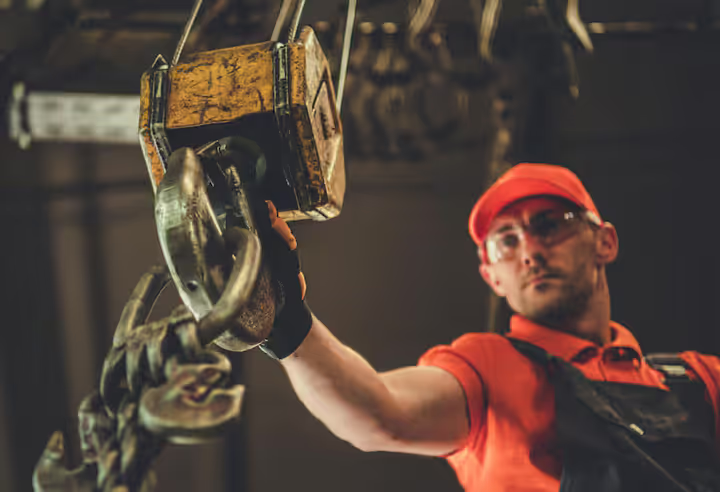
An industrial hoist system uses a motorized or manual mechanism to lift and lower loads through chains, wire ropes, drums, gears, and supporting structures.
The basic operation typically follows these steps:
- The load is attached using hooks, slings, or lifting accessories.
- The lifting mechanism generates upward or downward motion.
- The chain or wire rope transfers lifting force.
- Control systems regulate movement speed and positioning.
- Braking systems secure the load during operation.
Electric hoists use motors and gearboxes to automate lifting functions, while manual hoists rely on human force and mechanical advantage.
The efficiency of the system depends on proper load distribution, lifting capacity, and maintenance practices.
Main Components of an Industrial Hoist System
Lifting Mechanism
- Electric motor or manual drive
- Gear reduction system
- Drum or chain wheel
- Braking unit
Load Handling Components
- Hooks
- Shackles
- Slings
- Load chains
- Wire ropes
Structural Components
- Bridge beams
- Runway systems
- Trolleys
- Support frames
Control Components
- Pendant controls
- Wireless controllers
- Variable frequency drives
- Load monitoring systems
Safety Components
- Emergency stop systems
- Overload protection devices
- Limit switches
- Anti-collision mechanisms
These components work together to ensure reliable and controlled lifting operations.
Types of Industrial Hoist Systems
Industrial facilities use different hoist systems depending on operational requirements.
| Hoist Type | Lifting Medium | Common Applications | Key Characteristics |
|---|---|---|---|
| Chain Hoist | Steel Chain | Workshops and assembly lines | Compact and durable |
| Wire Rope Hoist | Wire Rope | Heavy industrial operations | High lifting capacity |
| Electric Hoist | Motorized System | Manufacturing facilities | Automated operation |
| Manual Hoist | Hand Chain | Maintenance activities | No electrical power required |
| Pneumatic Hoist | Compressed Air | Hazard-sensitive environments | Reduced electrical risk |
| Monorail Hoist | Rail System | Production facilities | Efficient horizontal movement |
Each type offers unique advantages based on load size, lifting frequency, and operating conditions.
Importance of Industrial Hoist Systems
Industrial hoist systems contribute significantly to operational efficiency and workplace safety.
Key benefits include:
- Improved material movement efficiency
- Reduced physical strain on workers
- Enhanced load positioning accuracy
- Better utilization of production space
- Support for continuous industrial operations
- Increased productivity in manufacturing environments
- Improved handling of oversized components
Without suitable lifting systems, many industrial processes would experience slower workflows and higher operational risks.
Real-World Applications
Industrial hoist systems are widely used across numerous sectors.
Manufacturing Facilities
- Assembly line operations
- Equipment installation
- Component transportation
- Machine maintenance
Warehousing and Logistics
- Inventory movement
- Pallet handling
- Storage management
- Loading and unloading activities
Construction Industry
- Structural material lifting
- Equipment positioning
- Heavy component installation
Mining Operations
- Equipment maintenance
- Material extraction support
- Infrastructure development
Energy and Utility Facilities
- Turbine maintenance
- Generator installation
- Equipment replacement projects
These applications demonstrate the versatility of industrial lifting equipment across industries.
Problems Solved by Industrial Hoist Systems
Industrial operations often encounter challenges related to moving heavy materials safely and efficiently.
Industrial hoist systems help solve:
- Manual lifting limitations
- Workplace injury risks
- Production bottlenecks
- Inefficient material movement
- Equipment positioning difficulties
- Space utilization challenges
- Heavy-load transportation requirements
By addressing these issues, hoist systems contribute to smoother and more predictable operations.
Key Features of Modern Industrial Hoist Systems
Modern industrial lifting equipment incorporates advanced technologies that improve performance and safety.
Operational Features
- Variable lifting speeds
- Smooth acceleration and deceleration
- Precision load positioning
- Automated lifting cycles
Safety Features
- Overload protection
- Emergency stop functionality
- Load monitoring sensors
- Limit switch controls
Smart Technology Features
- Remote monitoring
- Predictive maintenance alerts
- Digital diagnostics
- Performance analytics
These capabilities help facilities achieve greater efficiency and reliability.
Recent Trends and Developments (2025–2026)
Industrial hoist technology continues to evolve as industries adopt automation and digital transformation strategies.
Notable developments during 2025 and 2026 include:
Smart Monitoring Systems
Manufacturers are increasingly integrating Internet of Things (IoT) technology into hoist systems. Connected sensors provide real-time monitoring of load conditions, equipment performance, and maintenance requirements.
Predictive Maintenance
Artificial intelligence and condition-monitoring technologies are helping facilities identify potential issues before equipment downtime occurs.
Energy-Efficient Designs
Modern electric hoists are being developed with energy-efficient motors and advanced drive systems to reduce energy consumption.
Enhanced Safety Integration
New safety technologies include advanced load sensors, anti-sway controls, collision avoidance systems, and digital safety reporting tools.
Automation Integration
Industrial hoists are becoming more closely connected with automated manufacturing systems, warehouse automation platforms, and smart factory environments.
These trends reflect the growing demand for intelligent material-handling solutions.
Regulations and Safety Standards
Industrial hoist systems must comply with applicable safety requirements and engineering standards.
Commonly referenced standards include:
International Standards
- ISO 4301 series for crane and hoist classification
- ISO 9927 inspection standards
- ISO 12480 lifting operation guidance
Occupational Safety Requirements
- Load capacity compliance
- Operator training requirements
- Regular inspection schedules
- Maintenance documentation
Equipment Safety Practices
- Routine safety checks
- Proper load rating verification
- Inspection of chains and wire ropes
- Functional testing of emergency controls
Compliance with these standards helps reduce operational risks and supports safe lifting practices.
Useful Tools, Platforms, and Learning Resources
Professionals seeking to understand industrial hoist systems can benefit from various educational and technical resources.
Technical Resources
- Manufacturer technical manuals
- Equipment maintenance guides
- Engineering reference documents
- Material handling handbooks
Learning Platforms
- Industrial automation training programs
- Mechanical engineering courses
- Manufacturing technology resources
- Workplace safety training modules
Software Tools
- Load calculation software
- Equipment monitoring platforms
- Predictive maintenance systems
- Industrial asset management solutions
These resources help operators, engineers, and maintenance teams develop relevant knowledge and skills.
FAQs
What is an industrial hoist system?
An industrial hoist system is a lifting mechanism used to raise, lower, and move heavy materials within industrial facilities. It typically uses chains or wire ropes powered by manual, electric, or pneumatic mechanisms.
What is the difference between a hoist and a crane?
A hoist performs vertical lifting and lowering functions, while a crane combines lifting capabilities with horizontal movement for transporting loads across a work area.
Which industries commonly use industrial hoist systems?
Manufacturing, warehousing, logistics, construction, mining, energy production, and processing industries frequently use industrial hoist systems for material handling tasks.
How often should industrial hoist systems be inspected?
Inspection frequency depends on operating conditions, usage intensity, and applicable regulations. Routine visual inspections and scheduled detailed examinations are generally recommended.
What factors influence hoist selection?
Important considerations include lifting capacity, duty cycle, lifting height, operating environment, power source, safety requirements, and integration with existing material handling systems.
Conclusion
Industrial hoist systems are essential components of modern material-handling operations. They enable safe and efficient lifting of heavy loads while supporting productivity across manufacturing, logistics, construction, mining, and other industrial sectors.
With advancements in automation, predictive maintenance, smart monitoring, and safety technologies, industrial hoists continue to evolve to meet changing industrial requirements. Understanding their components, types, applications, and operational principles helps organizations implement effective lifting solutions while maintaining high safety and performance standards.
As industries continue embracing digital transformation and intelligent automation, industrial hoist systems will remain a critical part of efficient and reliable material-handling infrastructure.