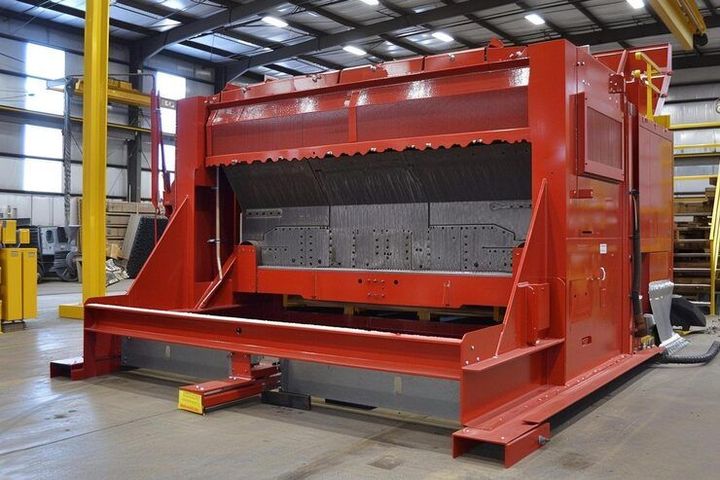
Discover Hydraulic Press Machines Overview and Industrial Benefits
Hydraulic press machines are industrial systems that use hydraulic pressure to generate large amounts of force for shaping, compressing, cutting, and forming materials. These machines operate based on fluid pressure principles, where force applied to hydraulic fluid is transferred through cylinders to create controlled mechanical movement. Hydraulic presses are widely used in manufacturing because they can apply consistent force with high precision across different industrial applications.
Globally, hydraulic press technology has become increasingly important as industries continue to expand heavy duty manufacturing and automated production systems. According to industry data, manufacturers are investing in advanced press technologies to improve production efficiency, reduce material waste, and support precision forming operations. This reflects a broader industrial trend toward automation and high-capacity machinery in modern manufacturing environments.
In practical applications, hydraulic press machines are used in industries such as automotive manufacturing, metal fabrication, aerospace production, construction equipment manufacturing, and industrial forming operations. Their ability to handle high-pressure tasks makes them essential for shaping metals, molding components, and assembling industrial products. Understanding how hydraulic press systems function and support manufacturing processes helps highlight their growing importance in modern production industries.
Who It Affects & Problems It Solves
Hydraulic press machines affect a wide global audience, including manufacturers, engineers, machine operators, fabrication facilities, and industrial production companies. Industries that process metals, plastics, composites, and heavy materials rely on hydraulic presses to maintain production speed, consistency, and structural accuracy. Technical students and industrial professionals also benefit from understanding hydraulic press operations and forming technologies.
Without hydraulic press systems, many manufacturing operations may struggle with inefficient forming methods, inconsistent material shaping, or limited force generation. Traditional mechanical processes may not provide the controlled pressure required for precise heavy-duty production tasks. Hydraulic presses solve these challenges by delivering stable force distribution and adaptable pressure control for different manufacturing applications.
A common scenario involves attempting to form thick metal components using low-capacity equipment, leading to uneven shaping or material stress. Hydraulic press machines improve these processes by applying controlled pressure evenly across workpieces. This increases production accuracy and reduces the likelihood of material defects. These operational advantages naturally lead into recent developments shaping hydraulic press technology and industrial automation.
Recent Updates
Over the past year, hydraulic press machines have advanced significantly through improved automation and digital monitoring systems. Modern presses increasingly use programmable control systems that allow operators to adjust force, speed, and pressure settings more accurately for different production requirements.
Another important trend is the integration of smart monitoring technologies. Industry data suggests that manufacturers are using sensors and connected systems to monitor hydraulic pressure, temperature, and machine performance in real time. This supports predictive maintenance and helps reduce unexpected downtime.
Energy efficiency has also become a major focus in hydraulic press design. Manufacturers are developing systems that optimize fluid circulation and reduce unnecessary energy consumption during operation. These improvements align with broader industrial efforts to improve sustainability and operational cost management.
Additionally, there is growing demand for compact and modular hydraulic press systems that can be integrated into automated production lines. These systems improve flexibility and support modern manufacturing environments that require adaptable machinery. These developments provide useful context for comparing different hydraulic press machine types and their industrial applications.
Comparison Table
The table below compares common hydraulic press machine types based on operational characteristics and manufacturing applications.
| Parameter | H-Frame Press | C-Frame Press | Four-Column Press | Servo Hydraulic Press |
|---|---|---|---|---|
| Structure Type | Open frame | Compact side frame | Multi-column support | Advanced automated system |
| Force Capacity | High | Moderate | Very high | Adjustable |
| Precision Level | Moderate | High | High | Very high |
| Automation Capability | Moderate | Moderate | High | Advanced |
| Space Requirement | Large | Compact | Large | Moderate |
| Energy Efficiency | Moderate | Moderate | Moderate | High |
| Common Applications | Heavy forming | Assembly operations | Large component forming | Precision manufacturing |
| Maintenance Complexity | Moderate | Moderate | High | High |
| Production Flexibility | High | Moderate | High | Very high |
| Cost Level | Moderate | Moderate | High | High |
The comparison shows that each hydraulic press type is designed for different manufacturing needs. Traditional frame presses support heavy-duty forming, while servo hydraulic systems provide greater precision and automation capabilities. Understanding these differences naturally leads into practical guidance and industrial considerations.
Regulations & Practical Guidance
In most countries, hydraulic press machines are subject to industrial safety and operational standards. These regulations generally focus on pressure system safety, machine guarding, operator protection, and maintenance procedures. Following these guidelines helps manufacturers maintain safe production environments and reduce operational risks.
Globally, there is increasing emphasis on operator training and hydraulic system maintenance. Proper understanding of pressure systems, fluid management, and machine operation is essential for maintaining safe and efficient production processes. Regular inspections and preventive servicing are also important for reducing equipment wear and maintaining performance stability.
Environmental and energy considerations are becoming more significant in hydraulic manufacturing systems. Industries are adopting improved hydraulic fluids, energy-saving technologies, and automated controls to reduce waste and improve sustainability within production facilities.
Which Option Suits Your Situation?
For heavy-duty metal forming and large industrial operations, H-frame and four-column hydraulic presses are often the most suitable options. These machines provide strong force capacity and stable support for demanding manufacturing tasks.
For facilities requiring compact equipment and moderate forming capabilities, C-frame presses may provide practical advantages. Their smaller design supports easier integration into limited production spaces.
For advanced manufacturing environments focused on automation and precision control, servo hydraulic presses are generally the most adaptable option. These systems allow detailed pressure adjustments and support highly controlled production processes.
For businesses upgrading existing manufacturing lines, selecting hydraulic systems with digital monitoring and energy-efficient controls may improve long-term operational performance. Choosing the right machine depends on production volume, material requirements, and automation goals. These considerations naturally lead into useful tools and resources.
Tools & Resources
Several tools and resources can help manufacturers and professionals better understand and manage hydraulic press systems effectively.
Hydraulic Simulation Software — allows users to model pressure systems and forming operations.
Machine Monitoring Systems — provide real-time performance tracking and maintenance alerts.
Industrial Automation Platforms — support integration of hydraulic systems with production lines.
Technical Training Programs — provide education on hydraulic principles, safety, and equipment operation.
Maintenance Management Tools — help schedule inspections and monitor machine servicing needs.
Industry Communities — enable professionals to exchange manufacturing insights and operational best practices.
These resources support informed equipment management and production planning, leading naturally into frequently asked questions.
Frequently Asked Questions
What is a hydraulic press machine?
A hydraulic press machine is an industrial system that uses hydraulic fluid pressure to generate force for shaping, compressing, cutting, or forming materials during manufacturing operations.
What industries commonly use hydraulic presses?
Hydraulic presses are widely used in automotive manufacturing, metal fabrication, aerospace production, construction equipment manufacturing, and industrial forming operations.
Why are hydraulic presses important in heavy-duty manufacturing?
Hydraulic presses provide controlled force, high pressure capacity, and precision forming capabilities, making them suitable for shaping strong or thick materials in industrial production.
What is a common misconception about hydraulic press machines?
A common misconception is that hydraulic presses are only used for metal crushing or extreme force applications. In reality, they are also widely used for precision forming and controlled manufacturing processes.
How do manufacturers maintain hydraulic press performance?
Manufacturers maintain performance through regular inspections, hydraulic fluid management, system monitoring, preventive maintenance, and operator training programs.
Conclusion
Hydraulic press machines play a major role in modern heavy-duty manufacturing by supporting forming, shaping, and assembly operations across multiple industries. Their ability to generate controlled force and operate with high precision makes them valuable for industrial production systems.
For most manufacturers, selecting the right hydraulic press involves balancing force capacity, automation level, production flexibility, and operational efficiency. Careful planning and regular maintenance help improve machine reliability and long-term manufacturing performance.
As industrial technology continues to evolve globally, hydraulic press systems are expected to become more automated, energy-efficient, and digitally integrated, supporting the future growth of advanced manufacturing and forming processes.