Discover Advanced Hospital Equipment: Innovation, Analysis & Future Trends
Advanced hospital equipment plays a major role in modern healthcare by improving diagnosis, treatment, patient monitoring, and operational efficiency. From AI-powered imaging systems to robotic surgical tools, medical technology continues to reshape hospitals worldwide.
Advanced hospital equipment refers to specialized medical technology used for diagnosis, monitoring, treatment, and patient support inside healthcare facilities. These systems include diagnostic imaging devices, intensive care monitoring systems, robotic surgery platforms, laboratory automation tools, and smart healthcare infrastructure.
Hospitals rely on medical equipment because healthcare has become increasingly data-driven and precision-focused. Traditional manual processes are no longer enough for complex medical conditions. As patient needs grow and disease patterns change, hospitals need faster diagnostics, better accuracy, and stronger safety systems.
Common categories of advanced hospital equipment include:
- Diagnostic imaging systems
- Patient monitoring equipment
- Surgical robotics
- Laboratory automation systems
- Intensive care support devices
- Smart healthcare data systems
High-value healthcare technology keywords such as medical imaging systems, hospital automation, clinical diagnostics equipment, AI healthcare solutions, and digital healthcare infrastructure are increasingly important in modern healthcare discussions.
Equipment Categories in Modern Hospitals
| Equipment Type | Primary Function | Common Usage |
|---|---|---|
| MRI & CT Systems | Internal imaging | Diagnosis |
| Patient Monitors | Vital tracking | ICU & emergency |
| Surgical Robots | Precision procedures | Operating rooms |
| Laboratory Automation | Sample analysis | Pathology labs |
| Smart Beds | Patient safety | Recovery wards |
The main goal of advanced hospital equipment is simple: improve care quality while reducing delays and errors.
Importance
Advanced hospital equipment matters today because healthcare systems are under growing pressure. Aging populations, chronic disease growth, and rising patient volumes create major challenges.
Modern equipment helps hospitals address these problems in several ways.
Faster Diagnosis
Advanced imaging systems allow doctors to detect problems earlier. Early detection improves treatment planning and patient outcomes.
Better Patient Monitoring
Continuous monitoring systems track heart rate, oxygen levels, and other vital signs in real time. This helps clinical teams react quickly during emergencies.
Improved Precision
Robotic surgery and AI-assisted tools help reduce human error and improve procedural accuracy.
Operational Efficiency
Hospital automation improves workflows by reducing delays in testing, reporting, and patient management.
Why It Matters
Advanced equipment affects:
- Patients receiving treatment
- Doctors and clinical teams
- Hospitals managing operations
- Governments improving healthcare access
- Research institutions developing medical innovation
A simplified impact comparison is shown below.
| Area | Traditional Systems | Advanced Systems |
|---|---|---|
| Diagnosis Time | Slower | Faster |
| Accuracy | Moderate | Higher |
| Monitoring | Periodic | Real-time |
| Data Access | Manual | Digital |
Recent Updates
The past year has brought major advances in hospital technology.
AI Integration in Medical Imaging (2025–2026)
Artificial intelligence is increasingly being integrated into radiology workflows. AI-assisted imaging tools help detect abnormalities in X-rays, MRI scans, and CT scans with greater efficiency.
Hospitals now use AI diagnostic software to support radiologists during image analysis.
Growth of Robotic Surgery (2025)
Robotic-assisted procedures expanded significantly in 2025, especially in minimally invasive surgery. Advanced robotic systems improve precision and reduce recovery time.
Remote Patient Monitoring Expansion (2025)
Remote monitoring tools became more common after hospitals expanded digital healthcare infrastructure. Smart wearable sensors now transmit patient data directly into hospital systems.
Smart ICU Technology (2026)
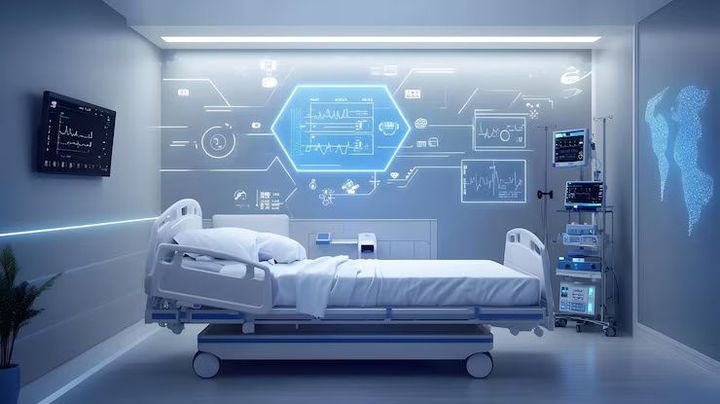
Many healthcare institutions adopted smart ICU systems combining:
- Predictive analytics
- Real-time alerts
- Automated monitoring
- Digital patient dashboards
Laws or Policies
Hospital equipment is heavily regulated because patient safety depends on equipment reliability and performance.
Different countries follow specific regulatory frameworks.
Regulatory Standards
Medical devices usually require approval from national health authorities before clinical use.
Important regulatory areas include:
- Safety certification
- Performance testing
- Calibration standards
- Data privacy compliance
- Cybersecurity requirements
India
In India, advanced hospital equipment falls under medical device regulations managed by the Central Drugs Standard Control Organization. Medical device classification helps determine approval and compliance requirements.
Government healthcare programs also encourage digital healthcare infrastructure expansion.
United States
In the United States, advanced medical devices are regulated by the Food and Drug Administration.
Europe
The European Union uses Medical Device Regulations focusing on safety, risk classification, and quality assurance.
Healthcare regulations increasingly emphasize:
- Patient data security
- AI transparency
- Equipment lifecycle monitoring
Tools and Resources
Healthcare professionals use various digital resources to manage equipment performance and medical workflows.
Useful Tools
- Medical equipment maintenance trackers for calibration schedules
- Hospital asset management software for inventory visibility
- Radiology reporting templates for structured reporting
- Clinical analytics dashboards for operational insights
- Biomedical engineering checklists for preventive maintenance
- Healthcare compliance templates for regulatory audits
Useful learning resources include:
- Medical engineering training modules
- Healthcare technology whitepapers
- Clinical workflow simulation tools
- Equipment lifecycle calculators
These resources improve equipment management and support safer hospital operations.
FAQs
What is advanced hospital equipment?
Advanced hospital equipment includes specialized medical technology used for diagnosis, treatment, surgery, and patient monitoring.
Why is AI important in hospital equipment?
AI improves imaging analysis, predictive monitoring, and workflow automation, helping healthcare professionals make faster decisions.
How often should hospital equipment be maintained?
Maintenance schedules depend on device type, usage frequency, and regulatory requirements. Critical systems often require routine calibration and inspection.
What is hospital automation?
Hospital automation uses digital systems, sensors, and software to improve operations such as diagnostics, patient monitoring, and reporting.
Will robotics replace doctors?
No. Robotics supports medical professionals by improving precision and efficiency, but human expertise remains essential.
Conclusion
Advanced hospital equipment is transforming modern healthcare through smarter diagnostics, better monitoring, and more precise treatment. Innovations such as AI-powered imaging, robotic surgery, and digital healthcare infrastructure are reshaping hospitals worldwide.
As regulations evolve and technology improves, healthcare systems will continue moving toward connected, data-driven care environments. The future of hospital equipment is not just about machines—it is about safer, faster, and more intelligent healthcare for everyone.