Check Weighing Machines Explained: Weighing Technologies, Automation Systems, Manufacturers, Suppliers and Industrial Applications
Check weighing machines are automated inspection systems designed to verify the weight of products while they move through a production or packaging line. They are widely used in food processing, pharmaceuticals, chemicals, beverages, cosmetics, logistics, and other industries where consistent product weight is important.
Modern check weighing machines combine precision load cells, conveyors, sensors, digital controls, and automated rejection mechanisms. These systems can operate as part of broader packaging automation and quality-control workflows, helping manufacturers identify products outside predefined weight limits.
Context
What Are Check Weighing Machines?
A check weighing machine, commonly called a checkweigher, automatically measures the weight of individual products during production or packaging. The system compares each measurement against predefined minimum and maximum limits.
Products within the specified range can continue through the production line, while products outside the permitted range can be identified for further inspection or removal.
Unlike standalone weighing equipment, automated checkweighers are designed to operate continuously within production environments. They can process products at different speeds depending on the machine configuration, product characteristics, and required measurement accuracy.
How Check Weighing Systems Work
A typical automated check weighing system contains several stages:
- Product infeed: Products enter the weighing section through a conveyor or controlled feeding mechanism.
- Product separation: Sensors or conveyor arrangements help create suitable spacing between individual products.
- Dynamic weighing: A load cell measures the product while it moves across the weighing conveyor.
- Data processing: A controller evaluates the measured weight against configured limits.
- Classification: The product is classified according to the programmed weight criteria.
- Rejection or routing: An automated mechanism can redirect products that fall outside the specified range.
- Data recording: Measurements and production information can be stored for monitoring and analysis.
The process allows weight verification without necessarily stopping the production line.
Major Weighing Technologies
Several technologies can be incorporated into industrial check weighing machines.
| Technology | Primary Function | Typical Application |
|---|---|---|
| Load Cells | Measure product weight | Packaging and manufacturing |
| Strain-Gauge Sensors | Convert mechanical force into electrical signals | Precision weighing |
| Digital Signal Processing | Process measurement signals | Automated inspection |
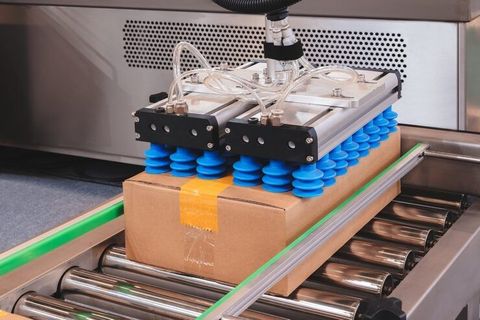
| Conveyor Systems | Transport products through weighing zones | Production lines |
| Photoelectric Sensors | Detect product position | Product separation |
| Reject Mechanisms | Remove nonconforming products | Quality control |
| PLC Controllers | Coordinate machine functions | Industrial automation |
| HMI Systems | Display settings and production data | Operator control |
The appropriate technology depends on product characteristics, conveyor speed, environmental conditions, required accuracy, and integration requirements.
Types of Checkweighing Machines
Industrial checkweighers can be configured for different production requirements.
In-line checkweighers are installed directly within production or packaging lines and continuously inspect individual products.
High-speed checkweighers are designed for applications requiring rapid product movement and frequent measurements.
Combination systems can combine weight inspection with other technologies such as metal detection or product inspection.
Multi-lane checkweighers can inspect products from multiple lanes, depending on line configuration.
Specialized checkweighers can be designed for irregular products, containers, cartons, bottles, pouches, or other packaging formats.
Importance
Why Check Weighing Machines Matter
Product weight can influence regulatory compliance, packaging consistency, inventory management, and production efficiency. Automated weighing provides a repeatable method for identifying variations during manufacturing and packaging.
For packaged products, weight verification can also help identify underfilled or overfilled units before they leave the production process.
Supporting Manufacturing Quality Control
Check weighing is one component of a broader quality-control system. Measurements can be combined with other inspection methods to create a more comprehensive evaluation of finished or packaged products.
For example, a food packaging line may combine weight verification with metal detection, seal inspection, label inspection, and vision-based quality checks.
Reducing Product Variation
Variations in filling, dosing, packaging, or material handling can produce differences between individual units. Automated checkweighing can identify these variations in real time.
Production teams can use the resulting information to investigate upstream processes such as filling systems, dosing equipment, or packaging machinery.
Supporting Automated Production
Modern checkweighing machines can communicate with PLCs, manufacturing execution systems, packaging equipment, and plant-level monitoring platforms.
This connectivity allows weight inspection to become part of a broader automated production workflow rather than functioning as an isolated machine.
Manufacturers and Suppliers
The industrial checkweigher market includes equipment manufacturers, automation companies, weighing technology specialists, and system integrators.
Manufacturers and suppliers may provide different configurations based on:
- Product dimensions
- Product weight range
- Conveyor speed
- Required measurement resolution
- Production environment
- Hygiene requirements
- Packaging format
- Communication protocols
- Line integration requirements
Organizations evaluating equipment should compare technical specifications with their actual production conditions rather than relying only on nominal machine capacity.
Industrial Applications
Check weighing machines are used across many industries.
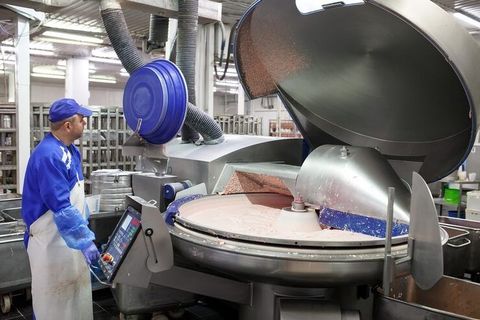
Food processing: Packaged foods, snacks, bakery products, meat products, dairy products, frozen foods, and prepared meals can be checked for weight consistency.
Pharmaceutical manufacturing: Packaged pharmaceutical products may undergo weight verification as part of quality-control procedures.
Beverage production: Bottles, cans, and containers can be inspected after filling and packaging.
Chemical manufacturing: Containers and packages containing powders, granules, liquids, or other materials can be checked.
Cosmetics: Tubes, jars, bottles, and other packaged cosmetic products can undergo automated weight inspection.
Logistics and distribution: Automated weighing can help verify packages and support shipping or inventory processes.
Industrial manufacturing: Components and packaged parts can be checked when weight is an important quality indicator.
Recent Updates
Digital Weighing Systems
Modern checkweighers increasingly use digital signal processing to analyze measurements rapidly. Digital electronics can help manage calibration, filtering, diagnostics, and communication with other automation equipment.
The exact performance depends on the load cell, software, mechanical construction, environmental conditions, and product characteristics.
Smart Automation
Industrial checkweighers can increasingly communicate with production-control systems. Information such as product counts, weight distributions, rejected units, and production batches can be collected electronically.
This data can help production teams identify recurring variation and investigate process conditions.
Machine Learning and Advanced Analytics
Some industrial inspection environments are exploring machine-learning techniques for process analysis and anomaly identification. In a checkweighing application, historical measurements may help identify unusual patterns in product weight.
Such technologies generally complement conventional measurement and control systems rather than replacing the underlying weighing mechanism.
Improved Human-Machine Interfaces
Modern HMI systems can provide graphical displays for product recipes, weight limits, production counts, alarms, and machine status.
Recipe management can also make it easier to switch between different products while maintaining appropriate inspection parameters.
Hygienic Machine Design
Food and pharmaceutical production environments may require equipment designed around specific hygiene and cleaning requirements.
Machine construction can therefore include materials, surfaces, conveyor arrangements, and enclosure designs selected for the operating environment.
Connectivity and Industry 4.0
Industrial communication technologies can connect checkweighers with PLCs, MES platforms, SCADA systems, databases, and production analytics.
This connectivity supports centralized data collection and can contribute to broader Industry 4.0 manufacturing strategies.
Laws or Policies
Measurement and Metrology Requirements
Commercial weighing applications may be subject to legal metrology requirements depending on jurisdiction and intended use. Requirements can apply when measurements are used for commercial transactions or other regulated purposes.
Organizations should verify the applicable national and regional requirements before selecting or deploying equipment.
Quality Management
Manufacturers may integrate check weighing into documented quality-management procedures. Measurement equipment may require calibration, verification, maintenance, and documented records according to the organization's quality system.
Food and Pharmaceutical Requirements
Food and pharmaceutical production can involve additional requirements concerning packaging, labeling, product quality, traceability, and manufacturing controls.
The specific rules depend on the product category, jurisdiction, and intended market.
Equipment Safety
Checkweighing systems contain moving conveyors, motors, electrical components, and automated reject mechanisms. Appropriate machine safeguarding, emergency controls, maintenance procedures, and operator training are therefore important.
Data and Electronic Records
Where checkweighing information forms part of regulated production records, organizations may need controls for data integrity, access permissions, audit trails, and record retention.
Tools and Resources
Load Cell Testing Equipment
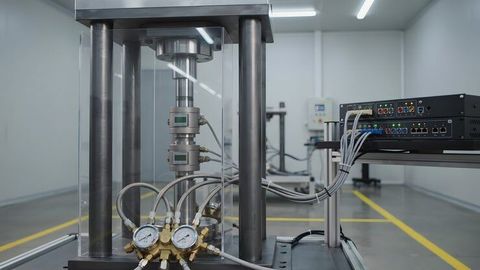
Load cell testing and calibration equipment can be used to verify measurement performance. Regular verification helps identify drift or mechanical issues that could affect weighing results.
Calibration Weights
Reference weights are commonly used during calibration and verification activities. Their specifications should correspond with the weighing system and applicable metrology requirements.
PLC and Automation Systems
PLC systems coordinate sensors, conveyors, weighing signals, reject mechanisms, and other production equipment. Integration allows the checkweigher to operate as part of a complete automated line.
MES and Production Data Platforms
Manufacturing execution systems can collect production information from connected checkweighers. This can support batch tracking, production analysis, and quality documentation.
Inspection and Diagnostic Software
Diagnostic tools can provide information about sensor status, alarms, calibration conditions, conveyor performance, and system operation.
When selecting a check weighing machine, organizations can examine:
- Weight range
- Accuracy and resolution
- Conveyor dimensions
- Maximum throughput
- Product characteristics
- Environmental conditions
- Communication interfaces
- Calibration procedures
- Reject-system configuration
- Data-recording capabilities
- Maintenance requirements
FAQs
What is a check weighing machine?
A check weighing machine is an automated weighing system that measures individual products during production or packaging and compares their measured weight against predefined limits.
How does a checkweigher work?
A product travels across a weighing conveyor where a load cell measures its weight. The control system evaluates the measurement and can classify or redirect products that fall outside configured limits.
Where are check weighing machines used?
Checkweighers are used in food processing, pharmaceuticals, beverages, chemicals, cosmetics, logistics, packaging, and various manufacturing environments.
What technologies are used in automated check weighing?
Common technologies include load cells, strain-gauge sensors, digital signal processing, photoelectric sensors, PLC controllers, conveyor systems, HMI software, and automated rejection mechanisms.
Can checkweighers connect to factory automation systems?
Yes. Depending on the equipment configuration, checkweighers can communicate with PLCs, MES platforms, SCADA systems, databases, and other industrial automation systems.
Conclusion
Check weighing machines provide automated weight verification for products moving through industrial production and packaging lines. Their combination of load cells, sensors, conveyors, control systems, and software enables continuous measurement and classification without requiring every product to be weighed manually.
Modern checkweighing systems are increasingly connected to manufacturing automation, digital records, analytics, and Industry 4.0 platforms. Their application ranges from food and pharmaceutical packaging to chemical manufacturing, beverage production, cosmetics, logistics, and general industrial production.
Selecting an appropriate system requires consideration of product characteristics, measurement requirements, conveyor configuration, operating environment, regulatory obligations, data integration, and maintenance procedures.