Battery Assembly Machines: Guide to Automated Battery Manufacturing
Battery technology plays a major role in modern life. Electric vehicles, portable electronics, renewable energy systems, and industrial tools all depend on reliable battery production.
As global demand continues to grow, manufacturers are turning to battery assembly machines to improve production speed, accuracy, and safety.
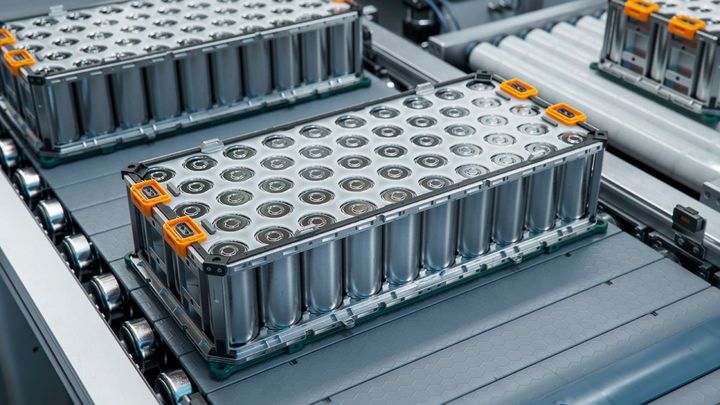
Battery assembly machines are advanced industrial systems designed to automate different stages of battery manufacturing. These machines handle tasks such as cell preparation, welding, testing, labeling, and final battery pack assembly. Modern factories use automated lithium battery assembly lines to manage large-scale production with greater consistency and precision.
The rise of electric mobility and renewable energy storage has increased interest in ev battery pack manufacturing equipment and advanced battery production methods. Understanding how these systems work helps explain why automation is becoming essential in modern battery manufacturing.
Understanding the Concept
Battery assembly machines are industrial machines designed to assemble battery cells into complete battery packs. A battery pack contains multiple cells connected together to store and deliver electrical energy.
In traditional manufacturing environments, workers manually handled many assembly tasks. While manual processes still exist in smaller operations, modern factories increasingly rely on automation to reduce errors and improve production efficiency.
A typical battery manufacturing setup may include:
- Cell sorting machines
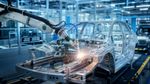
- Robotic welding systems
- Inspection cameras
- Conveyor systems
- Battery testing stations
- Automated packaging equipment
These machines work together as part of a connected production line. In many advanced factories, automated lithium battery assembly lines can operate continuously with minimal interruption.
For example, electric vehicle battery factories may produce thousands of battery modules every day. Manual assembly alone would make it difficult to maintain the required speed and consistency.
Key Types or Categories
Battery assembly systems vary depending on battery design, production scale, and industry requirements.
Lithium-Ion Battery Assembly Machines
Lithium-ion batteries are widely used in:
- Electric vehicles
- Smartphones
- Laptops
- Energy storage systems
- Power tools
These production systems focus heavily on precision because lithium-ion cells are sensitive to heat, pressure, and contamination.
Many factories use turnkey lithium ion cell production plant setups that include every stage of manufacturing, from raw material preparation to final battery testing.
EV Battery Pack Assembly Systems
Electric vehicle batteries are much larger and more complex than consumer batteries. Specialized ev battery pack manufacturing equipment is designed to handle heavy battery modules safely and accurately.
These systems may include:
- Robotic lifting equipment
- Cooling system installation tools
- Laser welding machines
- Thermal testing stations
- Battery management system integration units
Automotive battery production requires extremely high accuracy because even small defects can affect battery performance and safety.
Cylindrical Battery Production Lines
Cylindrical batteries are common in:
- E-bikes
- Flashlights
- Portable devices
- Electric scooters
These production lines focus on rapid cell handling and automated welding.
Prismatic and Pouch Cell Assembly Systems
Prismatic and pouch cells are popular in electric vehicles and energy storage systems because they allow compact battery designs.
Production systems for these batteries often include:
- Precision stacking machines
- Vacuum sealing systems
- Electrolyte filling equipment
- Automated inspection systems
Important Subsections
Robotic Welding Units
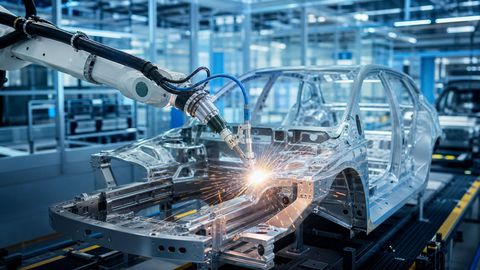
Battery connections require highly accurate welding. Robotic welding systems use laser or ultrasonic welding methods to connect battery cells safely.
These systems help reduce defects caused by uneven welds or overheating.
Inspection and Quality Control Systems
Modern factories use cameras and sensors to inspect every battery component during production.
Inspection systems can identify:
- Damaged cells
- Incorrect positioning
- Weak weld connections
- Surface defects
This improves production consistency and reduces manufacturing errors.
Thermal Management Integration
Batteries generate heat during operation. Many assembly systems include thermal management installation steps to improve cooling efficiency.
Proper thermal control helps maintain battery performance and long-term reliability.
How It Works
Battery manufacturing involves several connected stages. Automation helps coordinate these processes efficiently.
Step 1: Cell Preparation
Battery cells are first inspected and sorted based on voltage, capacity, and quality standards.
Machines remove defective cells before assembly begins.
Step 2: Cell Arrangement
Cells are placed into specific patterns depending on battery design.
For example:
- Electric vehicle packs may contain hundreds of cells
- Energy storage systems may contain thousands of cells
Robotic systems arrange these cells with high precision.
Step 3: Welding and Electrical Connections
Machines connect cells using laser welding or ultrasonic welding methods.
This step creates electrical pathways between cells.
Step 4: Battery Management System Installation
The battery management system monitors:
- Temperature
- Voltage
- Charging levels
- Safety conditions
Assembly machines install and connect these monitoring components automatically.
Step 5: Testing and Inspection
Each battery pack undergoes several tests, including:
- Voltage testing
- Leak testing
- Thermal testing
- Safety inspections
Automated systems quickly identify any abnormal results.
Step 6: Final Assembly and Packaging
The completed battery pack receives labeling, protective casing, and packaging before moving to storage or transportation areas.
Benefits and Advantages
Battery assembly automation provides many practical advantages for manufacturers and end users.
Improved Production Speed
Automation allows factories to produce batteries much faster than manual production methods.
This is especially important as global electric vehicle demand continues to rise.
Better Accuracy
Machines can repeat tasks with consistent precision.
This reduces manufacturing defects and improves battery quality.
Enhanced Safety
Battery production involves electrical energy, chemicals, and heat-sensitive materials.
Automation helps reduce direct worker exposure to hazardous conditions.
Consistent Quality
Automated systems monitor production continuously. This helps maintain uniform battery performance across large production volumes.
Reduced Material Waste
Precision assembly reduces damaged components and wasted materials.
This improves production efficiency and environmental sustainability.
Scalable Manufacturing
Factories can expand production capacity more easily using automated systems.
Large-scale turnkey lithium ion cell production plant operations are designed to support growing battery demand worldwide.
Real-World Examples or Applications
Battery assembly machines support many industries and technologies used every day.
Electric Vehicles
Electric vehicle manufacturers depend heavily on ev battery pack manufacturing equipment to produce reliable battery systems.
These battery packs power:
- Passenger vehicles
- Electric buses
- Delivery vans
- Industrial transport vehicles
Renewable Energy Storage
Solar and wind energy systems often use large battery storage units.
Automated production helps create energy storage batteries capable of handling large amounts of electricity.
Consumer Electronics
Smartphones, tablets, laptops, and wearable devices all use compact lithium-ion batteries.
High-speed automated production lines help maintain steady product availability.
Industrial Equipment
Factories and warehouses increasingly use battery-powered machinery such as:
- Automated guided vehicles
- Forklifts
- Portable industrial tools
Reliable battery production is essential for these industries.
Aviation and Marine Applications
Battery systems are becoming more common in electric boats and experimental electric aircraft.
These industries require advanced safety testing and precise assembly standards.
Important Factors to Understand
Several important factors influence battery manufacturing quality and efficiency.
Precision Requirements
Battery assembly requires extremely accurate positioning and welding.
Even small errors may affect battery performance or safety.
Clean Production Environments
Many battery factories use controlled environments to reduce dust and moisture contamination.
Contamination can damage sensitive battery materials.
Thermal Safety
Lithium batteries can generate heat if damaged or improperly assembled.
Modern assembly systems include multiple safety monitoring processes.
Production Flexibility
Manufacturers often need flexible production lines capable of handling different battery sizes and designs.
Advanced automated lithium battery assembly lines can switch between production formats more efficiently.
Energy Efficiency
Battery production itself consumes significant energy.
Factories increasingly focus on reducing energy consumption through optimized automation systems.
Future Trends and Industry Insights
Battery manufacturing technology continues to evolve rapidly.
Solid-State Battery Development
Many researchers and manufacturers are exploring solid state battery production technology as a next-generation solution.
Solid-state batteries may provide:
- Higher energy density
- Improved safety
- Faster charging capability
- Longer operational lifespan
Although large-scale production is still developing, many factories are preparing for future integration of solid-state manufacturing systems.
Artificial Intelligence in Manufacturing
AI-based monitoring systems can analyze production data in real time.
These systems help detect:
- Equipment issues
- Production inconsistencies
- Quality variations
This improves operational efficiency and reduces downtime.
Increased Automation
Factories are moving toward highly connected smart manufacturing systems.
Future battery facilities may use:
- Autonomous robots
- Predictive maintenance systems
- Real-time digital monitoring
- Fully integrated production management
Sustainable Manufacturing
Environmental concerns are encouraging manufacturers to improve recycling and material recovery systems.
Future battery plants may focus more heavily on:
- Reduced waste generation
- Recycled battery materials
- Lower energy consumption
- Cleaner production methods
Expansion of EV Infrastructure
As electric vehicle adoption grows worldwide, battery production capacity will continue expanding.
This growth is increasing demand for advanced ev battery pack manufacturing equipment and scalable production systems.
Conclusion
Battery assembly machines are transforming modern manufacturing by improving production speed, consistency, and safety. These automated systems play an essential role in producing batteries for electric vehicles, renewable energy storage, consumer electronics, and industrial equipment.
Modern automated lithium battery assembly lines combine robotics, precision welding, inspection systems, and advanced testing technologies to support large-scale production demands. At the same time, evolving innovations such as solid state battery production technology are shaping the future of battery manufacturing.
As global demand for energy storage continues to increase, advanced battery manufacturing systems will remain a critical part of industrial development and technological progress.