Aerogel Manufacturing Systems Explained: Production Technologies, Processing Equipment, Manufacturers, Suppliers and Industrial Applications
Aerogel manufacturing systems are specialized production technologies used to create highly porous materials with low density and distinctive thermal, acoustic, optical, and surface properties. Silica aerogels are currently among the most commercially developed aerogel materials, although research and industrial development also covers polymeric, carbon-based, metal-oxide, and composite aerogels.
Modern aerogel production combines sol-gel chemistry, controlled aging, solvent management, drying technologies, material handling, process instrumentation, and quality-control systems. Manufacturing configurations can range from laboratory equipment to pilot plants and continuous or semi-continuous industrial production systems.
Context
What Are Aerogel Manufacturing Systems?
An aerogel manufacturing system is an integrated collection of equipment used to transform a suitable precursor into an aerogel product. For silica aerogels, the production route commonly involves sol preparation, gelation, aging, solvent exchange or modification, and drying.
The manufacturing system must preserve the delicate porous network formed during gelation. Drying is particularly important because conventional evaporation can generate capillary forces that damage the pore structure.
How Aerogels Are Manufactured
A simplified silica-aerogel manufacturing sequence is:
Raw-material preparation → Sol formation → Gelation → Aging → Solvent exchange/modification → Drying → Finishing → Inspection
The exact sequence varies according to precursor chemistry, aerogel form, desired properties, and drying technology.
Silica precursors can include silicon alkoxides such as tetraethyl orthosilicate (TEOS), tetramethyl orthosilicate (TMOS), and other silica-containing materials. Waterglass-based processes are also used in some manufacturing approaches.
Main Manufacturing Stages
| Manufacturing Stage | Main Function | Typical Equipment |
|---|---|---|
| Raw-Material Preparation | Prepare precursor and additives | Storage tanks, dosing systems |
| Sol Formation | Create silica sol | Mixing vessels, reactors |
| Gelation | Form the wet-gel network | Gelation vessels or molds |
| Aging | Strengthen the gel structure | Aging tanks |
| Solvent Exchange | Replace pore liquid | Exchange vessels |
| Surface Modification | Adjust surface chemistry | Treatment reactors |
| Drying | Remove liquid while preserving pores | Drying chambers or pressure vessels |
| Finishing | Shape and classify material | Cutting, milling, screening equipment |
| Quality Control | Measure material properties | Laboratory instruments |
Importance
Why Aerogel Manufacturing Systems Matter
Aerogels derive their distinctive behavior from a highly porous solid structure. Silica aerogels can have very high porosity, low density, large surface area, and low thermal conductivity. These characteristics have supported applications in insulation, adsorption, catalysis, energy technologies, and other specialized fields.
Producing these materials consistently requires close control of chemistry, gel structure, solvent conditions, drying parameters, and post-processing.
Sol-Gel Processing
Sol-gel processing is a central technology for silica aerogel production. A precursor undergoes hydrolysis and condensation reactions, creating a three-dimensional silica network.
The resulting wet gel contains liquid within its pores. The manufacturing challenge is to remove this liquid while retaining the structure of the solid network.
Gelation and Aging
During gelation, the liquid precursor develops into a connected solid network. After gel formation, aging can strengthen the structure through continued chemical reactions and structural rearrangement.
Aging conditions such as time, temperature, solvent composition, and chemical environment can influence the final material.
Solvent Exchange
In many processes, the liquid contained within the gel is exchanged with another solvent before drying. Solvent exchange can influence drying behavior and the final aerogel structure.
Industrial systems may therefore include dedicated tanks, pumps, filtration components, temperature controls, and solvent-recovery equipment.
Surface Modification
Silica aerogels may undergo hydrophobic treatment to modify their interaction with moisture. Surface modification can be integrated into the manufacturing sequence before or during drying.
The selected chemistry depends on the intended application and required material properties.
Aerogel Drying Technologies
Supercritical Drying
Supercritical drying is a major aerogel manufacturing technology. The solvent is brought into a supercritical state so that it can be removed without the conventional liquid-gas interface that generates strong capillary forces.
Carbon dioxide is commonly used in low-temperature supercritical drying routes. Such systems require pressure-rated equipment, controlled temperature, gas handling, pressure regulation, and appropriate safety systems.
Ambient-Pressure Drying
Ambient-pressure drying provides an alternative approach in which the gel undergoes suitable solvent exchange and surface modification before controlled evaporation.
Research has demonstrated ambient-pressure approaches capable of producing silica aerogels with properties comparable to some supercritical-dried materials, although the acceptable process window can be narrower.
Freeze Drying
Freeze drying can also be used for selected aerogel formulations. The liquid is frozen and subsequently removed through sublimation.
This method can be useful for particular compositions, but the required equipment and process conditions differ from those used in supercritical or ambient-pressure drying.
Rapid Supercritical Extraction
Rapid supercritical extraction uses accelerated solvent removal under controlled supercritical conditions. Research has explored this method as a way to shorten processing time for selected aerogel systems.
Manufacturing Equipment
Mixing and Reaction Vessels
Mixing vessels prepare precursor solutions and allow controlled chemical reactions to occur. Equipment materials need to be compatible with the chemicals and operating conditions.
Agitation systems should provide appropriate mixing without creating undesirable process conditions.
Gelation Equipment
Gelation equipment can include molds, trays, tanks, or continuous processing systems. The geometry of the equipment influences the final shape and handling requirements of the wet gel.
Aging Tanks
Aging vessels maintain wet gels under controlled conditions for a specified period. Temperature, solvent composition, and residence time may be monitored.
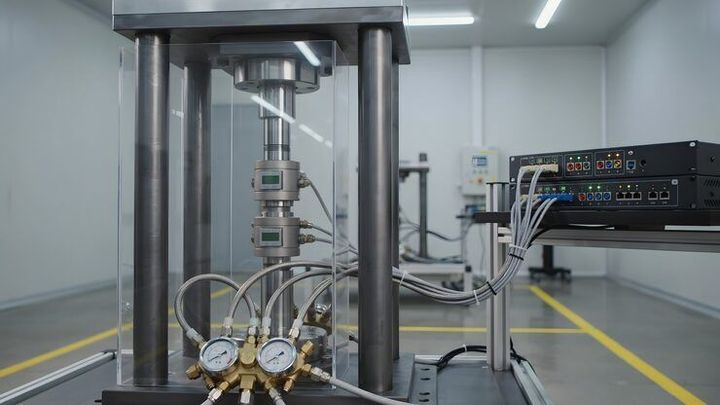
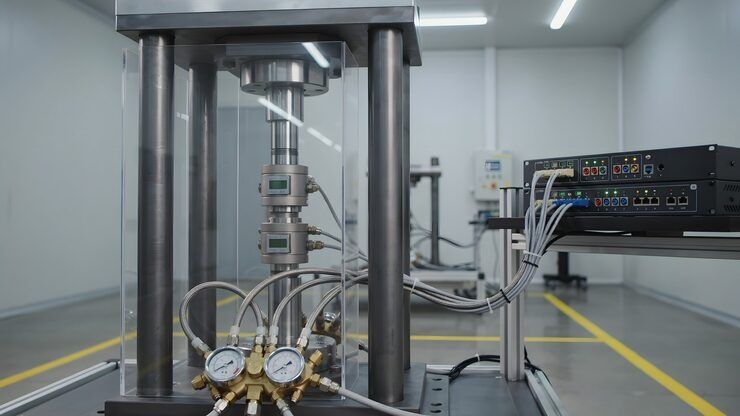
High-Pressure Drying Systems
Supercritical drying requires pressure-rated vessels and associated equipment. A typical system may include:
- High-pressure vessel
- Carbon dioxide supply
- Pumps or compressors
- Heat-exchange equipment
- Pressure-control valves
- Temperature sensors
- Pressure sensors
- Safety relief systems
- Gas recovery or handling equipment
Solvent Recovery Systems
Aerogel manufacturing can involve solvents that need to be recovered, recycled, or treated according to the process design.
Recovery equipment may include condensers, separators, storage vessels, pumps, and monitoring systems.
Finishing Equipment
After drying, aerogel may be produced as monoliths, granules, powders, blankets, composites, or other forms.
Depending on the product, finishing equipment can include cutters, crushers, mills, screens, classifiers, coating equipment, and composite-forming systems.
Industrial Applications
Thermal Insulation
Thermal insulation remains a major commercial application of aerogel materials. Their porous structure can provide low thermal conductivity, allowing insulation products to achieve substantial thermal resistance within relatively thin sections.
Applications include building materials, industrial equipment, pipelines, cryogenic systems, and specialized thermal barriers.
Construction Materials
Aerogel can be incorporated into insulation boards, plasters, panels, and composite construction materials.
Research and industrial development are examining aerogel-based materials for building renovation and lightweight insulation systems.
Oil and Gas Equipment
Aerogel-based insulation can be incorporated into systems requiring thermal management around pipelines, vessels, and process equipment.
Material selection depends on operating temperature, mechanical requirements, moisture exposure, and installation configuration.
Aerospace and Transportation
The low density and thermal characteristics of aerogels make them relevant to specialized aerospace and transportation applications.
Potential uses include thermal protection, lightweight insulation, and selected energy-storage components.
Environmental Applications
Aerogels can provide large surface areas suitable for adsorption and filtration research. Modified aerogel materials have been investigated for removing selected contaminants from water and air.
Energy Technologies
Aerogel materials are being investigated for applications involving batteries, supercapacitors, catalysts, thermal management, and other energy technologies.
The precise function depends on the aerogel chemistry, pore structure, surface properties, and composite formulation.
Recent Updates
More Scalable Production Technologies
One important development area is the transition from laboratory-scale batch processing toward scalable manufacturing systems.
Researchers and industrial developers are investigating continuous and modular production methods that can improve process consistency and facilitate larger production volumes. A patented silica-aerogel powder system, for example, describes integrated raw-material supply, synthesis, drying, collection, and recovery stages.
Supercritical CO₂ Processing
Supercritical carbon dioxide remains an important area of aerogel process development. Its use can reduce reliance on some conventional organic-solvent drying routes and can operate at comparatively moderate temperatures in appropriate process configurations.
Modular Manufacturing
Modular aerogel production plants can combine individual processing stages into configurable systems. Fraunhofer UMSICHT has described a modular process based on supercritical CO₂ and reported pilot-scale development aimed at industrial production.
Composite Aerogels
Research increasingly examines aerogel composites that combine silica or other aerogel structures with fibers, polymers, minerals, or other materials.
Composite structures can improve handling characteristics and expand the range of forms available for insulation and other applications.
Alternative Drying Methods
Ambient-pressure drying and other lower-pressure approaches are being studied as alternatives to conventional supercritical drying. The objective is to simplify equipment requirements while preserving important aerogel properties.
Laws or Policies
Chemical Process Safety
Aerogel manufacturing may involve solvents, catalysts, reactive precursors, elevated temperatures, and high-pressure systems. Facilities therefore need appropriate chemical-process safety procedures.
High-pressure supercritical drying equipment requires particular attention to vessel design, pressure control, relief systems, inspection, and operator protection.
Pressure Equipment
Manufacturing systems using supercritical fluids can operate at elevated pressures. Pressure vessels, piping, valves, and related components should comply with applicable engineering codes and jurisdictional requirements.
Chemical Handling
Raw materials and solvents should be stored, transferred, used, and disposed of according to applicable chemical-safety requirements.
Safety data, exposure controls, ventilation, spill procedures, and appropriate protective equipment form part of a broader chemical-management program.
Environmental Management
Aerogel manufacturing can generate solvent-containing streams, wastewater, solid residues, and other process outputs.
Facilities should identify applicable requirements for emissions, waste handling, solvent recovery, and environmental monitoring.
Product Quality
Industrial aerogel production may require documented specifications for density, pore structure, thermal conductivity, surface area, moisture content, mechanical characteristics, and other application-specific properties.
Testing requirements depend on the intended product and industry.
Tools and Resources
Process Control Systems
PLCs, distributed control systems, and industrial monitoring platforms can regulate temperature, pressure, flow, mixing, drying, and other process variables.
Laboratory Characterization
Aerogel characterization can include measurements of:
- Density
- Porosity
- Surface area
- Pore-size distribution
- Thermal conductivity
- Moisture content
- Mechanical strength
- Surface chemistry
These measurements help determine whether the manufactured material meets its intended specification.
Pressure and Temperature Monitoring
High-pressure drying systems require accurate measurement of pressure and temperature. Automated monitoring can help maintain defined process conditions and provide records for process analysis.
Solvent Recovery Equipment
Recovery systems can reduce solvent losses and support controlled handling of process streams. The specific equipment depends on the solvent, operating conditions, and production architecture.
Process Modeling
Simulation and modeling tools can help engineers evaluate heat transfer, fluid flow, drying behavior, and equipment scale-up.
FAQs
What are aerogel manufacturing systems?
Aerogel manufacturing systems are integrated production setups used to prepare, form, age, dry, finish, and inspect aerogel materials. Silica aerogel systems commonly use sol-gel processing followed by controlled drying.
What equipment is used to manufacture silica aerogels?
Typical equipment includes mixing vessels, reactors, gelation containers, aging tanks, solvent-exchange systems, drying chambers, pressure vessels, pumps, heat exchangers, sensors, and finishing equipment.
What is the main manufacturing process for silica aerogels?
A typical process involves sol formation, gelation, aging, solvent exchange or surface modification, and drying. Supercritical drying and ambient-pressure drying are among the principal approaches used in aerogel production.
Why is supercritical drying used?
Supercritical drying can remove pore liquid while reducing the capillary forces that can collapse the delicate aerogel network during conventional evaporation.
What industries use aerogel materials?
Aerogels are used or investigated in thermal insulation, construction, industrial process equipment, aerospace, transportation, environmental technologies, energy systems, catalysts, adsorption, and specialized materials research.
Conclusion
Aerogel manufacturing systems combine advanced materials chemistry with specialized process equipment. For silica aerogels, sol-gel formation, gelation, aging, solvent management, surface modification, and controlled drying form the central stages of production.
Industrial development is increasingly focused on scalable manufacturing, modular equipment, supercritical CO₂ processing, ambient-pressure drying, composite aerogels, and improved process monitoring.
As aerogel applications expand beyond conventional insulation, manufacturing systems will need to accommodate different material chemistries, product forms, performance specifications, and production scales. Equipment design, process control, pressure management, chemical handling, and material characterization remain important considerations for industrial aerogel production.