Jump to a Chapter

Which Cooking Oils Are Healthiest and Which to Avoid? Types, Nutrition Facts, and Healthy Cooking Insights

Which Cooking Oils Are Healthiest and Which to Avoid? Types, Nutrition Facts, and Healthy Cooking Insights

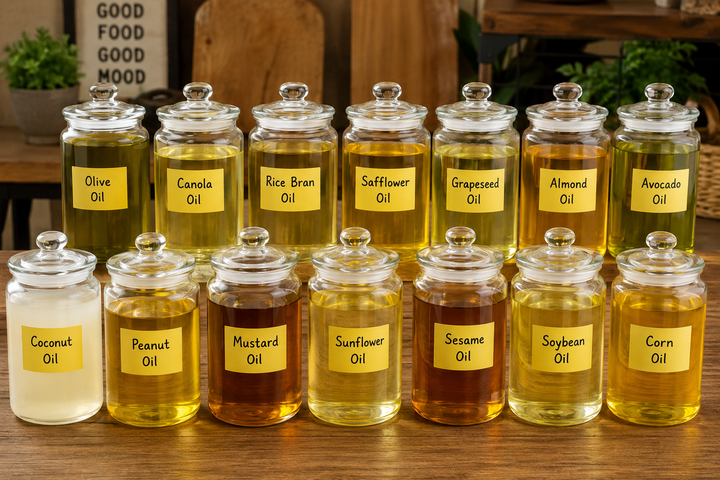
Cooking oils are widely used in food preparation across households, restaurants, and food manufacturing industries. Derived from plant-based or other sources, oils contribute to cooking processes such as frying, sautéing, roasting, baking, and food preservation.


Different oils possess unique characteristics based on their source materials, fatty acid composition, processing methods, flavor profiles, and thermal properties. As a result, cooking oils are frequently discussed within food science, nutrition education, culinary arts, agriculture, and food manufacturing.

This guide explores cooking oil categories, nutritional concepts, and culinary characteristics from an educational perspective without providing dietary or medical advice.

Why Cooking Oils Matter

Cooking oils serve multiple functions in food preparation.

Common uses include:

  • Heat transfer during cooking
  • Texture development
  • Flavor enhancement
  • Food preservation
  • Ingredient blending
  • Moisture retention
  • Culinary versatility
  • Food manufacturing applications

Different oils may be selected based on cooking techniques and desired food characteristics.

How Cooking Oils Are Produced

Most edible oils originate from agricultural sources.

Common sources include:

  • Olives
  • Soybeans
  • Sunflower seeds
  • Canola plants
  • Peanuts
  • Coconuts
  • Corn
  • Avocados

Production methods vary depending on the oil type and manufacturing process.

Common Categories of Cooking Oils

Oil CategorySource Material
Olive OilOlives
Canola OilRapeseed varieties
Sunflower OilSunflower seeds
Soybean OilSoybeans
Peanut OilPeanuts
Coconut OilCoconut flesh
Corn OilCorn germ
Avocado OilAvocados

Each oil possesses distinct culinary and compositional characteristics.

Understanding Fat Composition

Cooking oils contain varying proportions of different fats.

Common categories include:

  • Monounsaturated fats
  • Polyunsaturated fats
  • Saturated fats

The proportion of each fat category differs among oils and contributes to their physical and culinary properties.

Nutrition Concepts and Cooking Oils

Nutrition discussions often reference oils because fats are essential dietary components.

Fats contribute to:

  • Energy provision
  • Food texture
  • Flavor development
  • Nutrient transport functions
  • Food formulation

The nutritional characteristics of oils vary according to their composition and processing methods.

Refined and Unrefined Oils

Cooking oils may undergo different levels of processing.

Refined Oils

Characteristics may include:

  • Additional processing steps
  • Neutral flavor profiles
  • Consistent appearance
  • Extended shelf stability

Unrefined Oils

Characteristics may include:

  • Less extensive processing
  • Distinct flavor profiles
  • Source-specific characteristics
  • Different culinary applications

Processing approaches vary among manufacturers and products.

Smoke Point and Cooking Methods

Smoke point refers to the temperature at which an oil begins producing visible smoke under specific conditions.

Food science discussions often examine:

  • High-temperature cooking
  • Frying applications
  • Baking uses
  • Roasting techniques
  • Sautéing methods

Cooking performance may vary among oil types due to differences in composition and processing.

Olive Oil

Olive oil is among the most widely recognized cooking oils globally.

It is commonly discussed in relation to:

  • Culinary traditions
  • Mediterranean cuisine
  • Flavor characteristics
  • Food preparation applications
  • Agricultural production

Numerous varieties exist, each with unique production methods and characteristics.

Sunflower Oil

Sunflower oil is derived from sunflower seeds and is widely used in household and commercial food preparation.

Topics commonly associated with sunflower oil include:

  • Food manufacturing
  • Frying applications
  • Ingredient formulation
  • Agricultural production

Canola Oil

Canola oil is produced from specially cultivated rapeseed varieties.

It is often discussed within:

  • Food science research
  • Culinary applications
  • Agricultural production systems
  • Processed food manufacturing

Coconut Oil

Coconut oil is obtained from coconut flesh and is used in both culinary and non-food applications.

Common discussion areas include:

  • Tropical agriculture
  • Food production
  • Baking applications
  • Ingredient functionality

Avocado Oil

Avocado oil has gained visibility in culinary discussions due to its production source and food preparation applications.

Topics frequently associated with avocado oil include:

  • Culinary innovation
  • Food manufacturing
  • Specialty ingredients
  • Agricultural development

Food Industry and Oil Production

Cooking oils represent a significant segment of global agriculture and food production.

Industry participants may include:

  • Farmers
  • Agricultural cooperatives
  • Food processors
  • Refining facilities
  • Packaging companies
  • Retail distributors

The global edible oils sector continues to evolve alongside food industry innovation.

Examples of Organizations Involved in Food and Agriculture Research

Numerous organizations contribute to food science, nutrition research, and agricultural development.

Examples include:

  • Food and Agriculture Organization
  • World Health Organization
  • International Food Information Council

These organizations are mentioned solely as examples of institutions involved in food, agriculture, and nutrition-related research and education.

Food and Nutrition Trends (2025–2026)

Several developments continue shaping consumer interest in cooking oils.

Current trends include:

  • Sustainable agriculture initiatives
  • Food traceability systems
  • Plant-based food innovation
  • Advanced food processing technologies
  • Consumer nutrition awareness
  • Clean-label product development
  • Supply chain transparency
  • Agricultural sustainability programs

These developments reflect broader changes within the global food industry.

Cooking Oil Overview

TopicGeneral Focus
Source MaterialAgricultural origin
Fat CompositionFat category distribution
Processing MethodsRefining and production approaches
Culinary ApplicationsCooking uses
Food ScienceFunctional characteristics
AgricultureProduction and supply systems

Frequently Asked Questions

What are cooking oils made from?

Cooking oils are typically produced from plant-based sources such as olives, seeds, grains, nuts, and fruits.

Why do oils differ from one another?

Differences arise from source materials, fat composition, processing methods, flavor characteristics, and production techniques.

What is a smoke point?

Smoke point refers to the temperature at which an oil begins producing visible smoke under specific conditions.

What is the difference between refined and unrefined oils?

Refined oils generally undergo additional processing, while unrefined oils retain more source-specific characteristics.

Why are cooking oils discussed in nutrition education?

Cooking oils contain fats, which are important components of food science and nutrition discussions.

Conclusion

Cooking oils play an important role in culinary traditions, food science, agriculture, and food manufacturing. From olive oil and sunflower oil to avocado and coconut oils, each type possesses distinct characteristics shaped by its source material, processing methods, and composition.

As consumer awareness, food technology, agricultural innovation, and sustainability initiatives continue evolving, understanding cooking oil types and their characteristics provides valuable insight into one of the most widely used ingredients in modern food preparation.

Disclaimer

This article is intended solely for informational and educational purposes. It does not provide medical, nutritional, dietary, healthcare, fitness, or professional advice. It does not recommend, rank, compare, endorse, promote, or discourage the consumption of any specific cooking oil, food product, or dietary practice. Readers should consult qualified healthcare professionals, registered dietitians, nutrition specialists, and authoritative health resources regarding dietary choices, nutrition concerns, and individual health circumstances.

author-image

Ravi Shankar Maurya

We create purposeful content that speaks, resonates, and drives action.

June 10, 2026 . 6 min read