Warehouse Automation Equipment: Smart Solutions for Modern Operations
The global logistics and supply chain industry is evolving rapidly. As customer expectations continue to rise, businesses are under pressure to improve efficiency, accuracy, and productivity across warehouse operations. This is where warehouse automation equipment plays an increasingly important role.
Modern warehouses are no longer limited to manual processes. Advanced technologies now help organizations streamline inventory management, optimize storage space, reduce operational delays, and improve overall workflow. From robotic systems to intelligent inventory tracking, warehouse automation has become a key part of modern supply chain management.
Understanding Warehouse Automation Equipment
Warehouse automation equipment refers to technologies and systems designed to automate repetitive warehouse tasks. These solutions minimize manual intervention while improving speed, accuracy, and consistency.
Automation can support various warehouse functions, including:
- Inventory management
- Order fulfillment
- Material transportation
- Product sorting
- Storage optimization
- Packaging operations
- Data collection and reporting
The growing adoption of digital transformation strategies has accelerated the use of automated warehouse systems across industries such as manufacturing, retail, e-commerce, healthcare, and distribution.
Why Warehouse Automation Matters
Warehouses serve as critical hubs within supply chains. Any inefficiency can create delays throughout the entire logistics network.
Automation helps organizations address common operational challenges such as:
- Inventory inaccuracies
- Labor-intensive workflows
- Storage inefficiencies
- Order processing delays
- Rising operational complexity
Industry reports suggest that automated warehouse technologies can significantly improve inventory accuracy while reducing processing time and operational errors. As global commerce continues to expand, smart warehouse technology is becoming essential for maintaining competitive performance.
Key Types of Warehouse Automation Equipment
Automated Storage and Retrieval Systems (AS/RS)
Automated Storage and Retrieval Systems are among the most widely used warehouse automation solutions. These systems automatically place and retrieve inventory from designated storage locations.
Benefits include:
- Improved storage density
- Faster inventory access
- Better space utilization
- Reduced handling errors
AS/RS technology is especially valuable in facilities with high inventory volumes and limited warehouse space.
Warehouse Robotics
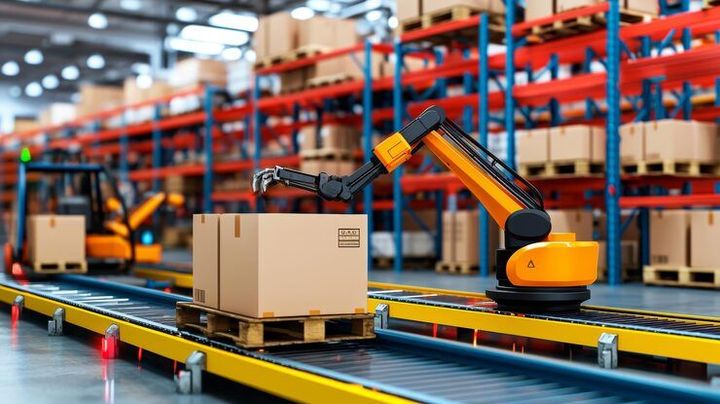
Warehouse robotics has transformed material handling operations. Robotic systems can perform tasks such as transporting goods, sorting packages, and assisting with order fulfillment.
Common robotic solutions include:
- Autonomous Mobile Robots (AMRs)
- Automated Guided Vehicles (AGVs)
- Robotic picking systems
- Sorting robots
These technologies improve workflow efficiency while helping warehouses operate with greater consistency.
Conveyor and Sortation Systems
Conveyor systems automate product movement throughout warehouse facilities. Combined with advanced sortation technology, they enable fast and accurate product routing.
Advantages include:
- Reduced manual handling
- Faster product movement
- Improved order accuracy
- Enhanced operational flow
Large distribution centers often rely on conveyor automation to manage high daily order volumes.
Warehouse Management Systems (WMS)
A Warehouse Management System acts as the digital control center for warehouse operations.
Modern WMS platforms provide:
- Real-time inventory visibility
- Order tracking
- Inventory forecasting
- Performance analytics
- Resource optimization
When integrated with warehouse automation equipment, a WMS helps coordinate processes across the entire facility.
Automated Picking Technologies
Order picking is often one of the most time-consuming warehouse activities.
Automated picking solutions include:
- Pick-to-light systems
- Voice-directed picking
- Robotic picking arms
- Vision-guided technologies
These tools improve picking accuracy while increasing throughput during peak operational periods.
Benefits of Smart Warehouse Automation
Organizations investing in warehouse automation equipment often experience improvements across multiple operational areas.
Increased Productivity
Automated systems can operate continuously and perform repetitive tasks with high efficiency. This helps increase throughput and reduces processing bottlenecks.
Improved Inventory Accuracy
Real-time inventory tracking and automated data capture reduce human error and enhance stock visibility.
Better Space Utilization
Advanced storage systems allow warehouses to maximize vertical and horizontal space, improving storage capacity without expanding facility size.
Enhanced Safety
Automation reduces the need for manual handling of heavy materials and repetitive movements, creating safer working environments.
Data-Driven Decision Making
Automation generates valuable operational data that supports performance monitoring, forecasting, and strategic planning.
Emerging Trends in Warehouse Automation
The future of warehouse automation continues to be shaped by technological innovation.
Artificial Intelligence and Machine Learning
Artificial intelligence is helping warehouses predict demand patterns, optimize inventory placement, and improve workflow planning.
Machine learning algorithms continuously analyze operational data to identify opportunities for greater efficiency.
Internet of Things (IoT)
Connected sensors and smart devices provide real-time visibility into warehouse activities.
IoT-enabled systems help monitor:
- Equipment performance
- Inventory movement
- Environmental conditions
- Operational efficiency metrics
Digital Twin Technology
Digital twins create virtual models of warehouse environments. Operators can simulate changes, test workflows, and optimize facility layouts before implementing physical modifications.
Predictive Maintenance
Advanced monitoring systems can detect potential equipment issues before failures occur. This reduces downtime and improves operational reliability.
Factors to Consider When Implementing Automation
Warehouse automation is not a one-size-fits-all solution. Organizations should evaluate their operational requirements carefully.
Key considerations include:
- Warehouse size and layout
- Inventory complexity
- Order volume
- Integration requirements
- Scalability needs
- Technology compatibility
Successful implementation often begins with identifying operational bottlenecks and selecting automation technologies that align with business objectives.
The Future of Warehouse Operations
As supply chains become increasingly complex, warehouse automation equipment will continue to play a central role in operational success.
Advancements in robotics, artificial intelligence, cloud computing, and data analytics are creating smarter, more connected warehouse environments. Businesses that embrace these innovations can improve operational efficiency, enhance inventory management, and strengthen overall supply chain performance.
Modern warehouses are evolving from traditional storage facilities into intelligent logistics centers powered by automation and digital technology. The continued growth of automated warehouse systems reflects a broader shift toward smarter, faster, and more efficient operations across global industries.
Conclusion
Warehouse automation equipment is transforming how organizations manage inventory, fulfill orders, and optimize logistics operations. Technologies such as warehouse robotics, automated storage systems, conveyor networks, and advanced warehouse management platforms help improve productivity, accuracy, and operational visibility.
As innovation continues to accelerate, smart warehouse solutions will become increasingly important for organizations seeking greater efficiency and long-term operational excellence. By understanding available technologies and emerging trends, businesses can make informed decisions about the future of their warehouse operations.