VR in Automotive Design: Explore Future Car Design Technologies
Virtual reality is changing how vehicles are planned, tested, and improved. In the automotive industry, VR technology allows designers and engineers to build digital vehicle models and interact with them in immersive environments before physical production begins. This approach supports faster design reviews, better collaboration, and more accurate simulations.
VR Automotive systems are now used by manufacturers, research teams, and engineering departments around the world. Automotive VR helps teams evaluate vehicle structures, interiors, safety features, and user experiences using advanced VR Simulation platforms. As computing power improves, Car VR applications continue to expand across vehicle development processes.
Context
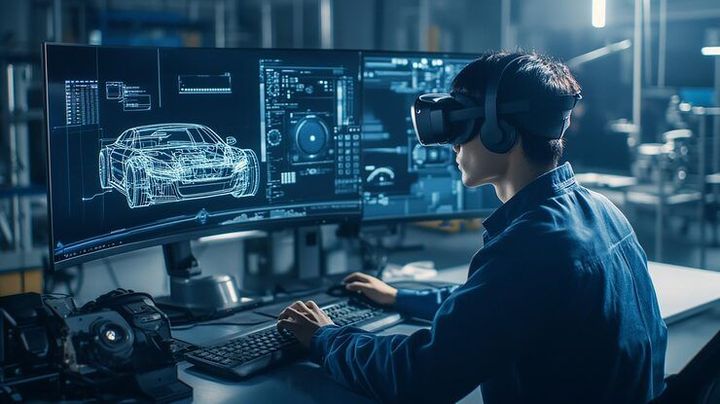
VR Design in the automotive industry refers to the use of virtual reality tools to create and test digital vehicle models. Engineers wear VR headsets or use immersive display systems to examine vehicle parts and designs in a three-dimensional environment. This technology helps teams identify design challenges before building physical prototypes.
How Automotive VR Started
Early automotive design depended heavily on clay models and physical testing. While these methods are still useful, they often require significant time and resources. Around the 2010s, improvements in graphics processing and VR hardware made immersive design systems more practical for industrial use.
Automotive VR gradually became part of research and development centers. Today, many companies use VR Engineering tools for design reviews, aerodynamic studies, and manufacturing planning.
Purpose of VR Simulation
The main purpose of VR Simulation is to improve vehicle development efficiency and accuracy. Engineers can test driving conditions, interior layouts, and manufacturing processes in virtual spaces.
Common uses include:
- Digital dashboard testing
- Driver visibility analysis
- Virtual Prototyping of vehicle components
- Ergonomic testing for seating and controls
- Production line planning
These systems reduce dependence on repeated physical model creation while improving collaboration between departments.
Importance
VR Automotive technology affects manufacturers, engineers, designers, suppliers, and consumers. By improving digital testing capabilities, Automotive VR contributes to safer and more efficient vehicle development processes.
One important benefit is faster design validation. Teams can review multiple versions of a vehicle in a virtual environment and make adjustments quickly. This reduces delays during development stages.
Another major advantage is improved communication. Designers, engineers, and production planners can enter shared virtual spaces to review the same model simultaneously.
Benefits for Vehicle Development
VR Design supports several areas of automotive innovation:
| Area | Role of VR Technology |
|---|---|
| Vehicle Design | Visualization of interior and exterior layouts |
| Safety Testing | Simulation of road and collision conditions |
| Manufacturing | Factory workflow and assembly planning |
| Driver Experience | Testing comfort and dashboard usability |
| Engineering | Virtual Prototyping and component analysis |
Car VR tools also help reduce material waste because fewer physical prototypes are required during early development phases.
Impact on Consumers
Consumers may not directly use Automotive VR during manufacturing, but they benefit from improved vehicle quality and safety testing. VR Engineering systems allow manufacturers to test visibility, comfort, and control placement more thoroughly.
Some vehicle companies also use VR Simulation for customer demonstrations and vehicle previews. Potential users can explore digital vehicle interiors before production models become available.
Recent Updates
Between 2024 and 2026, several important developments have shaped the Automotive VR industry. Advancements in artificial intelligence, cloud computing, and graphics processing have improved VR Design accuracy and accessibility.
Many automotive companies now combine VR Simulation with artificial intelligence systems to predict design performance and detect engineering problems earlier.
Recent trends include:
- Cloud-based collaborative VR platforms
- Real-time vehicle rendering
- AI-assisted Virtual Prototyping
- Mixed reality integration for assembly planning
- Improved motion tracking systems
Another major development is the use of digital twins. A digital twin is a virtual model connected to real-time vehicle data. Engineers can monitor and test vehicle behavior in virtual environments using live information.
Automotive VR systems are also becoming more portable. Lightweight headsets and wireless tracking devices allow engineering teams to work more flexibly across different locations.
The rise of electric vehicles has increased the importance of VR Engineering as manufacturers redesign battery systems, interiors, and vehicle architectures. Virtual testing helps engineers evaluate thermal systems, battery layouts, and energy efficiency.
Laws or Policies
Governments and regulatory agencies are still developing frameworks related to VR technology in industrial environments. While there are few laws focused only on Automotive VR, several regulations affect how VR systems are used.
Data protection rules are important because VR platforms often collect motion and biometric information. Companies using VR Simulation systems must follow privacy regulations in many regions.
Relevant policy areas include:
- Workplace safety regulations
- Data privacy requirements
- Vehicle safety compliance standards
- Intellectual property protection
- Cybersecurity guidelines
In the European Union, digital privacy laws influence how immersive technologies manage user data. In the United States, workplace safety agencies provide guidance related to VR equipment use in industrial settings.
Manufacturers also use VR Engineering systems to support compliance with crash safety and ergonomic standards before physical testing begins.
Tools and Resources
Several platforms and software systems support VR Automotive applications. These tools help engineers create simulations, review vehicle designs, and test manufacturing processes.
Common categories include:
- 3D modeling platforms
- VR collaboration software
- Simulation engines
- CAD integration systems
- Digital twin platforms
Popular tools used in Automotive VR environments include:
| Tool Type | Main Function |
| CAD Software | Vehicle component modeling |
| VR Headsets | Immersive design interaction |
| Simulation Platforms | Driving and safety testing |
| Rendering Engines | Realistic visual environments |
| Collaboration Systems | Team-based virtual reviews |
Educational institutions and automotive research organizations also provide training materials related to VR Design and Virtual Prototyping.
Useful learning resources often include:
- Engineering research journals
- Automotive technology conferences
- University VR laboratories
- Industry technical reports
- Digital manufacturing publications
These resources help students and professionals understand current VR Engineering methods and applications.
FAQs
What is VR Automotive technology?
VR Automotive technology uses virtual reality systems to design, test, and evaluate vehicles in digital environments before physical production.
How does Virtual Prototyping help car manufacturers?
Virtual Prototyping allows engineers to test vehicle components digitally, helping reduce material usage and improve design accuracy.
Is VR Simulation used only for vehicle design?
No. VR Simulation is also used for manufacturing planning, driver testing, safety analysis, and employee training.
What industries work with Automotive VR?
Automotive VR is mainly used in vehicle manufacturing, engineering, software development, industrial design, and research institutions.
Are VR Engineering systems important for electric vehicles?
Yes. VR Engineering helps manufacturers evaluate battery systems, energy efficiency, and interior layouts for electric vehicles.
Conclusion
VR in automotive design continues to transform how vehicles are developed and tested. Automotive VR systems support faster collaboration, improved simulations, and more detailed Virtual Prototyping processes. As computing technologies improve, VR Engineering tools are becoming more advanced and accessible across the automotive sector.
Recent developments between 2024 and 2026 show growing use of AI integration, digital twins, and cloud-based collaboration in VR Simulation environments. These technologies are helping manufacturers improve efficiency, safety testing, and design accuracy. In the coming years, Car VR applications are expected to play an even larger role in vehicle innovation and engineering research.