Stainless Steel Manufacturing Guide: Advanced Technology, Smart Production & Sustainable Trends
Stainless steel is an iron-based alloy containing sufficient chromium to develop a protective oxide layer that helps resist corrosion. Different grades also contain elements such as nickel, molybdenum, manganese, nitrogen, and carbon to achieve specific mechanical, thermal, and chemical properties.
Chromium is especially important because it forms a thin protective layer on the steel surface. This layer helps limit corrosion and can reform when the surface is exposed to oxygen, provided the material and conditions are suitable.
Stainless steel is used in many industries, including food processing, construction, automotive manufacturing, medical equipment, chemical production, energy systems, and household appliances.
How the Manufacturing Process Works
The manufacturing process depends on the required grade, shape, thickness, and intended application. Large production facilities often use several connected stages.
Raw material preparation: Iron-bearing materials, chromium, and other alloying elements are selected according to the required grade.
Melting: Electric furnaces melt the materials and create a uniform liquid metal mixture.
Refining: The molten steel is adjusted to control its chemical composition and reduce unwanted impurities.
Casting: Liquid steel is formed into slabs, billets, or other intermediate shapes.
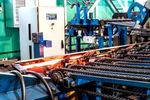
Hot and cold rolling: Rolling equipment reduces thickness and creates the required dimensions and surface characteristics.
Heat treatment: Controlled heating and cooling help develop the required material structure and mechanical properties.
Pickling and finishing: Suitable treatments remove surface scale, while finishing processes establish the desired appearance and surface condition.
Inspection: Testing verifies dimensions, surface quality, chemical composition, and other relevant specifications.
Not every stainless steel product follows the same route. Pipes, sheets, bars, coils, and precision components may require different equipment and finishing methods.
Why Stainless Steel Manufacturing Matters Today
Importance Across Modern Industries
Stainless steel plays an important role in modern infrastructure because it combines corrosion resistance, strength, durability, and flexibility. Manufacturers select different grades according to the environment, temperature, mechanical load, and hygiene requirements of the final product.
Its importance can be seen across several sectors:
Food and beverage production: Stainless steel tanks, conveyors, pipes, and processing equipment support hygienic handling and cleaning.
Healthcare and laboratories: Selected grades are used for surgical instruments, work surfaces, storage equipment, and laboratory components.
Construction: Stainless steel appears in structural components, building facades, handrails, and architectural details.
Automotive and transportation: Exhaust components, structural parts, and specialized equipment use stainless steel where its properties are suitable.
Chemical and energy industries: Tanks, heat exchangers, piping, and other components may require resistance to demanding environments.
Water treatment: Stainless steel components can be useful in filtration systems, pumps, and water-handling equipment.
Problems Modern Manufacturing Technology Helps Solve
Traditional production methods can face challenges such as inconsistent thickness, surface defects, material waste, high energy use, and unplanned equipment downtime.
Advanced manufacturing systems help address these issues through better process control and continuous monitoring.
For example, automated rolling systems can maintain more consistent sheet thickness. Machine vision can identify certain surface defects, while digital sensors can track furnace temperatures and machine vibration.
These technologies do not remove every production risk. Their effectiveness depends on correct installation, suitable operating procedures, calibration, and trained personnel.
Main Stainless Steel Grades and Applications
Different grades have different chemical compositions and performance characteristics. Selecting the correct grade is essential for safe and reliable production.
Stainless steel family | Main characteristics | Common applications |
|---|---|---|
Austenitic | Generally good corrosion resistance and formability | Food equipment, tanks, piping |
Ferritic | Magnetic, with useful corrosion resistance in suitable environments | Appliances, automotive components |
Martensitic | Can achieve high hardness through heat treatment | Blades, shafts, selected mechanical parts |
Duplex | Combines austenitic and ferritic structures | Chemical equipment, demanding piping systems |
Precipitation-hardening | Can develop high strength through specialized heat treatment | Precision and aerospace components |
The right material depends on factors such as chloride exposure, temperature, welding requirements, mechanical stress, and cleaning procedures. A grade that performs well indoors may not be suitable for a marine or highly corrosive environment.
Advanced Technology in Stainless Steel Production
Automated Machinery and Precision Processing
Modern stainless steel plants increasingly use automated equipment to improve repeatability and maintain process control.
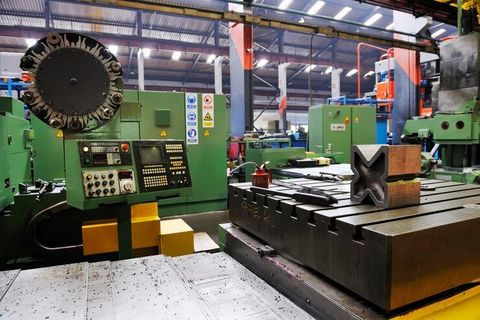
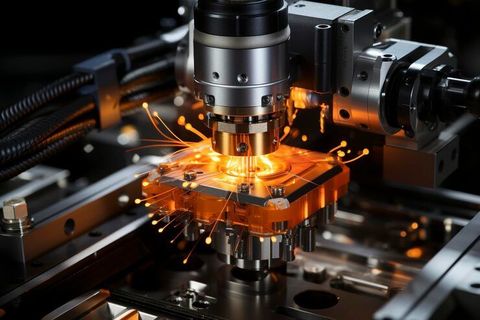
Computer numerical control (CNC) machines help manufacture components according to programmed dimensions. Laser cutting, waterjet cutting, precision grinding, and automated bending support the production of sheets, panels, pipes, and formed parts.
Robotic systems can perform repetitive handling and welding tasks where suitable equipment and safety controls are in place.
Important technologies include:
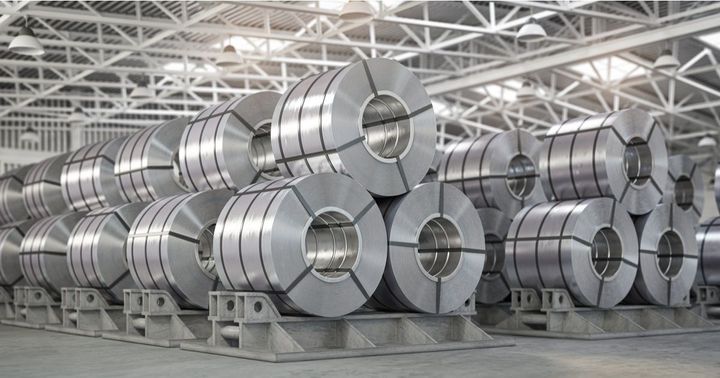
Automated coil handling and sheet feeding.
Computer-controlled rolling and thickness measurement.
Robotic welding and material movement.
Laser-based dimensional measurement.
Automated surface inspection.
Programmable heat-treatment systems.
Automation is most useful when equipment, software, and production procedures work together. Poorly maintained sensors or incorrect machine settings can still create defects.
Smart Factory Systems and Industrial Data
Smart manufacturing connects machinery, sensors, software, and production records. This allows operators to understand what is happening on the production floor and identify unusual operating conditions.
For example, sensors can measure furnace temperature, rolling pressure, vibration, and electrical consumption. Industrial software can collect this information and display it on a production dashboard.
Artificial intelligence can also help identify patterns associated with surface defects, equipment wear, or inconsistent production conditions. However, these systems require reliable data and appropriate human oversight.
A connected factory may use the following technologies:
Industrial Internet of Things (IIoT) sensors.
Manufacturing execution systems for production tracking.
Machine vision for surface inspection.
Predictive maintenance analytics.
Digital records for material traceability.
Computer-controlled process monitoring.
Quality Control and Material Testing
Quality control is central to stainless steel manufacturing because defects may affect performance, safety, appearance, and compliance.
Inspection methods vary according to the product and its intended use. Chemical analysis checks alloy composition, while tensile testing evaluates mechanical strength and elongation.
Ultrasonic testing can identify certain internal flaws. Dye penetrant inspection can reveal surface-breaking defects in suitable materials. Dimensional measurement verifies thickness, diameter, flatness, and other specifications.
Manufacturers may also examine corrosion resistance, weld integrity, surface roughness, and hardness when required.
A strong quality system records inspection results and connects them to material batches and production stages. This makes it easier to investigate defects and understand where a process needs improvement.
Recent Updates and Manufacturing Trends in 2025–2026
Greater Attention to Low-Emission Production
Reducing industrial emissions has become an important part of steelmaking discussions. Manufacturers are examining renewable electricity, energy-efficient equipment, improved scrap use, hydrogen-based processes, and carbon capture technologies.
These approaches do not all apply equally to every stainless steel facility. Their suitability depends on the production route, energy supply, material requirements, and available infrastructure.
In India, government policy has increasingly emphasized steel-sector decarbonization, including energy efficiency, renewable energy, green hydrogen research, and carbon capture, utilization, and storage. The country's Green Steel Taxonomy, introduced in 2024, provides a framework for classifying steel according to emissions intensity.
Smart Manufacturing Standards
Digital integration is another important trend. In 2026, ISO published guidance for smart manufacturing in the iron and steel industry through ISO 21763:2026. The guidance addresses the application of smart equipment, systems, and algorithms to areas such as production stability, worker safety, and environmental performance.
For stainless steel plants, this broader direction supports greater attention to data quality, connected equipment, production monitoring, and consistent operating procedures.
New Trade and Emissions Requirements
The European Union's Carbon Border Adjustment Mechanism entered its definitive phase on 1 January 2026. It covers specified iron and steel goods alongside other emissions-intensive product categories. Relevant importers must understand the applicable authorization, reporting, and emissions-related requirements. Exact obligations depend on the product and the rules in force.
This development makes emissions measurement and reliable production records more important for manufacturers involved in international supply chains. Stainless steel products are not automatically subject to every requirement simply because they contain steel; product classification and applicable legislation must be checked.
Circular Material Use and Resource Efficiency
Recycling remains an important part of stainless steel production because suitable scrap can be returned to the metalmaking process. However, scrap must be properly identified, sorted, and managed to maintain the intended alloy composition.
Manufacturers are also exploring improved water circulation, heat recovery, better cutting layouts, and more accurate process controls. These measures can reduce waste and improve resource efficiency when implemented correctly.
Laws, Standards, and Manufacturing Policies
Material Safety and Product Requirements
Stainless steel manufacturers must follow the rules that apply to their products, facilities, workers, and destination markets. Requirements differ by country and application.
Common areas of regulation include:
Workplace safety and machine guarding.
Industrial emissions and waste management.
Chemical handling and wastewater discharge.
Pressure equipment and structural integrity.
Food-contact material requirements.
Product testing, documentation, and traceability.
Standards from organizations such as ISO, ASTM, and EN may specify material grades, testing methods, dimensions, or product requirements. The applicable edition and standard depend on the intended use and jurisdiction.
Environmental Compliance in India
In India, industrial facilities may need to comply with environmental requirements under applicable national and state legislation. Depending on the facility and its activities, permissions or approvals may be required for emissions, wastewater, hazardous waste, and other regulated operations.
The relevant pollution control authority determines applicable requirements. Manufacturers should maintain accurate records, monitor emissions where required, and ensure that waste is handled through authorized processes.
Export-oriented manufacturers must also assess the rules of their destination markets. Meeting domestic requirements alone does not necessarily establish compliance with every international product or environmental standard.
Tools and Resources for Stainless Steel Manufacturing
Production Planning and Process Monitoring
Manufacturers can use general digital tools to organize production schedules, record machine performance, and monitor quality. The best choice depends on the size of the facility, production complexity, and technical requirements.
Useful categories include:
Production planning software: Helps coordinate manufacturing stages, materials, and schedules.
Computer-aided design (CAD): Supports product drawings, component design, and dimensional planning.
Manufacturing execution systems (MES): Track production progress, machine status, and batch records.
Quality management software: Organizes inspections, test results, nonconformity reports, and corrective actions.
Energy monitoring tools: Record electricity use and help identify areas for improvement.
Material selection references: Provide information about alloy composition, mechanical properties, and corrosion resistance.
Maintenance checklists: Help teams plan inspections, lubrication, calibration, and equipment maintenance.
Practical Methods for Improving Production
A manufacturer can begin by recording a few important performance indicators instead of introducing several complex systems at once.
Performance indicator | What it helps measure |
|---|---|
First-pass yield | Percentage of products meeting requirements without rework |
Equipment downtime | Time machinery is unavailable for production |
Material utilization | How effectively input material becomes usable output |
Energy intensity | Energy used per unit of production |
Defect rate | Frequency of products that fail inspection |
Water consumption | Water used during selected production activities |
Reviewing these indicators over time helps managers distinguish recurring problems from isolated incidents. Comparisons should use consistent measurement methods and account for differences in product type and production volume.
Frequently Asked Questions
What Are the Main Steps in Stainless Steel Manufacturing?
The main steps generally include raw material preparation, melting, refining, casting, rolling, heat treatment, surface finishing, and quality inspection. The exact sequence depends on whether the final product is a sheet, pipe, bar, coil, or finished component.
Which Machines Are Used in Stainless Steel Production?
Common equipment includes electric furnaces, casting machines, rolling mills, annealing furnaces, cutting machines, polishing equipment, welding systems, and inspection instruments. The equipment selection depends on the required product dimensions, grade, and production method.
How Does Automation Improve Stainless Steel Manufacturing?
Automation helps control repetitive processes, maintain dimensional consistency, monitor equipment conditions, and identify certain defects. Its results depend on suitable machinery, reliable data, regular maintenance, and trained operators.
Is Stainless Steel Environmentally Sustainable?
Stainless steel can support circular material use because suitable scrap can be recycled into new production. However, melting, refining, transportation, and finishing require energy and resources. Its overall environmental impact depends on the production method, electricity source, recycled content, and product lifespan.
What Should Manufacturers Consider When Choosing a Stainless Steel Grade?
They should evaluate corrosion exposure, temperature, mechanical strength, formability, welding requirements, hygiene needs, and applicable standards. Material selection should be based on the actual operating environment rather than appearance alone.
Conclusion
Stainless steel manufacturing combines metallurgy, precision machinery, quality assurance, and increasingly connected production systems. Its importance across construction, healthcare, food processing, transportation, and energy makes reliable manufacturing practices essential.