Automatic Sticker Labeling Machines for Commercial Packaging Production
Automatic sticker labeling machines play an important role in modern commercial packaging production. These machines apply adhesive labels to products, containers, bottles, and packages with controlled positioning and consistent movement.
An automatic labeling machine combines mechanical components, sensors, and control systems to place labels on packaging surfaces. Depending on its design, it can handle different shapes, materials, and production requirements.
Industrial labeling machines are an important part of packaging automation machinery. They help maintain consistent product identification, support organized production workflows, and reduce the need for repeated manual labeling activities.
Importance of Automatic Labeling Machines
Consistent Product Identification
Labels provide essential information about packaged products. They may contain product names, manufacturing details, batch numbers, instructions, barcodes, or other identification information.
Automatic labeling systems help maintain a consistent label position across products. This is particularly useful when packaging operations involve large quantities of similar containers or products.
Integration With Packaging Production
Industrial labeling equipment can operate alongside filling, sealing, inspection, and packaging systems. When connected through a production line, labeling becomes part of a coordinated manufacturing process.
High-speed labeling systems are designed to support continuous product movement. Their actual operating speed depends on product dimensions, label specifications, machine configuration, and production conditions.
Reduced Manual Handling
Manual labeling requires workers to position and apply individual labels. Automated equipment performs many of these repeated movements through mechanical and electronic processes.
Automation can reduce repetitive handling, although operators remain important for setup, inspection, monitoring, and maintenance.
How Automatic Sticker Labeling Machines Work
Product Feeding and Positioning
Products usually enter the labeling area through a conveyor or feeding mechanism. Guides, rollers, or positioning devices help maintain the correct orientation.
Sensors may detect the presence of a container and communicate with the machine control system. This allows labeling operations to be coordinated with product movement.
Label Dispensing and Application
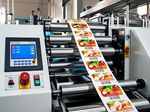
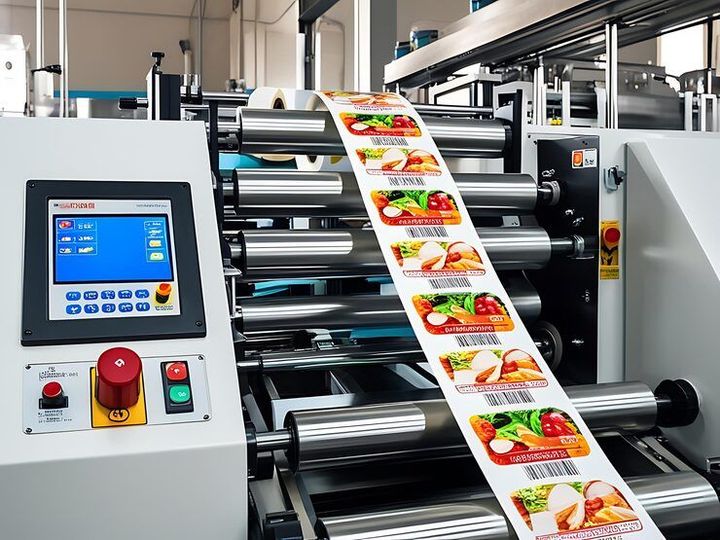
A label applicator machine typically uses a roll of adhesive labels mounted on a dispensing system. The backing material moves through rollers, allowing individual labels to separate and reach the application point.
The label is then applied using a suitable mechanism. Depending on the machine, application may involve pressure rollers, wiping plates, tamping devices, or air-assisted systems.
Control and Inspection
Control systems coordinate conveyor movement, label dispensing, and application timing. Operators can adjust settings according to product dimensions and labeling requirements.
Some industrial product labeling systems also include inspection cameras or sensors. These components can help identify missing, misplaced, or incorrectly positioned labels.
Types of Industrial Labeling Equipment
Automatic Bottle Labeling MachineAn automatic bottle labeling machine is designed for cylindrical or rounded containers. It may apply labels around the container body or at specific positions.
Bottle labeling equipment is commonly used in beverage, personal care, household product, and other packaging environments.
Flat Surface Labeling Systems
These systems are useful when labels must be positioned consistently on the top, side, or front surface of a product.
Wraparound Labeling Machines
The container may rotate during application to help the label cover the required surface area.
Industrial Label Printing and Application Systems
Some production environments require labels to be printed immediately before application. Industrial label printing machines can produce variable information such as batch codes, dates, or product identifiers.
Printing and application may be integrated into one system or arranged as separate stages.
Applications Across Industries
Food and Beverage Packaging
Food packaging labeling machines are used for containers, jars, bottles, cartons, and packaged food products.
Labels may communicate ingredient information, product details, storage instructions, and identification codes. Packaging requirements vary according to product type and applicable regulations.
Pharmaceutical Packaging
Pharmaceutical labeling equipment supports the identification of bottles, cartons, containers, and other packaging formats.
Label accuracy is especially important where product identification, batch information, and instructions must remain readable and correctly positioned.
Cosmetics and Household Products
Cosmetic labeling machinery is used for packaging items such as creams, lotions, shampoos, and personal care products.
These applications may involve containers with different shapes, surface materials, and label dimensions.
Machine Selection and Technical Considerations
Selecting labeling production line equipment involves understanding the packaging format and production requirements.
Consideration | Why It Matters |
|---|---|
Product shape | Determines suitable labeling mechanism |
Label dimensions | Affects dispensing and application setup |
Production speed | Influences conveyor and applicator capacity |
Surface material | Affects label adhesion |
Label position | Determines sensor and guide arrangement |
Maintenance access | Supports routine cleaning and servicing |
A machine designed for round bottles may not be suitable for flat cartons without configuration changes. Therefore, packaging dimensions and labeling requirements should be reviewed before equipment selection.
Recent Technology Developments
Sensor-Based Automation
Modern packaging labeling machinery increasingly uses sensors to detect products and coordinate application timing.
These systems can help reduce positioning errors caused by inconsistent product movement. Their performance depends on correct installation, calibration, and operating conditions.
Digital Controls and Monitoring
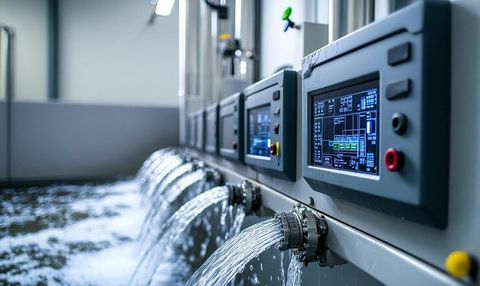
Digital control panels allow operators to adjust machine settings and monitor basic operating information.
Some systems provide production counters, fault indicators, and parameter storage. These features can support routine monitoring and simplify repeated production setups.
Flexible Packaging Formats
Manufacturing environments often handle multiple container sizes and product variations. Adjustable guides, interchangeable components, and programmable settings can make labeling systems more adaptable.
However, changing packaging formats may still require mechanical adjustments and setup verification.
Maintenance and Operational Safety
Regular maintenance helps keep automatic sticker labeling machines operating reliably. Cleaning label-contact surfaces, inspecting rollers, checking sensors, and reviewing conveyor alignment are common maintenance activities.
Operators should follow the equipment manufacturer's instructions for inspection and servicing. Moving components, electrical systems, and compressed-air mechanisms require appropriate safety precautions.
Before cleaning or maintenance, equipment should be placed in a safe condition according to established workplace procedures.
FAQs
What is an automatic sticker labeling machine?
It is equipment that automatically applies adhesive labels to products or packaging using mechanical and electronic systems.
Where are industrial labeling machines used?
They are used in food and beverage packaging, pharmaceutical packaging, cosmetics, household products, and general manufacturing.
What is a label applicator machine?
A label applicator machine dispenses and places labels onto a product or packaging surface.
Can automatic labeling machines handle different bottle sizes?
Many systems support different bottle sizes through adjustable guides and settings. Compatibility depends on the machine design.
What is the difference between printing and labeling?
Printing produces text, graphics, or codes on a label or surface. Labeling involves applying the prepared label to a product or package.
Conclusion
Automatic sticker labeling machines are an important part of commercial packaging production. They combine product positioning, label dispensing, application mechanisms, and control systems to support consistent packaging identification.