Smart Manufacturing Equipment Trends
Manufacturing is experiencing one of the biggest transformations in its history. Modern factories are moving beyond traditional production methods and embracing intelligent technologies that improve efficiency, accuracy, and decision-making. Smart manufacturing equipment is at the center of this shift, helping organizations create more connected, data-driven, and responsive production environments.
As Industry 4.0 continues to evolve, manufacturers across the world are investing in advanced equipment that combines automation, artificial intelligence, machine learning, and real-time analytics. These innovations are changing how products are designed, produced, monitored, and maintained.
Understanding the latest smart manufacturing equipment trends can help businesses stay competitive in a rapidly changing industrial landscape.
The Rise of Connected Manufacturing Equipment
One of the most significant trends in manufacturing is the growth of connected equipment powered by Industrial Internet of Things (IIoT) technology.
Modern machines are equipped with sensors that continuously collect operational data. These sensors monitor factors such as temperature, vibration, pressure, speed, and energy consumption. The collected information is transmitted to centralized systems where it can be analyzed in real time.
Connected manufacturing equipment provides several advantages:
- Improved production visibility
- Faster issue detection
- Better resource utilization
- Enhanced operational efficiency
- Reduced downtime
Manufacturers can now make informed decisions based on live production data instead of relying solely on historical reports.
AI-Powered Manufacturing Equipment
Artificial intelligence is becoming a major component of smart manufacturing systems. Advanced manufacturing equipment now uses AI algorithms to optimize production processes, identify anomalies, and support predictive decision-making.
AI-driven systems can analyze thousands of operational variables simultaneously. This capability helps manufacturers detect potential equipment failures before they occur and improve overall production quality.
Some common applications include:
Predictive Maintenance
Predictive maintenance uses machine learning models to evaluate equipment performance and identify signs of wear or malfunction. Instead of performing maintenance on fixed schedules, manufacturers can service machinery only when needed.
This approach helps reduce unexpected downtime and extends equipment lifespan.
Quality Inspection Automation
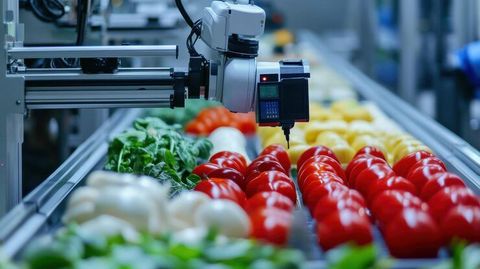
AI-powered vision systems can inspect products at high speeds while maintaining exceptional accuracy. These systems detect defects that may be difficult for human inspectors to identify consistently.
As product quality standards continue to increase globally, automated inspection technology is becoming increasingly valuable.
Industrial Robotics Becoming More Intelligent
Industrial robots have been used in manufacturing for decades, but recent advancements have significantly expanded their capabilities.
Today's smart robotic systems are more flexible, adaptable, and collaborative. Modern robots can perform complex tasks while working alongside human operators in safe environments.
Collaborative Robots
Collaborative robots, often called cobots, are designed to assist workers rather than replace them. They can handle repetitive tasks while employees focus on higher-value activities that require creativity, problem-solving, and decision-making.
Cobots are becoming popular because they offer:
- Faster deployment
- Greater flexibility
- Improved workplace safety
- Higher production consistency
These benefits make collaborative automation attractive for manufacturers of all sizes.
Digital Twin Technology Gaining Momentum
Digital twin technology is emerging as one of the most influential innovations in smart manufacturing.
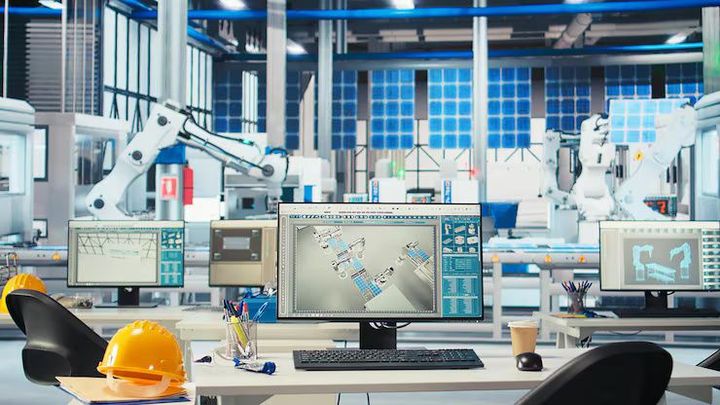
A digital twin is a virtual representation of physical equipment, production lines, or entire facilities. By continuously receiving data from real-world assets, digital twins provide an accurate digital model of operations.
Manufacturers use digital twins to:
- Simulate production scenarios
- Test process improvements
- Monitor equipment performance
- Optimize workflow efficiency
- Reduce operational risks
This technology allows organizations to experiment with changes virtually before implementing them in real production environments.
Smart Sensors and Real-Time Analytics
The growing use of smart sensors is transforming manufacturing equipment into intelligent assets.
Advanced sensors generate large volumes of operational data that can be processed through manufacturing analytics platforms. These systems provide actionable insights that support continuous improvement initiatives.
Real-time analytics helps manufacturers:
- Monitor production efficiency
- Identify bottlenecks
- Improve machine utilization
- Reduce material waste
- Enhance supply chain visibility
Data-driven manufacturing is becoming a key competitive advantage in global industries.
Energy-Efficient Manufacturing Equipment
Sustainability has become a major priority for manufacturers worldwide. As a result, energy-efficient manufacturing equipment is receiving increased attention.
Modern equipment is designed to minimize energy consumption while maintaining high productivity levels. Smart energy management systems automatically adjust operations based on production requirements.
Benefits include:
- Lower energy usage
- Reduced environmental impact
- Improved operational performance
- Enhanced sustainability reporting
Many organizations are integrating energy monitoring tools directly into manufacturing equipment to support long-term environmental goals.
Cloud-Based Manufacturing Systems
Cloud computing continues to influence the development of smart manufacturing equipment.
Cloud-connected machinery allows manufacturers to access operational data from virtually anywhere. Production managers can monitor equipment performance, review analytics, and respond to issues remotely.
Cloud-based manufacturing platforms support:
- Remote monitoring
- Centralized data management
- Cross-facility collaboration
- Scalable technology integration
- Faster decision-making
As industrial connectivity improves globally, cloud-enabled manufacturing environments are becoming increasingly common.
Advanced Human-Machine Interfaces
Human-machine interfaces are evolving to provide more intuitive interactions between operators and manufacturing equipment.
Modern interfaces often feature touchscreens, voice commands, augmented reality support, and customizable dashboards. These tools help operators understand complex production systems more effectively.
Advanced interfaces contribute to:
- Faster training
- Improved productivity
- Reduced operational errors
- Better equipment monitoring
User-friendly technology is helping bridge the gap between sophisticated machinery and everyday industrial operations.
Cybersecurity Becoming a Manufacturing Priority
As manufacturing equipment becomes more connected, cybersecurity is gaining importance.
Smart factories generate and exchange large amounts of data across networks, creating new security considerations. Manufacturers are implementing stronger security measures to protect equipment, production systems, and sensitive operational information.
Key cybersecurity strategies include:
- Network monitoring
- Access control systems
- Data encryption
- Threat detection platforms
- Secure equipment integration
Strong cybersecurity practices are now considered essential components of modern manufacturing infrastructure.
Future Outlook for Smart Manufacturing Equipment
The future of manufacturing will be increasingly driven by intelligent technologies. Artificial intelligence, industrial automation, robotics, machine learning, digital twins, and connected equipment will continue to shape production environments across industries.
Industry experts predict that smart manufacturing adoption will accelerate as organizations seek greater efficiency, resilience, and operational visibility. Manufacturers that embrace advanced equipment and data-driven strategies will be better positioned to adapt to evolving market demands.
Smart manufacturing equipment is no longer simply an innovation trend. It is becoming the foundation of modern industrial operations, enabling organizations to improve productivity, enhance quality, support sustainability initiatives, and remain competitive in a technology-driven global economy.