Shell Curing Ovens: An Overview of Industrial Heating and Curing Processes
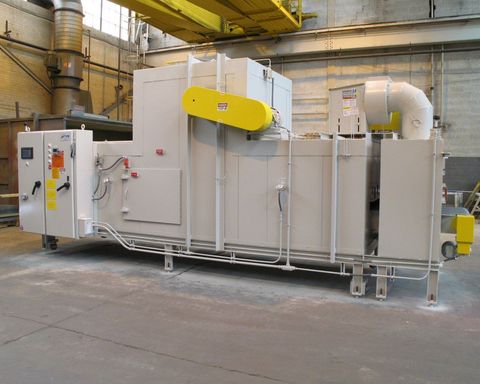
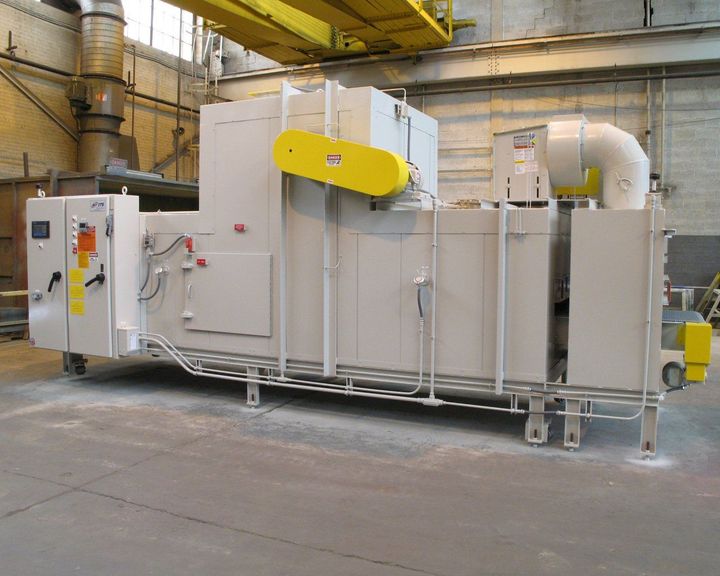
Shell curing ovens are specialized industrial heating systems used to harden resin-coated sand molds and cores during the shell molding process. These ovens play an essential role in foundries and precision casting facilities by providing controlled temperatures that cure the resin binder, creating strong and dimensionally accurate shells.
A properly designed shell curing oven helps manufacturers produce consistent molds with excellent surface quality while improving production efficiency. Modern systems include automated temperature controls, airflow management, and energy-efficient heating technologies that support reliable manufacturing operations across multiple industries.
Understanding Shell Curing Ovens
Shell curing ovens are enclosed thermal processing units designed to expose resin-coated sand molds or cores to carefully controlled heat. During the curing cycle, the resin binder chemically hardens, allowing the shell to maintain its shape throughout metal casting.
Unlike conventional heating equipment, shell curing ovens are engineered to deliver uniform heat distribution, minimizing temperature variations that could affect mold strength or dimensional accuracy.
How Shell Curing Ovens Work
The curing process follows several controlled stages.
Heating Process
- Resin-coated sand is placed onto heated patterns.
- Shell molds or cores are transferred into the curing oven.
- Controlled heat activates the thermosetting resin.
- The resin hardens uniformly throughout the shell.
- Cooling prepares the shell for handling and casting.
Precise temperature regulation is essential because excessive heat may damage the binder, while insufficient heat may produce weak molds.
Main Components of Shell Curing Ovens
Modern shell curing ovens combine multiple systems that work together to maintain stable thermal conditions.
| Component | Purpose |
|---|---|
| Heating Chamber | Provides enclosed curing environment |
| Heating Elements | Generate required curing temperatures |
| Air Circulation Fans | Distribute heat evenly |
| Temperature Controllers | Maintain accurate operating temperatures |
| Insulated Walls | Reduce heat loss and improve efficiency |
| Conveyor or Tray System | Moves molds through the curing cycle |
| Control Panel | Manages operating parameters |
| Safety Sensors | Monitor temperature and system conditions |
Importance in Industrial Manufacturing
Shell curing ovens contribute significantly to manufacturing quality by producing durable molds with consistent mechanical properties.
Their importance includes:
Manufacturing Benefits
- Improved dimensional accuracy
- Better casting surface finish
- Reduced production variation
- Stable curing performance
- Higher production consistency
- Lower material waste
- Improved process repeatability
- Enhanced operational efficiency
These advantages make shell curing ovens valuable in industries where precision casting is required.
Common Industrial Applications
Shell curing ovens support manufacturing across many industrial sectors.
Industries Using Shell Curing Ovens
- Automotive component manufacturing
- Aerospace casting
- Agricultural machinery
- Railway equipment
- Heavy engineering
- Pump manufacturing
- Valve production
- Industrial machinery
- Mining equipment
- Marine engineering
- Energy equipment manufacturing
- Precision metal casting
Many foundries rely on shell curing technology to produce complex metal components with high dimensional stability.
Types of Shell Curing Ovens
Different production requirements require different oven designs.
Batch Shell Curing Ovens
Suitable for smaller production volumes and customized manufacturing.
Continuous Conveyor Ovens
Designed for high-volume manufacturing with automated material flow.
Electric Shell Curing Ovens
Provide accurate temperature control and cleaner heating environments.
Gas-Fired Shell Curing Ovens
Common in large manufacturing plants where continuous heating capacity is required.
Automated Smart Ovens
Integrated with programmable logic controllers (PLC), sensors, and digital monitoring systems for improved process control.
Problems Shell Curing Ovens Help Solve
Proper curing technology addresses several manufacturing challenges.
Common Manufacturing Challenges
- Uneven mold curing
- Weak shell structures
- Poor casting quality
- Excessive scrap production
- Temperature inconsistency
- Production delays
- Material defects
- Reduced operational efficiency
Modern ovens minimize these issues through automated process control and uniform heat distribution.
Key Features of Modern Shell Curing Ovens
Manufacturers continue improving oven technology to enhance performance and reliability.
Important Features
- Programmable temperature control
- Uniform airflow system
- Digital monitoring displays
- Multi-zone heating
- High-quality insulation
- Automated curing cycles
- Energy-efficient heating elements
- Safety interlock systems
- Data logging capability
- Remote monitoring support
These features help maintain stable production while improving overall equipment performance.
Recent Trends and Developments (2025–2026)
Industrial heating technology continues evolving alongside smart manufacturing initiatives.
Recent Industry Developments
- Increased adoption of Industry 4.0 connectivity during 2025.
- Greater use of Industrial Internet of Things (IIoT) sensors for real-time temperature monitoring.
- Improved predictive maintenance using artificial intelligence analytics.
- Higher adoption of energy-efficient insulation materials.
- Expansion of digital process monitoring dashboards.
- Wider integration with Manufacturing Execution Systems (MES).
- Increased use of programmable automation for production consistency.
- Enhanced environmental monitoring to improve workplace sustainability.
Many manufacturers are also implementing advanced data collection systems that support continuous process optimization and quality improvement.
Safety Standards and Industrial Regulations
Industrial curing ovens typically operate under workplace safety and equipment standards established by national or regional authorities.
Manufacturers commonly consider requirements related to:
Regulatory Considerations
- Occupational workplace safety regulations
- Electrical equipment safety standards
- Industrial fire protection practices
- Machine guarding requirements
- Environmental emission guidelines
- Thermal equipment inspection procedures
- Preventive maintenance documentation
- Energy management recommendations
Organizations should follow applicable regulations within their operating region and maintain routine equipment inspections.
Maintenance Best Practices
Routine maintenance helps extend equipment life and maintain consistent curing quality.
Maintenance Recommendations
- Inspect heating elements regularly.
- Verify temperature calibration.
- Clean air circulation components.
- Examine insulation for damage.
- Test safety devices periodically.
- Lubricate moving conveyor components where applicable.
- Replace worn electrical components when necessary.
- Maintain accurate maintenance records.
Preventive maintenance reduces unexpected downtime while supporting consistent manufacturing performance.
Useful Tools, Platforms, and Learning Resources
Professionals working with shell curing ovens can expand their knowledge using technical resources from recognized organizations.
Learning Resources
- American Foundry Society (AFS)
- ASTM International standards
- ISO quality management documentation
- Industrial automation learning platforms
- PLC programming resources
- Manufacturing engineering publications
- Industrial thermal processing journals
- Equipment manufacturer technical manuals
These resources provide valuable information regarding foundry operations, process optimization, industrial safety, and thermal engineering.
Future Outlook
The future of shell curing ovens is closely connected to smart manufacturing and sustainable industrial production.
Emerging technologies are expected to improve:
Future Innovations
- Artificial intelligence process optimization
- Machine learning quality prediction
- Cloud-based production monitoring
- Digital twin simulation
- Lower energy consumption
- Advanced thermal sensors
- Fully automated production lines
- Greater manufacturing traceability
These innovations will help manufacturers achieve higher productivity while maintaining consistent product quality.
Frequently Asked Questions
What is a shell curing oven?
A shell curing oven is an industrial heating system used to harden resin-coated sand molds and cores during the shell molding process for metal casting.
What industries commonly use shell curing ovens?
Automotive, aerospace, railway, mining, marine, heavy engineering, agricultural machinery, and industrial equipment manufacturing frequently use shell curing ovens.
Why is temperature control important?
Accurate temperature control ensures uniform resin curing, stronger molds, improved casting quality, and reduced manufacturing defects.
Are modern shell curing ovens automated?
Yes. Many modern systems include programmable controllers, digital monitoring, automated conveyors, remote diagnostics, and data logging features.
How do shell curing ovens improve manufacturing quality?
They provide consistent curing conditions, reduce production variation, improve mold strength, enhance dimensional accuracy, and support repeatable manufacturing processes.
Conclusion
Shell curing ovens are an essential part of modern foundry and precision casting operations. Their ability to provide controlled heating, consistent curing conditions, and reliable thermal performance makes them valuable for producing high-quality shell molds across numerous industries. As manufacturing continues adopting automation, digital monitoring, artificial intelligence, and energy-efficient technologies, shell curing ovens are becoming increasingly sophisticated and capable of supporting higher productivity, improved quality control, and more sustainable industrial operations. Organizations that implement proper maintenance practices and follow recognized safety standards can maximize equipment performance while ensuring dependable long-term manufacturing efficiency.