Semiconductor Machines Explanation of Precision Manufacturing Systems
Semiconductor machines are specialized manufacturing systems used to produce semiconductor devices such as microprocessors, memory chips, sensors, and integrated circuits. These machines perform highly precise operations that transform raw semiconductor materials into functional electronic components used in computers, smartphones, automobiles, medical equipment, communication networks, and industrial systems.
The semiconductor industry depends on advanced machinery to achieve microscopic levels of accuracy. As chip designs become more complex and compact, semiconductor machines continue to evolve to support higher performance, lower power consumption, and greater production efficiency.
Understanding Semiconductor Machines
Semiconductor machines are designed to handle various stages of semiconductor fabrication. They process silicon wafers through multiple manufacturing steps, including cleaning, deposition, lithography, etching, inspection, testing, and packaging.
Each machine performs a specific function within the semiconductor production workflow. Together, these systems create integrated circuits containing millions or even billions of transistors.
The manufacturing environment is highly controlled because even tiny particles can affect chip quality. Most semiconductor machines operate inside cleanrooms where contamination levels are carefully managed.
Structure of Semiconductor Manufacturing
The semiconductor production process involves several interconnected stages.
| Manufacturing Stage | Purpose | Common Machine Types |
|---|---|---|
| Wafer Preparation | Creates base silicon wafers | Wafer polishing machines |
| Deposition | Adds material layers | CVD and PVD equipment |
| Lithography | Transfers circuit patterns | Lithography systems |
| Etching | Removes selected materials | Plasma etching machines |
| Ion Implantation | Modifies electrical properties | Ion implantation equipment |
| Inspection | Detects defects | Optical inspection systems |
| Testing | Verifies functionality | Semiconductor testers |
| Packaging | Protects completed chips | Packaging and assembly equipment |
How Semiconductor Machines Work
Semiconductor machines work together in a sequence of highly controlled manufacturing steps.
A silicon wafer first undergoes preparation and cleaning. Deposition machines then apply thin material layers onto the wafer surface. Lithography systems project circuit patterns using light-sensitive materials. Etching equipment removes selected portions of material to create transistor structures.
Ion implantation machines introduce specific elements into the wafer to control electrical behavior. Inspection systems analyze patterns and identify defects. Testing equipment evaluates performance before packaging machines assemble the finished semiconductor products.
Advanced automation systems coordinate these processes to ensure consistency, precision, and quality.
Importance of Semiconductor Machines
Semiconductor machines are essential because they enable the production of modern electronic devices. Without these machines, manufacturing advanced integrated circuits at scale would not be possible.
Their importance includes:
High Precision Manufacturing
- Supports nanometer-scale chip fabrication
- Maintains consistent production quality
- Enables complex circuit designs
Increased Production Efficiency
- Automates repetitive manufacturing tasks
- Reduces human error
- Improves throughput and productivity
Support for Technological Innovation
- Enables advanced processors and memory technologies
- Supports artificial intelligence applications
- Facilitates next-generation communication systems
Quality and Reliability
- Detects manufacturing defects
- Improves chip performance consistency
- Supports industry quality standards
Major Types of Semiconductor Machines
Different machine categories serve distinct functions within semiconductor fabrication facilities.
Lithography Machines
- Transfer circuit patterns onto wafers
- Use advanced optical technologies
- Critical for transistor miniaturization
Lithography systems are among the most sophisticated and technically demanding semiconductor machines.
Deposition Equipment
- Apply thin material layers
- Support dielectric and conductive coatings
- Create essential semiconductor structures
Common technologies include:
- Chemical Vapor Deposition (CVD)
- Physical Vapor Deposition (PVD)
- Atomic Layer Deposition (ALD)
Etching Machines
- Remove selected materials from wafers
- Create precise circuit features
- Support advanced chip architectures
Ion Implantation Systems
- Introduce controlled impurities into silicon
- Adjust electrical conductivity
- Improve transistor functionality
Inspection and Metrology Equipment
- Measure dimensions and patterns
- Detect defects during production
- Support quality assurance processes
Semiconductor Testing Systems
- Verify electrical performance
- Identify faulty devices
- Ensure compliance with design specifications
Packaging and Assembly Machines
- Protect semiconductor devices
- Connect chips to external systems
- Improve durability and reliability
Key Components Found in Semiconductor Machines
Modern semiconductor machines contain sophisticated technologies that support precision manufacturing.
Core Components
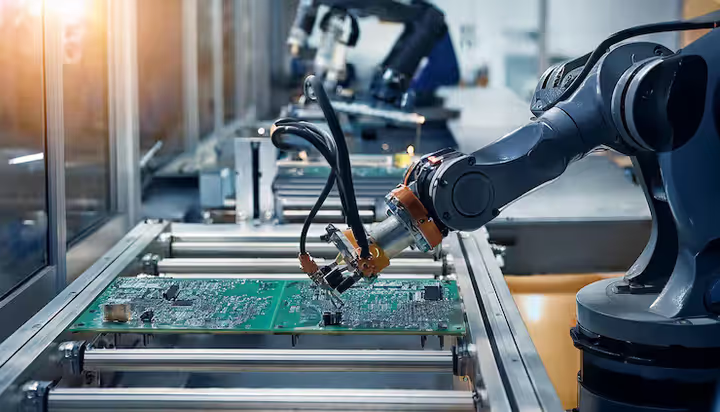
- Robotic wafer handling systems
- Vacuum chambers
- Laser systems
- Optical sensors
- Precision motion controls
- Plasma generators
- Data monitoring software
- Artificial intelligence-based analytics
These components work together to achieve highly accurate manufacturing results.
Real-World Applications
Semiconductor machines contribute to many industries and technologies.
Consumer Electronics
- Smartphones
- Tablets
- Laptops
- Gaming systems
Automotive Technology
- Advanced driver assistance systems
- Electric vehicle electronics
- Power management chips
Telecommunications
- 5G infrastructure
- Network processors
- Communication modules
Healthcare Equipment
- Diagnostic systems
- Medical imaging devices
- Wearable monitoring technology
Industrial Automation
- Smart manufacturing systems
- Robotics controllers
- Industrial sensors
Artificial Intelligence Infrastructure
- AI accelerators
- Data center processors
- Machine learning hardware
Challenges Solved by Semiconductor Machines
Semiconductor manufacturing involves significant technical challenges. Specialized machinery helps overcome these obstacles.
Miniaturization Requirements
- Supports increasingly smaller transistor designs
- Improves chip density
Production Consistency
- Maintains uniform manufacturing standards
- Reduces process variation
Defect Management
- Identifies flaws early
- Improves yield rates
Scalability
- Supports large-volume manufacturing
- Enables global electronics production
Process Complexity
- Coordinates hundreds of manufacturing steps
- Improves workflow integration
Recent Trends and Developments (2025–2026)
The semiconductor equipment sector has experienced significant advancements during the past year.
Artificial Intelligence Integration
- AI-driven process optimization has expanded across fabrication facilities
- Predictive maintenance systems improve equipment reliability
- Machine learning algorithms enhance defect detection accuracy
Advanced Packaging Growth
- Demand for chiplet-based architectures has increased
- High-density packaging technologies continue to evolve
- Advanced packaging equipment remains a major investment area during 2025 and 2026
Expansion of Domestic Semiconductor Production
- Multiple countries continue strengthening semiconductor manufacturing capabilities
- Investments in fabrication facilities have increased throughout 2025 and early 2026
- Equipment demand remains strong due to new production capacity projects
High-NA Lithography Development
- Next-generation lithography systems continue progressing toward advanced node manufacturing
- Improved resolution supports increasingly complex chip designs
Sustainability Initiatives
- Equipment manufacturers are focusing on energy efficiency
- Water conservation technologies are receiving greater attention
- Reduced chemical consumption is becoming a key objective
Regulations and Industry Standards
Semiconductor manufacturing is influenced by various regulations, standards, and compliance requirements.
Environmental Regulations
- Air emission controls
- Chemical handling requirements
- Waste management standards
- Water usage monitoring
Workplace Safety Standards
- Hazardous material handling procedures
- Cleanroom safety requirements
- Equipment operation protocols
International Quality Standards
- ISO quality management frameworks
- Semiconductor manufacturing best practices
- Product reliability standards
Export Control Policies
Certain semiconductor technologies and manufacturing equipment may be subject to export regulations established by national governments. These policies can influence global supply chains and technology transfers.
Useful Tools, Platforms, and Learning Resources
Individuals interested in semiconductor manufacturing can explore several educational resources.
Learning Platforms
- Coursera
- edX
- FutureLearn
- MIT OpenCourseWare
Industry Organizations
- SEMI
- IEEE
- IPC
Technical Publications
- Semiconductor Engineering
- IEEE Spectrum
- Electronics Weekly
Design and Simulation Tools
- Electronic Design Automation (EDA) software
- Process simulation platforms
- Manufacturing analytics systems
FAQs
What are semiconductor machines used for?
Semiconductor machines manufacture integrated circuits and electronic chips through processes such as lithography, deposition, etching, testing, and packaging.
Why are semiconductor machines important?
They enable precise and large-scale chip production, supporting modern electronics, communication systems, healthcare devices, and industrial technologies.
What is the most critical semiconductor machine?
Lithography equipment is often considered one of the most critical machine categories because it defines circuit patterns that determine chip functionality.
How do semiconductor machines improve chip quality?
They use advanced inspection, measurement, automation, and process control technologies to minimize defects and maintain manufacturing consistency.
What industries depend on semiconductor machines?
Consumer electronics, automotive manufacturing, telecommunications, healthcare, aerospace, industrial automation, and artificial intelligence all rely on semiconductor manufacturing equipment.
Conclusion
Semiconductor machines form the foundation of modern electronics manufacturing. These advanced systems enable the precise production of integrated circuits that power countless technologies used every day. From lithography and deposition to testing and packaging, each machine plays a specialized role in transforming silicon wafers into sophisticated semiconductor devices.
As demand for artificial intelligence, advanced computing, electric vehicles, and next-generation communication networks continues to grow, semiconductor machinery remains a critical driver of technological progress. Ongoing developments in automation, advanced packaging, sustainability, and high-precision manufacturing are shaping the future of the semiconductor industry and supporting continued innovation across global markets.