CNC Laser Cutting Machines: Insights into Automated Metal Processing Solutions
CNC laser cutting machines are advanced manufacturing systems that combine Computer Numerical Control (CNC) technology with high-powered laser beams to cut, engrave, and shape materials with exceptional precision. These machines have become essential in modern manufacturing because they enable accurate, repeatable, and efficient processing of metals, plastics, composites, and other materials.
The integration of automation and digital control allows manufacturers to create complex designs while maintaining consistency and minimizing material waste. CNC laser cutting technology is widely used across industries ranging from automotive production to aerospace engineering and architectural fabrication.
Understanding CNC Laser Cutting Machines
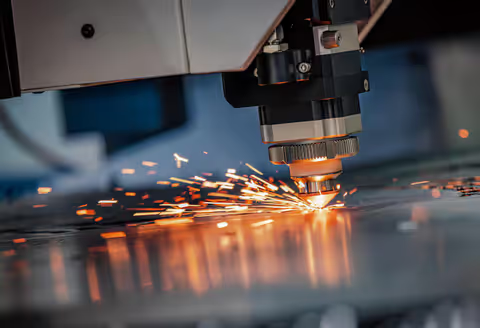
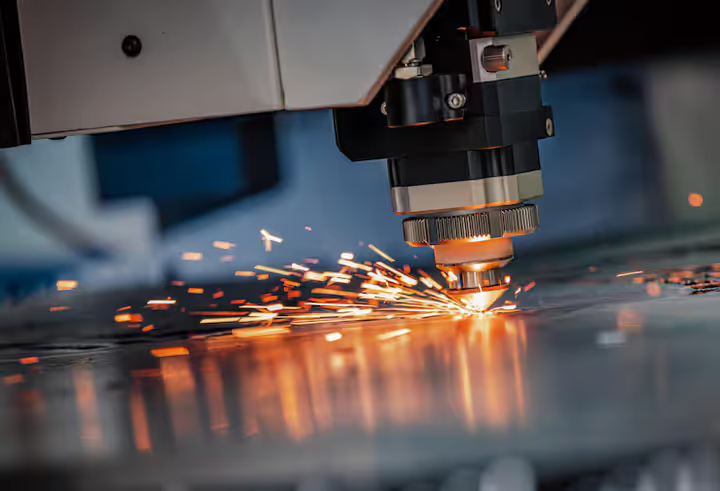
A CNC laser cutting machine uses computer-controlled instructions to direct a focused laser beam onto a material surface. The intense energy generated by the laser melts, burns, or vaporizes the material along a programmed path.
The CNC controller interprets digital design files and converts them into machine movements. This process enables highly accurate cuts without direct contact between the cutting tool and the workpiece.
Unlike traditional mechanical cutting methods, laser cutting provides cleaner edges, reduced deformation, and improved precision for complex geometries.
How CNC Laser Cutting Machines Work
The cutting process begins with a digital design created using CAD (Computer-Aided Design) software. The design is converted into machine-readable instructions that guide the CNC system.
Key Steps
- Design creation using CAD software
- Conversion of design into CNC programming code
- Material placement on the machine bed
- Laser beam generation and focusing
- Automated movement along the cutting path
- Material removal through melting or vaporization
- Finished component inspection
The laser beam is focused through specialized optics to create an extremely small and powerful cutting point. Assist gases such as oxygen, nitrogen, or compressed air may be used to improve cutting efficiency and edge quality.
Main Components of CNC Laser Cutting Machines
Several critical components work together to ensure accurate and reliable operation.
Core Components
- CNC controller
- Laser source
- Cutting head
- Optical lens system
- Motion control system
- Machine bed
- Cooling unit
- Gas supply system
- Safety enclosure
- Software interface
Each component contributes to overall machine performance, precision, and operational stability.
Types of CNC Laser Cutting Machines
Different laser technologies are available depending on material requirements and production goals.
| Laser Type | Common Materials | Key Characteristics |
|---|---|---|
| Fiber Laser | Steel, aluminum, brass, copper | High efficiency, excellent metal cutting |
| CO2 Laser | Wood, acrylic, plastics, non-metals | Versatile material compatibility |
| Crystal Laser | Metals and specialized materials | High precision applications |
| Hybrid Laser | Mixed material processing | Combines multiple capabilities |
Fiber laser technology has gained significant adoption in industrial manufacturing due to its energy efficiency and ability to process reflective metals effectively.
Importance of CNC Laser Cutting Machines
Modern industries demand high precision, repeatability, and production efficiency. CNC laser cutting machines address these requirements while supporting advanced manufacturing processes.
Major Advantages
- High cutting accuracy
- Reduced material waste
- Fast production speeds
- Consistent product quality
- Minimal mechanical wear
- Ability to create complex designs
- Lower maintenance requirements
- Enhanced automation capabilities
These benefits help organizations improve productivity and maintain quality standards across production operations.
Industrial Applications
CNC laser cutting machines are used in numerous sectors where precision and efficiency are critical.
Automotive Manufacturing
- Body panel fabrication
- Chassis component production
- Interior component cutting
- Prototype development
Aerospace Engineering
- Structural component manufacturing
- Lightweight material processing
- Precision metal fabrication
- Complex geometry production
Construction and Architecture
- Decorative metal panels
- Structural elements
- Customized architectural designs
- Building component fabrication
Electronics Manufacturing
- Enclosure fabrication
- Precision component production
- Heat sink manufacturing
- Thin-sheet processing
Medical Equipment Production
- Surgical instrument manufacturing
- Medical device components
- Stainless steel fabrication
- Precision cutting applications
Problems Solved by CNC Laser Cutting Technology
Traditional manufacturing methods often face challenges related to precision, speed, and flexibility. CNC laser cutting machines help overcome these limitations.
Common Manufacturing Challenges Addressed
- Inconsistent cutting quality
- Excessive material waste
- Slow production cycles
- Complex design limitations
- High tooling wear
- Frequent setup adjustments
- Difficulty processing intricate patterns
By automating the cutting process and using highly focused laser energy, manufacturers can achieve greater consistency and operational efficiency.
Features of Modern CNC Laser Cutting Machines
Recent developments have introduced advanced capabilities that improve productivity and operational intelligence.
Advanced Features
- Automatic nozzle changing
- Real-time monitoring systems
- Intelligent nesting software
- Automated material loading
- Collision detection technology
- Remote operation capabilities
- Integrated quality control systems
- Predictive maintenance tools
These features contribute to improved workflow management and reduced operational downtime.
Recent Trends and Developments (2025–2026)
The CNC laser cutting industry continues to evolve through advances in automation, artificial intelligence, and digital manufacturing technologies.
Emerging Trends
- Increased adoption of AI-assisted cutting optimization
- Growth of smart factory integration
- Enhanced machine connectivity through Industrial IoT
- Expansion of high-power fiber laser systems
- Improved energy efficiency technologies
- Greater use of digital twin simulations
- Advanced production analytics platforms
Notable Developments During 2025–2026
- Wider implementation of Industry 4.0 manufacturing frameworks
- Improved automation for material handling systems
- Enhanced cybersecurity measures for connected manufacturing equipment
- Development of intelligent process monitoring technologies
- Greater integration between CAD, CAM, and production systems
These developments support more efficient and data-driven manufacturing environments.
Safety Standards and Regulatory Considerations
Because laser cutting systems involve powerful energy sources, safety compliance is essential.
Important Standards and Guidelines
- ISO 12100 machinery safety principles
- ISO 11553 laser processing machine safety requirements
- IEC 60825 laser safety standards
- Occupational workplace safety regulations
- Electrical safety compliance requirements
- Environmental emission management guidelines
Organizations operating CNC laser cutting machines should implement proper training, maintenance procedures, and protective measures to ensure safe operation.
Software and Learning Resources
Software plays a crucial role in CNC laser cutting operations by enabling design creation, machine programming, and process optimization.
Common Software Categories
- CAD design software
- CAM programming software
- CNC simulation tools
- Production planning platforms
- Quality management systems
- Machine monitoring applications
Learning Resources
- Manufacturing technology textbooks
- Technical training institutes
- Industry association publications
- Engineering journals
- Industrial automation courses
- Equipment manufacturer documentation
Continuous learning helps operators and engineers stay updated with evolving manufacturing technologies.
Future Outlook
The future of CNC laser cutting machines is closely connected to advancements in industrial automation and digital manufacturing. Increased use of artificial intelligence, machine learning, and predictive analytics is expected to improve cutting precision and production efficiency.
Smart manufacturing environments will likely rely on interconnected systems capable of self-monitoring, process optimization, and real-time decision-making. These developments may further enhance productivity while reducing energy consumption and operational waste.
FAQs
What is a CNC laser cutting machine?
A CNC laser cutting machine is a computer-controlled system that uses a focused laser beam to cut, engrave, or shape materials with high precision and accuracy.
Which materials can CNC laser cutting machines process?
These machines can process steel, stainless steel, aluminum, copper, brass, plastics, acrylics, composites, wood, and various other industrial materials depending on the laser type.
What is the difference between fiber lasers and CO2 lasers?
Fiber lasers are highly efficient for metal processing, while CO2 lasers are commonly used for non-metal materials such as wood, acrylic, and plastics.
Why are CNC laser cutting machines important in manufacturing?
They provide precise cutting, reduce material waste, improve production efficiency, support automation, and enable the creation of complex designs.
How does automation improve CNC laser cutting operations?
Automation helps reduce manual intervention, improve consistency, increase production speed, optimize material usage, and support continuous manufacturing processes.
Conclusion
CNC laser cutting machines represent a significant advancement in modern manufacturing technology. By combining computer-controlled automation with precise laser cutting capabilities, these systems enable efficient production of high-quality components across numerous industries. Their ability to process complex designs, reduce waste, and improve consistency makes them an essential part of today's industrial landscape.
As manufacturing continues to evolve through Industry 4.0, artificial intelligence, and Industrial IoT technologies, CNC laser cutting machines are expected to become even more intelligent, connected, and efficient. Understanding their operation, applications, features, and emerging trends provides valuable knowledge for anyone interested in modern precision manufacturing and industrial automation equipment.