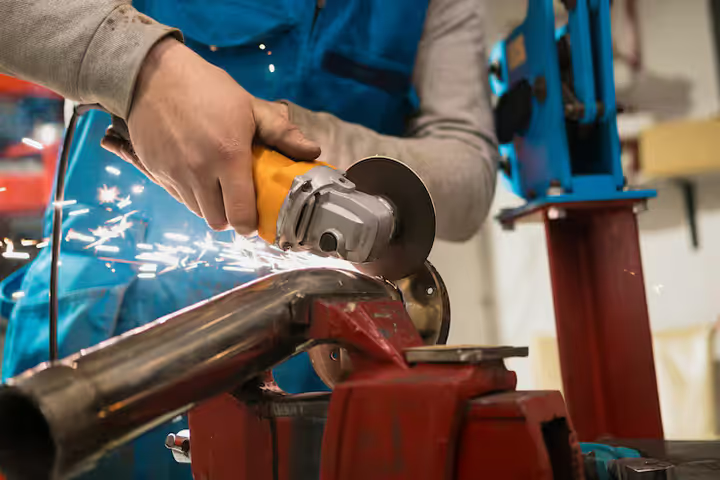
Industrial Welding Machines: Overview of Technology and Industry Trends
Industrial welding machines are specialized pieces of equipment used to join metal parts through the application of heat, pressure, or a combination of both. These machines play a critical role in manufacturing, construction, transportation, energy production, and heavy engineering industries.
The primary purpose of industrial welding machines is to create strong, durable, and permanent joints between metal components. Modern welding technology supports the production of complex structures, machinery, pipelines, vehicles, and infrastructure projects while maintaining quality and efficiency.
As manufacturing processes continue to advance, industrial welding machines have evolved from manually operated systems to highly automated and digitally controlled equipment capable of delivering precise and consistent results.
How Industrial Welding Machines Work
Industrial welding machines generate heat through electrical current, gas combustion, laser energy, or friction. The heat melts the base materials and, in many cases, filler material is added to strengthen the joint. Once cooled, the welded area forms a permanent bond.
The welding process generally involves:
Key Steps
- Surface preparation of metal components
- Positioning and securing workpieces
- Generation of heat through the selected welding method
- Addition of filler material when required
- Cooling and solidification of the weld joint
- Inspection and quality verification
Advanced welding systems use sensors, software controls, and monitoring technologies to maintain consistent welding parameters throughout production.
Major Types of Industrial Welding Machines
Different industrial applications require specific welding technologies based on material type, thickness, production volume, and quality requirements.
| Welding Type | Common Application | Key Advantage |
|---|---|---|
| MIG Welding | Manufacturing and fabrication | High productivity |
| TIG Welding | Precision industries | Excellent weld quality |
| Stick Welding | Construction projects | Versatile operation |
| Flux-Cored Welding | Heavy fabrication | Suitable for outdoor use |
| Submerged Arc Welding | Large structures and pipelines | Deep penetration |
| Resistance Welding | Automotive production | Fast production cycles |
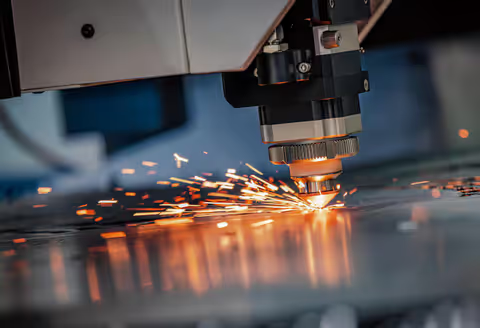
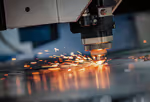
| Laser Welding | Advanced manufacturing | High precision |
| Plasma Welding | Aerospace and electronics | Accurate heat control |
Important Components of Industrial Welding Machines
Industrial welding systems consist of several components that work together to create reliable welds.
Main Components
- Power source unit
- Welding torch or electrode holder
- Grounding system
- Wire feeder mechanism
- Shielding gas supply system
- Control panel and interface
- Cooling system
- Safety protection equipment
Modern industrial systems often integrate programmable controls and digital monitoring features to improve operational efficiency.
Why Industrial Welding Machines Are Important
Welding technology supports nearly every major industrial sector. Without welding machines, the production of large-scale infrastructure, transportation equipment, and manufacturing systems would be significantly more difficult.
Key Benefits
- Creates strong and permanent metal joints
- Supports large-scale manufacturing operations
- Improves production efficiency
- Reduces assembly complexity
- Enables fabrication of complex structures
- Supports automation and robotics integration
- Enhances product durability and reliability
These advantages make welding equipment a foundational technology within industrial manufacturing environments.
Real-World Applications of Industrial Welding Machines
Industrial welding machines are used across numerous sectors where metal components require reliable joining solutions.
Manufacturing Industry
- Machinery production
- Equipment assembly
- Industrial component fabrication
- Metal enclosure manufacturing
Construction Industry
- Structural steel fabrication
- Bridge construction
- Commercial buildings
- Infrastructure projects
Automotive Industry
- Vehicle body assembly
- Chassis manufacturing
- Exhaust system production
- Battery enclosure fabrication
Energy Sector
- Pipeline construction
- Power generation facilities
- Renewable energy structures
- Offshore platforms
Aerospace Industry
- Aircraft structures
- Engine components
- Precision assemblies
- Lightweight metal fabrication
Shipbuilding Industry
- Hull construction
- Marine equipment manufacturing
- Structural reinforcement
- Offshore vessel production
Common Challenges Solved by Industrial Welding Machines
Industrial welding equipment addresses numerous production and engineering challenges.
Problems Solved
- Joining dissimilar metal components
- Creating leak-proof joints
- Improving structural strength
- Reducing mechanical fastener requirements
- Supporting high-volume production
- Enhancing manufacturing consistency
- Enabling complex design configurations
Modern welding technologies also help reduce material waste and improve overall production quality.
Safety and Compliance Requirements
Industrial welding operations involve high temperatures, electrical systems, and potentially hazardous fumes. Therefore, safety compliance is essential.
Important Safety Measures
- Use approved personal protective equipment
- Maintain proper ventilation systems
- Follow electrical safety procedures
- Conduct regular equipment inspections
- Implement fire prevention measures
- Train operators on safe welding practices
Relevant Standards and Regulations
- International Organization for Standardization (ISO) welding standards
- Occupational safety regulations for industrial workplaces
- American Welding Society (AWS) welding guidelines
- International Electrotechnical Commission (IEC) equipment standards
- Industry-specific quality assurance requirements
Organizations must ensure welding activities comply with applicable regional and international regulations.
Recent Trends and Developments (2025–2026)
The industrial welding sector has experienced significant technological advancement during 2025 and 2026.
Industry Developments
- Increased adoption of robotic welding systems
- Expansion of artificial intelligence-assisted weld monitoring
- Growth of automated quality inspection technologies
- Integration of Industrial Internet of Things (IIoT) platforms
- Enhanced digital welding data management
- Development of energy-efficient welding power sources
- Improved welding simulation and training software
Emerging Technologies
- Collaborative welding robots
- Real-time weld defect detection
- Cloud-connected production monitoring
- Digital twin manufacturing systems
- Advanced laser welding solutions
Manufacturers are increasingly focusing on automation, productivity optimization, and process traceability to improve operational performance.
Useful Tools and Learning Resources
Professionals interested in welding technology can benefit from various educational and technical resources.
Learning Resources
- American Welding Society publications
- International Institute of Welding resources
- Technical manufacturing journals
- Welding engineering textbooks
- Industrial automation training programs
- Manufacturing technology conferences
Common Software and Tools
- Welding simulation software
- CAD design platforms
- Manufacturing execution systems
- Quality inspection software
- Industrial automation platforms
- Production monitoring systems
These resources help engineers, technicians, and manufacturing professionals stay informed about evolving welding technologies.
Future Outlook for Industrial Welding Machines
The future of industrial welding machines is expected to be shaped by automation, digitalization, and advanced manufacturing practices.
Manufacturers are investing in intelligent welding systems that can monitor performance, detect defects, and adjust operating parameters automatically. These innovations may improve productivity, consistency, and operational efficiency across industrial environments.
As industries continue adopting smart manufacturing principles, welding equipment will likely become increasingly connected with broader production ecosystems, enabling better data analysis and process optimization.
FAQ
What is an industrial welding machine?
An industrial welding machine is equipment designed to join metal components using heat, pressure, or both. It is commonly used in manufacturing, construction, automotive production, and heavy engineering.
Which welding process is most commonly used in manufacturing?
MIG welding is among the most widely used manufacturing processes because it supports high productivity, consistent weld quality, and efficient operation in production environments.
What industries rely heavily on industrial welding machines?
Industries such as manufacturing, construction, automotive, aerospace, energy, shipbuilding, and heavy equipment production depend extensively on industrial welding technologies.
Are modern welding machines automated?
Many modern industrial welding systems incorporate automation, robotics, sensors, and digital controls that improve consistency, efficiency, and quality monitoring.
Why is welding safety important?
Welding operations involve heat, electricity, sparks, and fumes. Proper safety procedures help prevent injuries, equipment damage, and workplace hazards while ensuring compliance with industry regulations.
Conclusion
Industrial welding machines are essential technologies that support modern manufacturing, construction, transportation, and infrastructure development. By creating strong and reliable metal joints, these machines enable the production of countless industrial products and structures.
Advancements in automation, robotics, artificial intelligence, and digital monitoring are transforming the welding industry, making processes more efficient and precise. As industrial operations continue to evolve, welding machines will remain a critical component of modern production systems, supporting quality, productivity, and innovation across multiple sectors.