Root Canal Treatment Guide: Basics, Procedure, Facts, and Dental Information
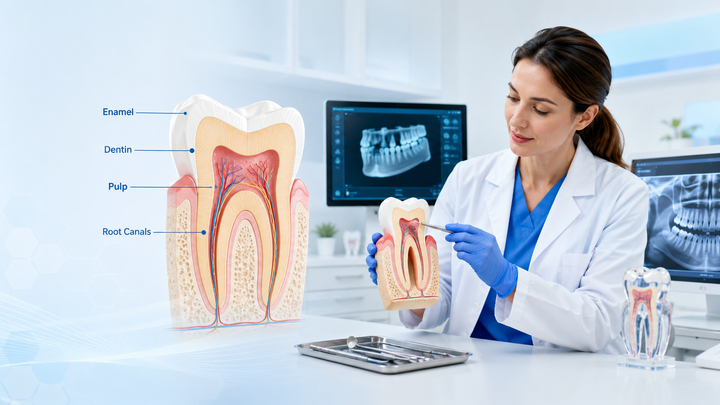
Root canal treatment is a dental procedure related to the inner part of a tooth. This inner part is called the pulp. The pulp contains nerves, blood vessels, and connective tissue. It is found inside the tooth crown and continues through narrow spaces inside the roots, known as root canals.
A root canal procedure may be discussed when the pulp becomes inflamed, infected, or damaged. This can happen because of deep tooth decay, a crack, an injury, repeated dental procedures on the same tooth, or a large filling that affects the inner structure of the tooth.
The American Association of Endodontists explains that root canal treatment involves removing inflamed or infected pulp, cleaning and disinfecting the inside of the tooth, and then filling and sealing the canal area. The goal is to manage infection inside the tooth and preserve the natural tooth where clinically suitable.
This article is for general dental education only. It does not provide diagnosis, personal health guidance, or treatment instructions. Any dental symptom should be reviewed by a qualified dental professional.
Why Root Canal Treatment Exists
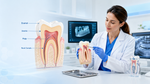
A tooth has several layers. The outer layer is enamel. Under that is dentin. Inside the dentin is the pulp chamber and root canal system. When bacteria reach the pulp, the tooth may become painful or infected.
Without professional dental evaluation, pulp problems may worsen. Pain, swelling, gum tenderness, or chewing discomfort can interfere with daily life. In some cases, a dental infection may affect the tissue around the root.
Root canal treatment exists because some affected teeth can be managed without removing the entire tooth. Whether this is suitable depends on tooth structure, root condition, gum health, extent of infection, fracture risk, and dental imaging findings.
Common reasons a dentist may discuss this procedure include:
- Deep tooth decay
- Long-lasting sensitivity
- Tooth injury
- Cracked tooth structure
- Swelling near the gum
- Pain while chewing
- Previous dental work affecting the pulp
- Infection near the root tip
Why Root Canal Treatment Matters Today
Oral health is a major public health topic. The World Health Organization reported in March 2025 that oral diseases affect nearly 3.7 billion people globally. It also stated that untreated tooth decay in permanent teeth is the most common health condition in the Global Burden of Disease 2021 data.
Root canal treatment matters because tooth decay and dental infection can affect eating, sleeping, speech, appearance, and overall comfort. It is also relevant for people who want to understand dental care options before making informed decisions with a dental professional.
This topic affects:
- Adults with deep cavities
- Children and teenagers with tooth injury
- Older adults with heavily restored teeth
- People with cracked or worn teeth
- People with gum swelling near a tooth
- Dental students and oral health learners
- Families trying to understand dental procedures
A root canal procedure may help address infection or inflammation inside a tooth. However, it is not suitable for every tooth. Some teeth may have severe cracks, weak structure, advanced gum disease, or other complications. A dental examination is needed before any conclusion.
| Dental Sign | Possible Dental Meaning | Why Evaluation Matters |
|---|---|---|
| Lingering hot or cold sensitivity | Pulp irritation may be present | Symptoms can overlap with other conditions |
| Pain while chewing | Root area or tooth structure may be affected | Bite and X-ray review may be needed |
| Gum swelling near one tooth | Infection may be present | Dental imaging can show root-area changes |
| Darkened tooth | Past injury or pulp changes may exist | Clinical testing may be needed |
| Deep cavity | Decay may be close to the pulp | Timing of dental care matters |
General Procedure Overview
The exact procedure can vary by tooth condition, tooth location, dentist’s assessment, and imaging results. In general, root canal treatment may include the following steps.
Dental examination and imaging
The dentist reviews symptoms, checks the tooth, examines gum tissue, and may use X-rays or other imaging. This helps understand the root shape, canal structure, and surrounding bone.
Local numbing
A local anesthetic is commonly used before the procedure. The aim is to keep the area comfortable during dental work.
Access opening
A small opening is made in the tooth to reach the pulp chamber and canal space.
Cleaning and shaping
The affected pulp tissue is removed. The canal area is cleaned, shaped, and disinfected using dental instruments and irrigation methods.
Filling and sealing
After cleaning, the canal space is filled with a dental material and sealed.
Final restoration planning
The tooth may need a final restoration, such as a filling or crown-type restoration, depending on how much tooth structure remains. Back teeth often need stronger restoration planning because they handle chewing forces.
A simplified process view:
Dental examination
        ↓
X-ray or imaging review
        ↓
Local numbing
        ↓
Canal cleaning and shaping
        ↓
Disinfection
        ↓
Filling and sealing
        ↓
Final restoration planning
        ↓
Follow-up review if advised
Recent Updates and Trends
Modern root canal treatment is being influenced by digital dentistry, imaging, artificial intelligence, advanced materials, and minimally invasive methods.
One important trend is the use of digital imaging. Dental X-rays are commonly used, while cone-beam computed tomography, known as CBCT, may be used in selected complex cases. CBCT can provide three-dimensional imaging that helps in understanding root anatomy, canal shape, and surrounding bone structures.
Artificial intelligence is also becoming relevant in endodontics. A 2026 review discussed AI use in diagnosis, imaging interpretation, treatment planning, complication management, and outcome prediction in endodontic care. This reflects the growing role of digital decision-support tools in dental education and clinical review.
Another trend is minimally invasive endodontics. This approach focuses on preserving healthy tooth structure while still allowing proper cleaning and sealing of the canal system. Tooth structure preservation matters because a stronger remaining tooth structure may support long-term function.
Bioceramic dental materials are also being studied and used in selected endodontic situations. These materials are discussed in dental literature for sealing, repair, and pulp-related applications. Their use depends on the clinical situation and the dentist’s judgment.
Recent focus areas include:
- Digital dental imaging
- CBCT in selected complex cases
- AI-assisted image interpretation
- Bioceramic dental materials
- Minimally invasive access design
- Better irrigation and disinfection methods
- Improved recordkeeping
- Follow-up imaging where needed
Illustrative trend view:
Traditional dental X-rays        ████████
CBCT in complex cases            ███████
AI-supported dental review       ██████
Bioceramic materials             ███████
Minimally invasive methods       ████████
Digital dental records           █████████
This chart is illustrative. It is not a clinical ranking or measurement.
Laws, Policies, and Dental Regulation in India
In India, dental treatment is connected with professional regulation, dental education standards, patient safety, infection control, radiation safety, and clinical recordkeeping.
A major regulatory change took effect in March 2026. The Press Information Bureau stated that with the National Dental Commission Act coming into force from 19 March 2026, the Dentists Act, 1948 stood repealed and the Dental Council of India was dissolved from the same date.
The Dental Council of India website also states that the Dental Council of India stood dissolved from 19 March 2026 and the National Dental Commission came into effect from the same date.
For patients and general readers, the key point is that dental care should be provided by qualified dental professionals under the applicable regulatory framework. Dental clinics also need to follow appropriate hygiene, sterilization, biomedical waste handling, and radiation safety practices.
Root canal treatment may involve dental instruments, local anesthetic, X-rays, and clinical waste. Because of this, dental environments should follow accepted clinical safety practices.
| Policy Area | Relevance to Root Canal Treatment |
|---|---|
| Dental professional regulation | Ensures qualified dental practice |
| Infection control | Supports safe instrument use |
| Radiation safety | Relevant when X-rays or CBCT are used |
| Biomedical waste handling | Applies to dental clinical waste |
| Patient records | Helps document diagnosis and procedure details |
| Informed communication | Supports patient understanding before care |
Helpful Tools and Resources
The following resources can help readers understand the topic and prepare for a dental discussion.
Educational resources
- American Association of Endodontists patient education pages
- World Health Organization oral health fact sheets
- National Dental Commission updates in India
- Dental anatomy diagrams
- Oral hygiene education charts
Personal tracking resources
- Tooth symptom diary
- Dental visit question checklist
- Pain pattern notes
- Sensitivity trigger notes
- Medication record sheet
- Dental imaging record folder
- Follow-up reminder sheet
Questions to note before a dental visit
- When did the symptom begin?
- Is the discomfort sharp, dull, or throbbing?
- Does heat or cold trigger it?
- Does the sensation stay after the trigger is removed?
- Is there swelling near the gum or face?
- Is chewing uncomfortable?
- Has the tooth had earlier dental work?
- Was there any injury to the tooth?
- Has an X-ray already been taken?
- What restoration may be needed after canal care?
Basic aftercare tracking table
| Item to Track | Why It Matters |
|---|---|
| Discomfort level | Helps observe recovery pattern |
| Swelling | May need dental review if it increases |
| Chewing comfort | Shows functional change |
| Temporary filling condition | Protects the treated area |
| Follow-up date | Supports completion of restoration planning |
| Oral hygiene routine | Helps maintain surrounding gum health |
Common Questions
What is root canal treatment?
Root canal treatment is a dental procedure that cleans, disinfects, fills, and seals the inner canal space of a tooth when the pulp is inflamed, infected, or damaged.
Does every toothache need root canal treatment?
No. Toothache can come from decay, gum disease, cracks, bite problems, sinus-related pressure, or other causes. A dentist needs to examine the tooth before deciding what is appropriate.
Is dental imaging always required?
Dental imaging is commonly used to understand tooth structure, root shape, and the area around the root. The dentist decides which imaging method is suitable.
Can a treated tooth need more dental work later?
Yes. A treated tooth may need final restoration, follow-up imaging, or further review depending on tooth structure and healing response.
Can root canal treatment fail?
Yes. Reinfection, cracks, incomplete sealing, delayed restoration, or complex anatomy can affect results. Follow-up care and restoration planning are important.
Medical Information Notice
This article is for general educational purposes only. It does not provide diagnosis, personal dental guidance, or treatment instructions. Dental symptoms should be reviewed by a qualified dental professional.
Conclusion
Root canal treatment is an important dental procedure related to the inner canal system of a tooth. It may be discussed when the pulp becomes inflamed, infected, or damaged due to deep decay, injury, cracks, or other dental causes.
The topic matters because oral diseases affect billions of people globally, and untreated tooth decay remains highly common. Modern dentistry is also changing through digital imaging, AI-supported review, bioceramic materials, and minimally invasive methods.
For readers, the safest understanding is simple: tooth pain, swelling, deep cavities, or long-lasting sensitivity should be evaluated by a qualified dental professional. Root canal treatment is one possible dental procedure, but suitability depends on clinical examination, imaging, tooth structure, and overall oral health.