Portable Water Filters: Essential Technologies and Applications Overview
Portable water filters are compact devices designed to improve water quality by removing contaminants from untreated water sources.
They are widely used during outdoor activities, travel, emergency preparedness, disaster response, and remote work environments where access to treated drinking water may be limited.
Modern portable water filters combine advanced filtration technologies, lightweight designs, and user-friendly operation. From hiking trails and camping sites to emergency situations and humanitarian operations, these devices help provide cleaner water through various filtration and purification methods.
As water quality concerns continue to grow worldwide, portable water filtration technologies are becoming increasingly important for personal safety, outdoor recreation, and emergency planning.
Quick Facts Table
| Topic | Purpose | Key Technologies | Main Benefits | Common Applications |
|---|---|---|---|---|
| Portable Water Filters | Remove contaminants from untreated water | Microfiltration, Ultrafiltration, Activated Carbon, UV Purification | Improved water quality, portability, convenience, emergency preparedness | Camping, hiking, travel, disaster response, remote locations |
What Are Portable Water Filters?
Portable water filters are compact filtration devices that remove bacteria, protozoa, sediment, and certain chemical contaminants from untreated water sources such as rivers, lakes, streams, and collected rainwater.
Unlike household filtration systems, portable units are designed for mobility and can operate without permanent installation or external infrastructure. Many modern systems use hollow-fiber membranes, activated carbon elements, or ultraviolet technologies to improve water quality.
Why Are Portable Water Filters Important?
Access to clean water is essential for health and safety. Portable filtration technologies provide an additional layer of protection when using untreated water sources.
Their importance includes:
- Supporting outdoor recreation activities
- Improving emergency preparedness
- Enhancing travel safety
- Reducing exposure to waterborne contaminants
- Supporting disaster response efforts
- Providing water treatment in remote areas
- Improving taste and odor in certain water sources
Portable Water Filter Facts
- Most portable microfilters are designed to remove bacteria and protozoan contaminants.
- Activated carbon is commonly used to improve taste and reduce certain chemical compounds.
- Ultrafilters with very small pore sizes can remove viruses, bacteria, and parasites.
- UV purification technologies can inactivate microorganisms when water is sufficiently clear.
- Portable filtration devices are widely used by hikers, travelers, emergency responders, and military personnel.
Understanding the Concept
Portable water filtration works by passing untreated water through specialized filter media that trap or remove contaminants. Different technologies target different types of impurities, including sediment, microorganisms, chemicals, and odors.
The effectiveness of a portable water filter often depends on factors such as pore size, filtration method, water source conditions, and maintenance practices. Smaller pore sizes generally provide greater protection against microorganisms.
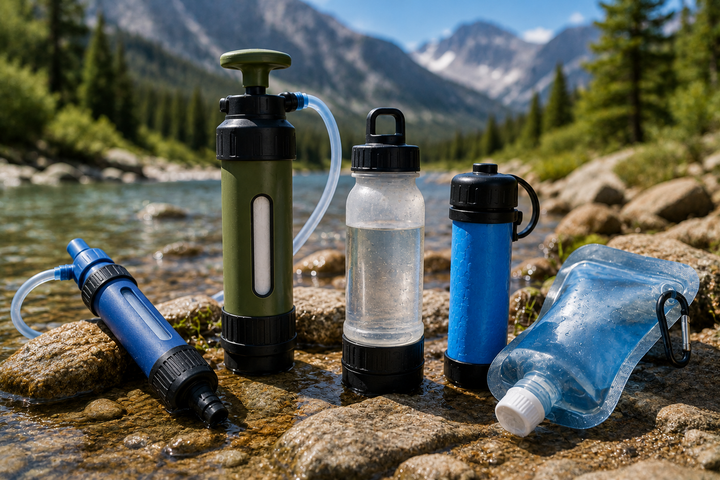
Major Types of Portable Water Filters
- Straw Filters
- Bottle Filters
- Squeeze Filters
- Pump Filters
- Gravity Filters
- Ultraviolet Purifiers
- Activated Carbon Filters
- Combined Filtration Systems
- Ultrafiltration Systems
- Reverse Osmosis Portable Units
Types Comparison Table
| Filter Type | Protection Level | Portability | Typical Use |
|---|---|---|---|
| Straw Filter | Medium | Very High | Hiking |
| Bottle Filter | Medium | High | Travel |
| Pump Filter | High | Medium | Camping |
| Gravity Filter | High | Medium | Group Activities |
| UV Purifier | High | High | Travel and Emergency Use |
| Ultrafiltration System | Very High | Medium | Remote Locations |
Key Features and Core Components
Important components commonly found in portable water filters include:
- Hollow-fiber membranes
- Activated carbon elements
- Filter cartridges
- Intake tubes
- Water reservoirs
- UV purification modules
- Flow control systems
- Pre-filters
- Protective housings
- Cleaning mechanisms
These components work together to improve water quality and filtration performance.
Main Types or Categories
Straw and Bottle Filters
These compact designs allow users to drink directly through the filtration system. They are lightweight and commonly used during hiking, travel, and emergency situations.
Pump and Gravity Filters
Pump filters use manual pressure to move water through a filtration element, while gravity filters rely on gravity flow. These systems are often suitable for treating larger volumes of water.
UV and Combined Systems
Ultraviolet purification devices use UV light to inactivate microorganisms. Combined systems integrate multiple treatment methods to address a broader range of contaminants.
How Portable Water Filters Work
- Water is collected from a natural or untreated source.
- A pre-filter removes larger debris and sediment.
- Water passes through a filtration membrane.
- Bacteria and protozoa are physically blocked by microscopic pores.
- Activated carbon may reduce odors and certain chemical compounds.
- Additional purification stages may target viruses or microorganisms.
- Treated water is collected for drinking or storage.
The filtration process varies depending on the technology and design of the device.
Benefits and Advantages
Portable water filters provide several practical advantages:
- Compact and lightweight design
- Convenient transportation
- Improved water quality
- Reduced sediment and particles
- Better taste and odor in some water sources
- Useful during emergencies
- Suitable for outdoor activities
- Supports remote travel
- Can operate without electricity
- Available in multiple filtration formats
Industry Applications
Portable water filtration technologies are used across many sectors:
- Outdoor recreation
- Camping and hiking
- Travel
- Disaster response
- Emergency preparedness
- Humanitarian operations
- Military field operations
- Remote construction sites
- Scientific field research
- Rural water access initiatives
Real-World Examples and Applications
Example: Hiking Adventure
A hiker collecting water from a mountain stream may use a straw filter or squeeze filter to reduce exposure to microorganisms before drinking.
Example: Emergency Preparedness
Families often include portable water filters in emergency kits to support access to treated water during infrastructure disruptions.
Example: Disaster Response Operations
Relief organizations frequently deploy portable filtration systems in areas affected by floods, storms, or other emergencies to improve access to drinking water.
Important Factors to Consider
When evaluating portable water filters, several factors should be considered:
- Filtration technology
- Pore size
- Water source conditions
- Filter lifespan
- Maintenance requirements
- Portability
- Flow rate
- Storage capacity
- Durability
- Contaminant removal capabilities
Common Challenges and Easy Solutions
| Challenge | Impact | Educational Solution |
|---|---|---|
| Clogged Filter | Reduced Flow | Clean filter regularly |
| High Sediment Levels | Reduced Efficiency | Use a pre-filter |
| Virus Concerns | Limited Protection | Use advanced purification methods |
| Poor Maintenance | Lower Performance | Follow maintenance schedules |
| Incorrect Filter Selection | Inadequate Treatment | Match filter type to water source |
Portable Water Filter Best Practices
- Inspect filters before use.
- Follow manufacturer maintenance guidelines.
- Clean filtration elements regularly.
- Store equipment in a dry location.
- Replace filter cartridges when necessary.
- Use appropriate filtration methods for local water conditions.
- Monitor flow rate changes.
- Avoid cross-contamination between untreated and treated water.
- Learn proper operation techniques.
- Keep backup purification methods available when possible.
Future Trends and Industry Insights
Portable water filtration technologies continue to evolve through innovation and research.
Advanced Membrane Technologies
New membrane materials are improving contaminant removal capabilities while maintaining portability.
Ultrafiltration Growth
Ultrafiltration systems are becoming more accessible and capable of removing increasingly smaller contaminants.
Smart Monitoring Features
Future portable filtration devices may incorporate sensors that track filter condition and performance.
Improved Activated Carbon Systems
Enhanced carbon technologies are helping improve removal of unwanted tastes, odors, and certain chemical compounds.
Lightweight Materials
Advances in materials science are making portable filtration systems lighter and more durable.
Multi-Stage Purification
Many modern systems combine multiple treatment methods for broader contaminant protection.
Expert Insights
Portable water filters have become an important component of modern water treatment strategies for outdoor recreation, travel, and emergency preparedness. Advances in membrane filtration, activated carbon technologies, ultrafiltration, and UV purification are improving both performance and usability.
As awareness of water quality continues to grow, portable filtration technologies are expected to become more efficient, compact, and adaptable to a wider range of environmental conditions.
Key Takeaways
- Portable water filters improve water quality from untreated sources.
- Multiple filtration technologies are available for different applications.
- Pore size plays a major role in filtration effectiveness.
- Activated carbon helps improve taste and reduce certain compounds.
- UV purification can inactivate microorganisms.
- Pump, gravity, bottle, and straw filters serve different needs.
- Regular maintenance supports long-term performance.
- Portable filtration is valuable for travel, outdoor recreation, and emergency preparedness.
Frequently Asked Questions (FAQ)
What is a portable water filter?
A portable water filter is a compact device designed to remove contaminants from untreated water sources.
How do portable water filters work?
They pass water through filtration media that trap contaminants and improve water quality.
What contaminants can portable water filters remove?
Many filters remove sediment, bacteria, and protozoa, while advanced systems may address viruses and certain chemicals.
What is the difference between filtration and purification?
Filtration typically removes particles and microorganisms, while purification may include additional methods that target viruses and other contaminants.
What is activated carbon filtration?
Activated carbon helps reduce odors, improve taste, and remove certain chemical compounds.
What is ultrafiltration?
Ultrafiltration uses extremely small pore sizes to remove microorganisms, including viruses in some systems.
Are portable water filters useful for travel?
Yes, they are commonly used during travel, outdoor recreation, and emergency situations.
What is a gravity filter?
A gravity filter uses gravity rather than pumping to move water through a filtration system.
What is a pump filter?
A pump filter uses manual pressure to force water through a filter cartridge.
What is a bottle filter?
A bottle filter combines a drinking bottle and filtration system into a single portable unit.
Why is pore size important?
Pore size determines which contaminants can be physically removed during filtration.
How should portable water filters be maintained?
Regular cleaning, proper storage, and timely replacement of filter elements help maintain performance.
Can portable filters remove viruses?
Some advanced ultrafiltration and purification systems are designed to address viruses.
What industries use portable water filtration?
Travel, emergency response, military operations, humanitarian assistance, and outdoor recreation.
What is the future of portable water filtration?
Future developments are expected to focus on advanced membranes, smart monitoring, lightweight materials, and multi-stage purification systems.
Conclusion
Portable water filters play an important role in improving water quality for outdoor activities, travel, emergency preparedness, and remote operations. Through technologies such as microfiltration, ultrafiltration, activated carbon treatment, and UV purification, these devices help address a variety of water quality concerns.
As filtration technologies continue to advance, portable water filters are becoming more efficient, durable, and versatile. Understanding how these systems work, their types, benefits, limitations, and applications can help readers make informed decisions about water treatment in different environments.