Portable Car Jump Starters: Battery Technologies and Usage Overview
A vehicle battery can lose power for many reasons, including cold weather, long periods of inactivity, electrical drain, or battery aging.
When this happens, starting the engine may become difficult or impossible.
Portable car jump starters are compact battery-powered devices designed to provide temporary power to a vehicle with a discharged battery. These devices have become increasingly popular because they are portable, easy to store, and useful in a variety of situations.
Understanding how portable car jump starters work, their key components, applications, and evolving battery technologies can help drivers make informed decisions about emergency vehicle preparedness.
Quick Facts Table
| Topic | Purpose | Key Components | Main Benefits | Common Applications |
|---|---|---|---|---|
| Portable Car Jump Starters | Provide temporary starting power for vehicles with discharged batteries | Internal battery, jumper cables, safety protection systems, charging ports, display indicators | Emergency starting assistance, portability, convenience, battery monitoring | Passenger vehicles, motorcycles, recreational vehicles, fleet vehicles, outdoor travel |
What Are Portable Car Jump Starters?
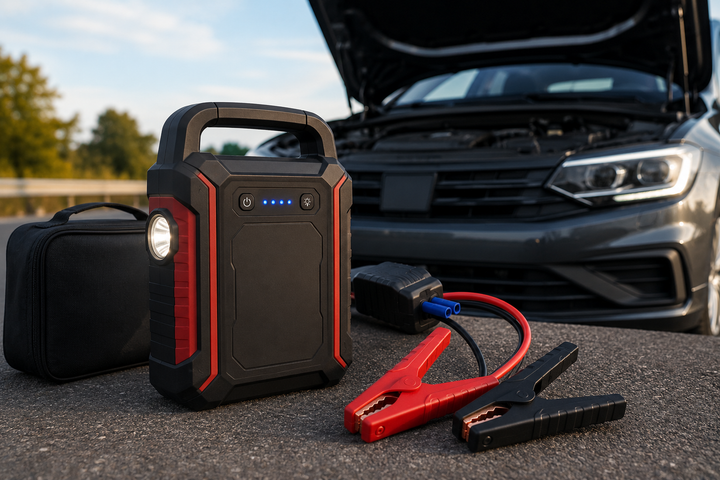
Portable car jump starters are self-contained battery devices designed to deliver a high-current electrical boost to a vehicle battery that no longer has enough power to start an engine.
Unlike traditional jump-start methods that require another vehicle, portable jump starters contain their own energy source. They can be connected directly to a vehicle battery through jumper clamps and used independently.
Many modern units also include additional functions such as charging ports, LED lighting, battery status displays, and safety monitoring features.
Why Are Portable Car Jump Starters Important?
Vehicle battery issues can occur unexpectedly. A discharged battery may leave a vehicle unable to start, especially in extreme temperatures or after long periods without operation.
Portable jump starters provide:
- Emergency starting capability
- Increased roadside preparedness
- Independence from another vehicle
- Convenient storage
- Additional battery-powered functionality
- Support during travel and outdoor activities
These benefits make them a useful part of vehicle emergency equipment.
Portable Car Jump Starter Facts
- Lithium battery technology has significantly reduced device size and weight.
- Modern safety systems help prevent reverse polarity connections.
- Many units include USB charging capabilities.
- Battery management systems improve operational safety.
- Compact designs make storage easier in vehicles.
- Fast charging technology continues to improve performance.
- Intelligent monitoring systems enhance battery protection.
Understanding the Concept
A vehicle engine requires a significant amount of electrical current during startup. When the vehicle battery lacks sufficient charge, the starter motor may not receive enough power.
Portable jump starters temporarily supply the required current to help start the engine. Once the engine starts, the vehicle's charging system begins replenishing battery power.
Modern devices utilize advanced battery technologies and intelligent protection systems to improve safety and reliability.
Major Components of Portable Car Jump Starters
Most units include:
- Internal battery pack
- Heavy-duty jumper clamps
- Battery management system
- Safety protection circuitry
- Charging interface
- Status indicators
- LED lighting
- Power output ports
- Voltage monitoring systems
- Thermal protection components
Battery Technologies Comparison Table
| Battery Technology | Weight | Energy Density | Lifespan | Common Usage |
|---|---|---|---|---|
| Lead-Acid Battery | High | Medium | Medium | Traditional Jump Starters |
| AGM Battery | Medium | Medium | Medium | Vehicle Applications |
| Lithium-Ion Battery | Low | High | High | Portable Jump Starters |
| Lithium Iron Phosphate | Low | High | High | Advanced Portable Units |
Types of Portable Car Jump Starters
Lithium-Ion Jump Starters
Lithium-ion models are lightweight and compact. They provide high power output while occupying less storage space.
Lithium Iron Phosphate Units
These devices are known for stability, durability, and longer operational life.
Traditional Lead-Acid Jump Starters
Lead-acid units are generally larger and heavier but remain common in certain vehicle and fleet environments.
What Is a Portable Jump Starter Battery?
A portable jump starter battery is the internal energy source that stores electrical power used to start a vehicle during battery-related emergencies.
How Does a Portable Car Jump Starter Work?
- The internal battery stores electrical energy.
- The user connects jumper clamps to the vehicle battery terminals.
- Safety systems verify proper connection.
- The device transfers high-current power to the vehicle.
- The starter motor receives additional electrical energy.
- The engine starts and begins operating normally.
- The vehicle charging system replenishes battery power.
Key Features and Core Components
Modern portable jump starters often include:
- Battery management systems
- Reverse polarity protection
- Short-circuit protection
- Overcharge protection
- Temperature monitoring
- LED displays
- USB charging ports
- Voltage monitoring
- Flashlight functionality
- Fast charging capabilities
Safety Features Comparison Table
| Safety Feature | Purpose |
|---|---|
| Reverse Polarity Protection | Prevents incorrect cable connections |
| Overcharge Protection | Protects internal battery health |
| Short Circuit Protection | Reduces electrical risks |
| Thermal Protection | Helps prevent overheating |
| Voltage Monitoring | Supports safe operation |
| Battery Management System | Improves performance and safety |
Benefits and Advantages
Portable car jump starters provide several practical benefits:
- Emergency vehicle support
- Compact storage
- Easy portability
- Reduced dependence on external assistance
- Multi-purpose functionality
- Improved preparedness
- Additional charging capabilities
- Battery monitoring support
- Convenient travel companion
- Useful during outdoor activities
Practical Usage Guide
Step 1: Inspect the Device
Verify battery charge level and ensure cables are in good condition.
Step 2: Position the Vehicle Safely
Park in a secure location and turn off electrical accessories.
Step 3: Connect the Clamps
Attach clamps according to the manufacturer's instructions.
Step 4: Verify Safety Indicators
Confirm proper connection through status indicators.
Step 5: Start the Vehicle
Attempt to start the engine.
Step 6: Disconnect Carefully
Remove the clamps after the vehicle starts.
Step 7: Recharge the Jump Starter
Recharge the unit according to recommended procedures.
Real-World Examples and Applications
Example: Cold Weather Starting
Low temperatures can reduce battery performance. A portable jump starter can provide additional power needed for engine startup.
Example: Long-Term Vehicle Storage
A vehicle that remains unused for extended periods may experience battery discharge. Portable jump starters help restore starting capability.
Example: Outdoor Travel
Travelers often carry portable jump starters during camping trips and long-distance journeys for added preparedness.
Example: Fleet Vehicle Operations
Fleet operators use portable battery equipment to help maintain vehicle availability during unexpected battery issues.
Important Factors to Consider
When evaluating portable jump starters, consider:
- Battery capacity
- Peak current rating
- Vehicle compatibility
- Charging speed
- Storage requirements
- Safety features
- Temperature performance
- Battery technology
- Weight and portability
- Durability
Common Challenges and Solutions
| Challenge | Impact | Solution |
|---|---|---|
| Low Device Charge | Reduced Performance | Routine Recharging |
| Incorrect Connections | Starting Difficulties | Use Safety Indicators |
| Extreme Temperatures | Battery Efficiency Reduction | Proper Storage Practices |
| Battery Aging | Reduced Capacity | Periodic Testing |
| Limited Maintenance | Performance Issues | Regular Inspection |
Portable Car Jump Starter Best Practices
- Recharge the device periodically.
- Store in a clean and dry location.
- Inspect cables regularly.
- Follow operating instructions carefully.
- Monitor battery status before travel.
- Keep terminals clean.
- Protect from extreme temperatures.
- Test functionality periodically.
Industry Applications
Passenger Vehicles
Commonly used for personal transportation and commuting vehicles.
Commercial Fleets
Support vehicle availability and operational continuity.
Recreational Vehicles
Useful for outdoor travel and extended journeys.
Motorcycles
Compact units are often suitable for motorcycle batteries.
Marine Applications
Some battery-powered starting systems are utilized in boating environments.
Emergency Preparedness
Portable jump starters are frequently included in emergency vehicle kits.
Future Trends and Industry Insights
Several developments are shaping the future of portable battery technology.
Advanced Lithium Technologies
New battery chemistries continue improving energy density and durability.
Intelligent Battery Management
Enhanced battery monitoring systems improve performance and operational safety.
Fast Charging Technologies
Charging times continue to decrease through improved charging methods.
Smart Connectivity
Some devices now incorporate mobile app connectivity and battery monitoring functions.
Improved Thermal Management
Advanced cooling and temperature monitoring technologies support battery health.
Multi-Function Power Systems
Modern devices increasingly combine vehicle starting, charging, and emergency lighting functions.
Expert Insights
Portable car jump starters have evolved significantly through advancements in battery technology, safety systems, and intelligent monitoring. Modern units are smaller, lighter, and more capable than earlier designs while maintaining the ability to provide substantial starting power.
As battery technologies continue to improve, portable jump starters are expected to become even more efficient, durable, and versatile. Their role in vehicle preparedness and emergency readiness is likely to remain important across personal, commercial, and recreational transportation environments.
Key Takeaways
- Portable car jump starters provide temporary starting power for vehicles.
- Modern units commonly use lithium battery technologies.
- Safety protection systems improve operational reliability.
- Compact designs support easy storage and portability.
- Battery management systems enhance performance.
- Regular charging helps maintain readiness.
- Advanced models include charging ports and monitoring features.
- Battery technology continues to evolve and improve.
Frequently Asked Questions (FAQ)
What is a portable car jump starter?
A portable car jump starter is a battery-powered device that helps start a vehicle with a discharged battery.
How does a portable jump starter work?
It transfers stored electrical energy to the vehicle battery and starter system during engine startup.
What battery technology is commonly used?
Many modern units use lithium-ion or lithium iron phosphate batteries.
Can portable jump starters be stored in a vehicle?
Many models are designed for vehicle storage, although temperature considerations are important.
What is reverse polarity protection?
It helps prevent issues caused by incorrect cable connections.
How often should a jump starter be recharged?
Recharge intervals vary by model and usage conditions.
What is a battery management system?
A battery management system monitors and protects the internal battery.
Are portable jump starters suitable for motorcycles?
Many compact models can support motorcycle batteries.
What factors affect jump starter performance?
Battery capacity, temperature, vehicle size, and battery condition can influence performance.
Why is battery capacity important?
Capacity affects how much energy the device can store and deliver.
What is peak current?
Peak current refers to the maximum current available during startup.
Can portable jump starters include charging ports?
Many models provide USB or other charging outputs.
How should a jump starter be stored?
Store it in a clean, dry location and follow manufacturer recommendations.
What is thermal protection?
Thermal protection helps prevent overheating during operation.
What is the future of portable jump starter technology?
Future developments include advanced batteries, intelligent monitoring, faster charging, and enhanced connectivity.
Conclusion
Portable car jump starters are valuable battery-powered devices that help restore vehicle starting capability during battery-related emergencies. Through advancements in battery technology, intelligent monitoring, and safety protection systems, these devices have become more compact, efficient, and versatile.
As battery technologies continue to evolve, portable jump starters are expected to provide improved performance, enhanced safety, and broader functionality. Understanding their operation, components, applications, and best practices can help drivers better prepare for unexpected vehicle battery situations.