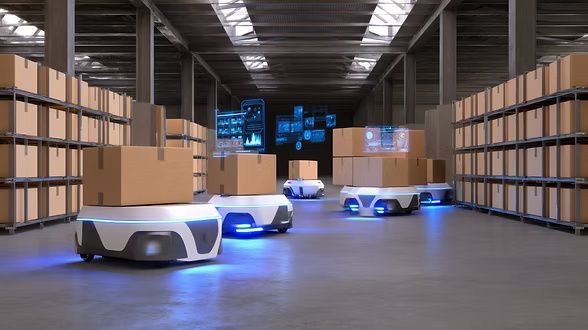
Autonomous Mobile Robots: Smart Automation Guide
Autonomous Mobile Robots are transforming the way industries move materials, manage workflows, and improve operational efficiency.
Unlike traditional automated machines that follow fixed paths, these intelligent robots navigate independently using sensors, cameras, artificial intelligence, and real-time mapping technologies. They can transport goods, avoid obstacles, and adapt to changing environments without continuous human intervention.
As automation becomes a priority across manufacturing, logistics, healthcare, and retail, Autonomous Mobile Robots are helping organizations improve productivity while supporting safer and more flexible operations. This guide explains how these robots work, their key technologies, practical applications, benefits, challenges, and future developments.
What Are Autonomous Mobile Robots?
Autonomous Mobile Robots (AMRs) are intelligent robotic systems designed to move independently within dynamic environments. They use advanced navigation technologies to understand their surroundings, determine the most efficient routes, and safely transport materials or perform assigned tasks.
Unlike automated guided vehicles (AGVs), which typically follow predefined tracks or markers, AMRs can adjust their routes in real time when they encounter obstacles or changes in their environment.
Why Autonomous Mobile Robots Matter
Modern industries require faster workflows, greater flexibility, and improved operational efficiency. Autonomous Mobile Robots help meet these demands by automating repetitive transportation tasks while allowing employees to focus on higher-value activities.
Industry reports indicate that automation continues to expand across warehouses, production facilities, healthcare environments, and distribution centers as organizations seek smarter material handling solutions. AMRs support this shift by reducing manual movement, improving workflow visibility, and enhancing operational consistency.
How Autonomous Mobile Robots Work
AMRs combine multiple technologies to navigate safely and complete assigned tasks.
Environment Mapping
Robots create digital maps of their surroundings using sensors, cameras, and laser-based scanning technologies. This allows them to understand the layout of a facility.
Intelligent Navigation
Navigation software analyzes the environment and calculates the most efficient route while continuously adjusting to changing conditions.
Obstacle Detection
Built-in sensors detect people, equipment, and other obstacles. The robot automatically slows down, changes direction, or stops when necessary to maintain safe operation.
Task Execution
Once a route is determined, the robot transports materials, delivers inventory, or performs programmed activities before receiving its next assignment.
Key Technologies Behind AMRs
Several technologies work together to enable autonomous operation.
Important components include:
- LiDAR sensors
- High-resolution cameras
- Artificial intelligence
- Machine learning
- Simultaneous Localization and Mapping (SLAM)
- Ultrasonic sensors
- Navigation controllers
- Wireless communication systems
- Battery management technology
Together, these technologies allow AMRs to operate accurately in complex industrial environments.
Applications Across Industries
Autonomous Mobile Robots are being adopted across a wide range of industries.
Manufacturing facilities use AMRs to transport raw materials, components, and finished products between production areas.
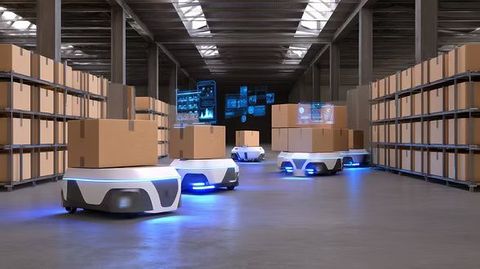
Warehouses rely on autonomous robots to move inventory, replenish storage locations, and support order fulfillment.
Healthcare facilities use AMRs to transport medical supplies, pharmaceuticals, laboratory samples, and essential equipment between departments.
Retail distribution centers use mobile robots to improve inventory movement while supporting faster order processing.
Airports, hospitality facilities, research laboratories, and educational campuses are also exploring autonomous robotics to improve internal logistics.
Benefits of Autonomous Mobile Robots
One of the greatest advantages of Autonomous Mobile Robots is their flexibility. Unlike fixed automation systems, AMRs can adapt to layout changes without requiring physical guide paths or extensive infrastructure modifications.
They also improve productivity by transporting materials continuously throughout the day while reducing repetitive manual handling activities.
Safety is another important benefit. Advanced sensors and intelligent navigation allow robots to detect obstacles and operate alongside people in shared workspaces.
Real-time monitoring provides valuable operational data that helps managers analyze workflow efficiency, optimize transportation routes, and improve overall facility performance.
Challenges and Best Practices
Although AMRs provide many operational advantages, successful implementation requires careful planning.
Organizations should evaluate facility layouts, wireless network coverage, workflow requirements, and system integration before deployment. Employee training is equally important to ensure smooth collaboration between people and autonomous systems.
Regular software updates, battery maintenance, sensor calibration, and routine inspections help maintain reliable robot performance while extending equipment lifespan.
Future Trends
Autonomous robotics continues to advance through artificial intelligence, edge computing, cloud connectivity, and Industrial Internet of Things (IIoT) technologies. Future AMRs are expected to become more collaborative, capable of making faster decisions, and better integrated with warehouse management and manufacturing execution systems.
Digital twins, predictive maintenance, and advanced fleet management platforms will further improve operational visibility and resource utilization. As smart factories and intelligent logistics networks continue to grow, Autonomous Mobile Robots will remain a key technology driving industrial automation.
Frequently Asked Questions
What are Autonomous Mobile Robots?
Autonomous Mobile Robots are intelligent robots that navigate independently using sensors, artificial intelligence, and mapping technologies to transport materials or perform automated tasks.
How are AMRs different from AGVs?
AMRs navigate dynamically using digital maps and obstacle detection, while AGVs generally follow fixed routes guided by physical markers or predefined pathways.
Which industries use Autonomous Mobile Robots?
Manufacturing, logistics, warehousing, healthcare, retail, hospitality, airports, research facilities, and distribution centers commonly use AMRs.
What technologies enable autonomous navigation?
Key technologies include LiDAR, SLAM, cameras, artificial intelligence, machine learning, ultrasonic sensors, wireless communication, and advanced navigation software.
Why are Autonomous Mobile Robots becoming more popular?
They improve operational efficiency, enhance workplace safety, increase flexibility, reduce repetitive manual transportation, and support intelligent automation across many industries.
Conclusion
Autonomous Mobile Robots are reshaping industrial automation by providing intelligent, flexible, and efficient material handling solutions. Their ability to navigate independently, adapt to changing environments, and integrate with modern digital systems makes them valuable across manufacturing, healthcare, logistics, and many other sectors.
As artificial intelligence and smart automation technologies continue to evolve, Autonomous Mobile Robots will play an increasingly important role in creating more connected, productive, and efficient workplaces.