Plastic Extrusion & Recycling Machines Explained: Advanced Processing Technologies & Sustainable Manufacturing
The plastics industry plays a major role in modern manufacturing, supporting sectors such as packaging, construction, automotive, healthcare, and consumer products. As demand for plastic products continues to grow, manufacturers are increasingly focused on improving production efficiency while reducing environmental impact.
This shift has led to the development of advanced plastic extrusion and recycling machines. These technologies help transform raw materials and recovered plastics into valuable products while supporting sustainable manufacturing practices.
From producing pipes and packaging materials to converting plastic waste into reusable resources, extrusion and recycling systems are becoming essential components of modern industrial operations.
In this guide, we'll explore how plastic extrusion and recycling machines work, the technologies behind them, and their role in sustainable manufacturing.
What Are Plastic Extrusion Machines?
Plastic extrusion machines are industrial systems that convert raw plastic materials into continuous shapes such as pipes, sheets, films, profiles, and tubing.
The process involves melting plastic material and forcing it through a specially designed die. Once the material exits the die, it cools and takes on its final shape.
Because extrusion can operate continuously, it is one of the most efficient methods for producing plastic products on a large scale.
Manufacturers commonly use extrusion technology to create products such as:
- Plastic pipes
- Packaging films
- Window profiles
- Cable insulation
- Plastic sheets
These products are used in industries ranging from construction and infrastructure to consumer goods manufacturing.
How Plastic Extrusion Works
Although modern extrusion systems are highly sophisticated, the basic process follows a straightforward sequence.
Plastic raw material enters the machine through a feeding system. The material then moves through a heated barrel where it is melted and mixed before being shaped through a die.
Main Stages of the Extrusion Process
- Material feeding
- Melting and mixing
- Pressure generation
- Shaping through a die
- Cooling and finishing
Each stage plays an important role in achieving consistent product quality and production efficiency.
For example, a pipe manufacturing facility may run extrusion lines continuously to produce large quantities of plastic piping with uniform dimensions and performance characteristics.
Key Components of Extrusion Machines
Modern extrusion systems consist of several integrated components that work together to ensure smooth operation.
Hopper and Feeding System
The hopper stores and feeds plastic material into the extrusion machine.
A consistent material supply helps maintain stable production conditions.
Extruder Screw and Barrel
The screw rotates inside a heated barrel, moving material forward while melting and mixing it.
This section is often considered the heart of the extrusion process because it directly influences product quality.
Die System
The die determines the final shape of the product.
Different dies are used depending on whether the manufacturer is producing film, sheet, tubing, or other plastic products.
Cooling and Calibration Equipment
After leaving the die, the material must cool and stabilize before further processing.
Cooling systems help maintain dimensional accuracy and product consistency.
Understanding Plastic Recycling Machines
Plastic recycling machines help convert used plastic materials into reusable raw materials for future manufacturing.
As industries focus on sustainability and resource efficiency, recycling technology has become increasingly important.
Rather than allowing plastic waste to enter landfills, recycling systems process discarded materials and prepare them for reuse.
This supports circular manufacturing practices and reduces dependence on virgin raw materials.
How Plastic Recycling Works
The recycling process involves multiple stages designed to clean, process, and recover valuable materials.
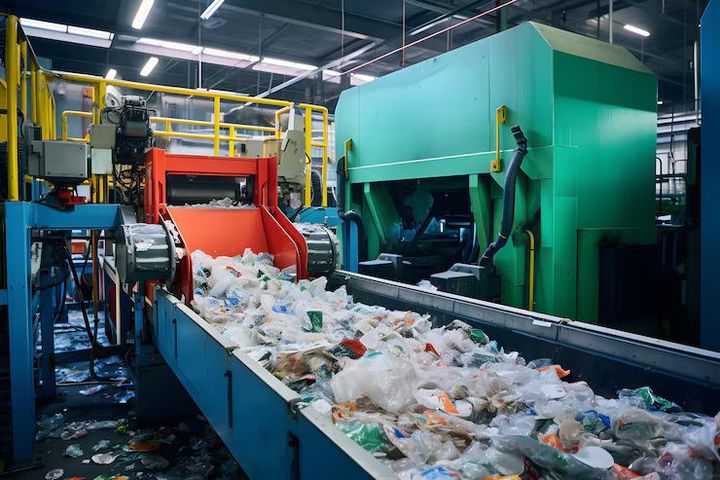
Collected plastic waste is sorted, cleaned, shredded, and processed before being converted into reusable material.
Typical Recycling Process
- Collection and sorting
- Cleaning and washing
- Shredding and size reduction
- Melting and processing
- Pellet production
The resulting recycled material can then be used in various manufacturing applications.
For example, plastic packaging waste can be processed into pellets that are later used to manufacture new plastic products.
Types of Recycling Equipment
Different recycling operations require different processing technologies.
Shredders and Granulators
These machines reduce plastic waste into smaller pieces that are easier to process.
The material is prepared for cleaning and further recycling stages.
Washing Systems
Contaminants such as dirt, labels, and residues must be removed before recycling.
Washing systems help improve the quality of recovered material.
Pelletizing Machines
Pelletizers convert processed plastic into small pellets that can be used as manufacturing feedstock.
These pellets are easier to store, transport, and process.
Integrated Recycling Lines
Many modern facilities use complete recycling lines that combine sorting, cleaning, processing, and pelletizing within a single operation.
This improves efficiency and production consistency.
Advanced Processing Technologies
Technology continues to improve both extrusion and recycling operations.
Modern systems are becoming more efficient, automated, and capable of handling a wider range of materials.
Automation and Process Control
Automated controls help monitor temperature, pressure, and material flow throughout production.
This improves consistency and reduces production variability.
Smart Monitoring Systems
Advanced sensors collect real-time operational data and help operators optimize machine performance.
These systems can identify potential issues before they affect production.
Energy-Efficient Equipment
New machine designs focus on reducing energy consumption while maintaining high productivity.
This supports both operational efficiency and environmental goals.
High-Performance Material Processing
Modern systems can process complex materials with greater accuracy and reliability than earlier technologies.
This expands manufacturing possibilities across multiple industries.
Applications Across Industries
Plastic extrusion and recycling technologies support numerous industrial sectors.
Packaging Industry
Packaging manufacturers use extrusion systems to produce films, sheets, and protective materials.
Recycled plastics are increasingly incorporated into packaging production to support sustainability goals.
Construction Sector
The construction industry relies on extrusion technology for products such as pipes, insulation materials, and structural profiles.
These products require durability and consistent quality.
Automotive Manufacturing
Automotive companies use plastic components for interior and exterior applications.
Recycled materials are becoming increasingly important in vehicle production strategies.
Consumer Products
Many everyday items are manufactured using extrusion and recycled plastic materials.
This includes household goods, storage products, and various commercial applications.
Sustainability Benefits of Recycling Technology
Sustainability has become a major priority for manufacturers worldwide.
Plastic recycling technologies help organizations reduce waste while improving resource utilization.
Key Environmental Advantages
Recycling systems support:
- Reduced landfill waste
- Improved material recovery
- Lower raw material consumption
- More sustainable manufacturing practices
These benefits contribute to long-term environmental responsibility and resource efficiency.
As industries continue pursuing sustainability initiatives, recycling technology will remain an important part of modern manufacturing strategies.
Challenges in Plastic Processing and Recycling
Despite significant advancements, manufacturers still face several challenges.
One challenge is maintaining consistent material quality when processing recycled plastics. Different waste streams may contain varying material characteristics.
Another challenge involves sorting and separating materials efficiently before processing.
Manufacturers must also balance productivity, quality, and sustainability goals while adapting to changing industry requirements.
Future Trends in Plastic Extrusion and Recycling
The future of plastic processing is increasingly focused on innovation, efficiency, and environmental responsibility.
Emerging Industry Trends
- Advanced automation systems
- Smart manufacturing technologies
- Improved material recovery processes
- High-efficiency recycling equipment
- Greater use of recycled feedstock
These developments are helping manufacturers create more sustainable and efficient production environments.
As technology continues to advance, plastic processing systems will become even more intelligent and adaptable.
Conclusion
Plastic extrusion and recycling machines play a critical role in modern manufacturing by transforming raw and recovered materials into valuable products. Through advanced processing technologies, automation, and efficient recycling systems, manufacturers can improve productivity while supporting sustainability goals.
From packaging and construction to automotive and consumer products, these technologies help industries meet growing production demands while promoting responsible resource management. As innovation continues to drive the sector forward, plastic extrusion and recycling systems will remain essential tools for sustainable manufacturing and industrial growth.