Office Cubicle Furniture: Explore Workplace Layouts and Productivity
Office cubicle furniture refers to modular workspace systems designed to create individual workstations within an office. These systems typically combine desks, storage units, partition panels, cable management components, and ergonomic accessories into organized work areas.
Unlike traditional open office layouts, cubicle furniture provides employees with a dedicated workspace while maintaining efficient use of available floor space. Modern office cubicles are available in numerous sizes, configurations, and materials to support different workplace requirements.
Organizations across industries use office cubicle furniture to improve organization, encourage productivity, reduce distractions, and accommodate growing teams without requiring permanent construction.
How Office Cubicle Furniture Is Structured
Modern office cubicle systems are built using modular components that can be rearranged as workplace needs change.
Core Components
- Workstation desk
- Partition panels
- Storage cabinets
- Mobile pedestal drawers
- Cable management channels
- Monitor arms
- Keyboard trays
- Privacy screens
- Power modules
- Lighting accessories
The modular design allows organizations to expand, reduce, or reconfigure office layouts with minimal disruption.
Common Types of Office Cubicle Furniture
| Type | Best Used For | Key Characteristics |
|---|---|---|
| Standard Cubicles | General office work | Balanced privacy and collaboration |
| High-Panel Cubicles | Focus-intensive tasks | Increased visual and sound privacy |
| Low-Panel Workstations | Team environments | Open communication and visibility |
| Benching Systems | Collaborative departments | Shared workspace with modular desks |
| Manager Workstations | Supervisors and team leaders | Larger work surfaces and additional storage |
| Height-Adjustable Cubicles | Ergonomic workplaces | Sit-stand functionality |
| Collaborative Pods | Project teams | Shared seating with integrated meeting space |
Why Office Cubicle Furniture Is Important
A thoughtfully designed office environment contributes to employee comfort, operational efficiency, and workplace organization.
Office cubicle furniture helps organizations:
Major Benefits
- Organize office space efficiently
- Improve employee concentration
- Reduce workplace distractions
- Support ergonomic working positions
- Simplify cable organization
- Maximize available floor area
- Adapt to changing workforce sizes
- Improve storage management
- Support hybrid office arrangements
- Create professional workplace aesthetics
Modern cubicle systems also help facility managers redesign office layouts without major structural modifications.
How Office Cubicle Furniture Works in Daily Operations
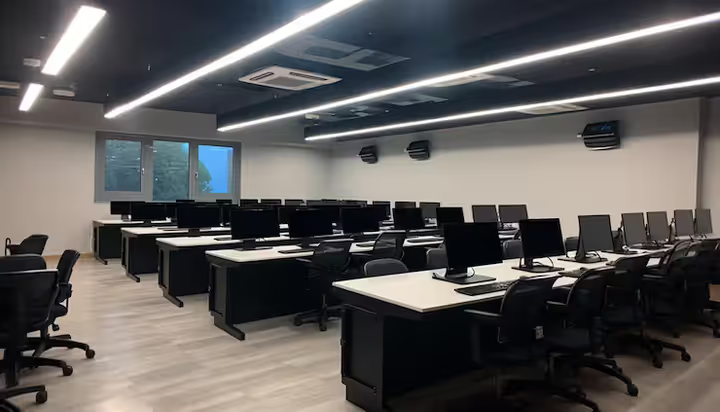
Each employee receives an individual workstation equipped with essential furniture and storage while remaining connected to nearby colleagues.
A typical cubicle may include:
Typical Workstation Features
- Computer desk
- Adjustable office chair
- Lockable storage drawers
- File storage
- Monitor mounting system
- Personal lighting
- Acoustic privacy panels
- Power outlets
- USB charging ports
- Network connectivity
Departments can be grouped together using modular workstation clusters that improve communication while maintaining personal workspace boundaries.
Key Features of Modern Office Cubicle Furniture
Today's office furniture emphasizes flexibility, employee wellness, and technology integration.
Important Features
- Modular construction
- Ergonomic desk options
- Adjustable partition heights
- Acoustic sound reduction panels
- Integrated cable routing
- Sustainable materials
- Easy expansion capability
- Durable laminate finishes
- Mobile storage units
- Smart power management
- Wireless charging compatibility
- Flexible workstation layouts
Many modern workstations are designed for long-term adaptability, allowing businesses to reorganize office layouts with minimal effort.
Materials Commonly Used
Manufacturers use durable materials to ensure long operational life and easy maintenance.
Popular Materials
- Steel frames
- Aluminum supports
- Engineered wood
- High-pressure laminate
- Tempered glass
- Fabric-covered acoustic panels
- Recycled composite materials
- Powder-coated metal
- MDF panels
- Commercial-grade plastic components
Material selection often depends on workplace design goals, maintenance requirements, and environmental considerations.
Industries That Use Office Cubicle Furniture
Office cubicle furniture is widely adopted across multiple sectors.
Common Industries
- Corporate offices
- Information technology
- Healthcare administration
- Government departments
- Educational institutions
- Engineering firms
- Legal offices
- Accounting firms
- Customer support centers
- Research organizations
- Insurance administration
- Shared office environments
Each industry customizes workstation layouts according to operational workflows and employee responsibilities.
Problems Office Cubicle Furniture Helps Solve
Modern workplaces face several space management and productivity challenges.
Office cubicle furniture addresses issues such as:
Workplace Challenges
- Limited office space
- Workplace noise
- Poor organization
- Cable clutter
- Lack of employee privacy
- Difficult office expansion
- Inconsistent workstation design
- Storage limitations
- Employee discomfort
- Inefficient workspace utilization
Proper planning creates an environment that balances collaboration with focused work.
Recent Trends and Developments (2025–2026)
Office furniture continues to evolve as organizations adapt to hybrid work and employee wellness initiatives.
Recent Developments
- Increased adoption of height-adjustable workstations throughout 2025.
- Greater use of recycled and environmentally responsible materials in furniture manufacturing.
- Growth of modular office layouts that can be quickly reconfigured for changing team sizes.
- Expanded use of acoustic panels to reduce workplace distractions.
- Integration of USB-C charging modules and smart power management into workstation systems.
- Wider implementation of flexible workspace planning for hybrid office environments.
- Growing emphasis on ergonomic furniture supporting employee health and long working hours.
- More manufacturers introducing low-emission materials that contribute to healthier indoor environments.
These developments reflect changing workplace expectations focused on flexibility, sustainability, and employee experience.
Standards and Workplace Considerations
Several workplace standards influence office furniture selection and workspace planning.
Relevant Guidelines
- Occupational safety and ergonomic recommendations encourage workstation designs that reduce physical strain.
- Accessibility requirements should ensure that office layouts accommodate individuals with disabilities where applicable.
- Fire safety regulations require clear evacuation pathways and appropriate furniture placement.
- Building regulations may specify minimum aisle widths and emergency access routes.
- Environmental certification programs encourage the use of sustainable materials and responsible manufacturing practices.
Organizations should consult applicable national and local workplace regulations when planning office layouts.
Useful Tools, Platforms, and Learning Resources
Numerous digital tools assist architects, facility managers, and workplace planners.
Planning and Design Tools
- AutoCAD
- SketchUp
- Autodesk Revit
- Microsoft Visio
- Planner 5D
- RoomSketcher
- Sweet Home 3D
- Figma (layout planning)
- Blender (workspace visualization)
Learning Resources
- Workplace ergonomics guides
- Interior design publications
- Commercial furniture design courses
- Building design associations
- Occupational safety resources
- Architecture learning platforms
- Facility management organizations
These resources help professionals understand workspace planning, ergonomic principles, and office layout optimization.
Choosing Appropriate Office Cubicle Furniture
Selecting suitable office furniture depends on several practical factors.
Factors to Consider
- Office size
- Employee count
- Workflow requirements
- Privacy needs
- Storage requirements
- Future expansion plans
- Technology integration
- Accessibility
- Ergonomic support
- Material durability
- Maintenance requirements
- Environmental sustainability
Evaluating these factors helps create workspaces that remain functional as organizational needs evolve.
Future Outlook
Office cubicle furniture is expected to become increasingly adaptable, technology-enabled, and environmentally responsible.
Future innovations may include:
Expected Developments
- AI-assisted workspace planning
- Smart occupancy monitoring
- Integrated environmental sensors
- Improved acoustic technologies
- Lightweight modular systems
- Sustainable manufacturing materials
- Enhanced cable-free workstation designs
- Greater customization for hybrid work environments
These innovations aim to improve employee comfort while supporting changing workplace strategies.
FAQs
What is office cubicle furniture?
Office cubicle furniture is a modular workstation system consisting of desks, partitions, storage units, and accessories that create organized individual workspaces within an office.
Why is office cubicle furniture commonly used?
It helps organize office space efficiently, supports employee privacy, improves workspace management, and creates structured work environments suitable for many industries.
What materials are commonly used in office cubicle furniture?
Common materials include steel, aluminum, engineered wood, laminate surfaces, tempered glass, acoustic fabric panels, and recycled composite materials.
Are modern office cubicles ergonomic?
Many modern cubicle systems support ergonomic working practices through adjustable desks, monitor arms, keyboard trays, and flexible workstation configurations.
Can office cubicle furniture support hybrid workplaces?
Yes. Modular workstation systems are designed to accommodate changing office layouts, flexible seating arrangements, and evolving workplace requirements.
Conclusion
Office cubicle furniture remains an important element of modern workplace design by providing organized, adaptable, and efficient work environments. Modular construction, ergonomic features, and flexible layouts allow organizations to accommodate changing workforce needs while improving employee comfort and productivity.
Recent developments emphasize sustainability, technology integration, and workplace wellness, making modern cubicle systems increasingly versatile. By understanding workspace requirements, selecting suitable materials, and following recognized workplace guidelines, organizations can create functional office environments that support collaboration, focused work, and long-term operational efficiency.