Jump to a Chapter

Monsoon 2026 India Guide: Explore Basics, Details, and Key Facts

Monsoon 2026 India Guide: Explore Basics, Details, and Key Facts

The monsoon is one of the most important seasonal weather patterns in India. It brings a large share of India’s yearly rainfall and affects agriculture, water storage, river flow, city drainage, transport, public health, and daily life. The main rainy period is the southwest monsoon, which normally develops around June and continues through September.


The monsoon exists because land and sea heat differently. During summer, the Indian landmass becomes much warmer than the surrounding ocean. This creates low pressure over land, pulling moisture-filled winds from the ocean toward India. When these winds rise over land, hills, coastal areas, and plains, clouds form and rainfall begins.

For India, the monsoon is not only a weather event. It affects agriculture, drinking water, reservoirs, hydropower, food supply, road travel, public health, and urban planning. A strong, well-distributed monsoon can support farming and water storage. A weak or uneven monsoon can create stress for farmers, cities, and households.

Monsoon 2026 is especially important because India entered the season after periods of severe heat in several regions. The arrival of rainfall can bring relief from heat, but it can also bring flooding, landslides, waterlogging, traffic disruption, crop risk, and disease concerns if rainfall is intense or poorly distributed.

The India Meteorological Department, commonly known as IMD, tracks the monsoon using rainfall data, wind patterns, satellite images, ocean conditions, and regional weather models. IMD also issues alerts, warnings, and seasonal forecasts for citizens, farmers, transport planners, and local authorities.

Importance

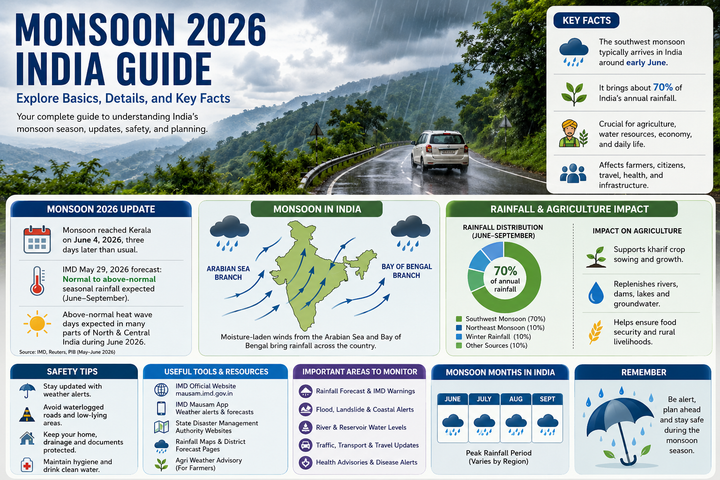
Monsoon 2026 matters because India still depends heavily on seasonal rainfall. Reuters reported that the June–September monsoon provides about 70% of India’s annual rainfall and supports crops such as rice, corn, cotton, soybeans, and sugarcane.

The monsoon affects many groups:

  • Farmers planning kharif crop sowing
  • Families preparing for rain, waterlogging, and travel delays
  • Students and office commuters using roads and public transport
  • City authorities managing drainage and traffic control
  • Health departments monitoring water-borne and vector-borne illness
  • Energy planners watching hydropower and cooling demand
  • Businesses that depend on logistics, agriculture, travel, and construction

A good monsoon helps refill rivers, lakes, dams, and groundwater systems. This supports drinking water availability and irrigation. In rural areas, rainfall timing can affect sowing decisions. In urban areas, heavy rain can expose weak drainage systems and increase flood risk.

The monsoon also affects


I need afs safe content

Meta Data

Meta Title: Monsoon 2026 India Guide: Basics, Details, Facts, and Safety Overview

Meta Description: Learn Monsoon 2026 India basics, rainfall updates, IMD alerts, agriculture impact, safety planning, policies, tools, and useful resources.

Read Time: 7–8 minutes

Focus Keywords: Monsoon 2026 India guide, India monsoon update, IMD rainfall forecast, weather alert, flood risk, agriculture weather, rainfall tracker, disaster management, travel safety, climate information

Monsoon 2026 India Guide: Explore Basics, Details, and Key Facts

Context

The monsoon is one of the most important seasonal weather patterns in India. It brings a large share of India’s yearly rainfall and affects agriculture, water storage, river flow, city drainage, transport, public health, and daily life. The main rainy period is the southwest monsoon, which normally develops around June and continues through September.

The monsoon exists because land and sea heat at different speeds. During summer, the Indian landmass becomes warmer than the surrounding ocean. This creates a pressure difference that pulls moisture-filled winds from the Arabian Sea and the Bay of Bengal toward the country. When these winds move over land, mountains, coastlines, and plains, clouds form and rainfall begins.

Monsoon 2026 is important because it follows another intense summer period in many parts of India. Rainfall can bring relief from heat, but it can also create challenges such as waterlogging, road disruption, landslides, crop stress, power interruptions, and higher disease risk in some areas.

India Meteorological Department, known as IMD, tracks rainfall, wind movement, ocean conditions, temperature patterns, satellite data, and regional weather activity. IMD also publishes monsoon information, rainfall maps, warnings, and forecast updates for the public. The IMD website has dedicated information areas for rainfall, monsoon, cyclone, agriculture weather, and climate-related updates.

Importance

The monsoon matters because India’s economy and daily routines are deeply connected with rainfall. Reuters reported that the June–September monsoon provides about 70% of India’s annual rainfall and supports crops such as rice, corn, cotton, soybeans, and sugarcane.

Monsoon 2026 affects many groups:

  • Farmers planning kharif crop sowing
  • Families preparing for rain and waterlogging
  • Students and commuters using roads and public transport
  • Local authorities managing drainage and flood-prone areas
  • Health departments monitoring water-borne and vector-borne illness
  • Transport planners handling road, rail, and airport delays
  • Energy planners watching hydropower, cooling demand, and grid load

A balanced monsoon can refill reservoirs, support irrigation, improve groundwater recharge, and reduce pressure on drinking water systems. However, the timing and distribution of rainfall are as important as total rainfall. Heavy rain in a short period may cause flooding, while long dry gaps can affect crop planning.

Urban India faces a different type of monsoon challenge. In cities, intense rain can quickly create waterlogging because of limited drainage capacity, construction activity, blocked drains, and high road density. For households, monsoon planning includes checking local alerts, keeping important documents protected, using safer travel routes, and maintaining basic hygiene.

Recent Updates

For Monsoon 2026, the first major update was the arrival of the southwest monsoon over Kerala. Reuters reported that the Indian monsoon reached Kerala on June 4, 2026, three days later than the usual onset date, according to IMD. The same report noted that the monsoon had covered Kerala and parts of Tamil Nadu, with conditions supporting further movement into other southern regions.

On May 29, 2026, the Ministry of Earth Sciences published an updated long-range forecast for southwest monsoon seasonal rainfall during June–September 2026, along with the monthly rainfall and temperature outlook for June. This type of update is important because it gives a broad view of rainfall expectations and temperature risk at the start of the season.

The same government update mentioned that above-normal heat wave days were expected in June 2026 over many parts of Uttar Pradesh, Haryana, Punjab, Bihar, Odisha, Chhattisgarh, Gujarat, Andhra Pradesh, and some isolated areas of Maharashtra, Telangana, Himachal Pradesh, and Tamil Nadu. This shows why monsoon tracking matters beyond rainfall alone. Heat, rainfall timing, humidity, and local weather alerts all need attention.

Current reports from Kerala also show why safety awareness is necessary. Recent rainfall activity in Kerala has led to serious rain-related incidents, highlighting the need to follow local weather warnings and avoid risky movement during intense rain.

Laws or Policies

Monsoon management in India is connected with disaster management, public weather communication, agriculture advisories, city planning, water management, and transport safety. The central and state governments use weather data and warnings to prepare for rain-related risks.

Key public systems linked with monsoon planning include:

  • IMD weather forecasts and alerts
  • State disaster management authorities
  • District-level warning systems
  • Flood control rooms in vulnerable areas
  • Agriculture weather advisories
  • Municipal drainage and waterlogging response plans
  • Road, rail, and airport weather coordination
  • Public health notices during heavy rain periods

The Disaster Management Act framework guides emergency preparation and response across India. During the monsoon, state and district authorities may issue alerts related to heavy rain, river levels, landslides, coastal risk, school closure decisions, and traffic diversions. These actions are usually based on local conditions and weather inputs.

Monsoon-related policies also affect agriculture. Rainfall forecasts help farmers plan sowing, irrigation, crop protection, and harvesting decisions. Agriculture weather advisories can guide farmers on when to delay sowing, protect crops from water stress, or manage field drainage.

For cities, monsoon planning includes clearing drains, checking flood-prone areas, managing underpasses, controlling traffic near waterlogged routes, and monitoring low-lying settlements. These steps are not only administrative; they directly affect public safety.

Tools and Resources

Reliable tools and resources can help people follow Monsoon 2026 more carefully. The most important source for weather-related information is IMD because it publishes alerts, rainfall data, monsoon progress, and forecast updates. IMD’s monsoon information page includes forecast links and long-range monsoon material, including 2026 seasonal rainfall documents.

Useful tools and resources include:

  • IMD website for rainfall, warnings, and monsoon progress
  • State disaster management authority updates
  • Local municipal alerts for drainage and traffic
  • Agriculture weather advisories for farmers
  • Rainfall maps and district-level forecast pages
  • River and reservoir updates from local authorities
  • Calendar reminders for school, travel, and document planning
  • Household emergency checklist templates
  • City traffic alert apps and public transport updates

A simple household monsoon checklist can help:

AreaWhat to CheckWhy It Matters
Weather AlertsIMD and local noticesHelps avoid risky movement
Travel RoutesWaterlogging-prone roadsReduces delay and exposure
DocumentsKeep protected copiesPrevents damage during flooding
HealthClean water and hygieneReduces seasonal illness risk
Home SafetyRoof, wiring, drainageLowers household risk
CommunicationCharged phone and contactsHelps during disruptions

A basic monsoon risk graph can be understood like this:

Risk AreaAttention Level
Heavy Rain Alerts██████████ High
Waterlogging█████████ High
Travel Delays████████ Medium-High
Health Precautions████████ Medium-High
Document Safety███████ Medium
Crop Planning█████████ High

This graph is not a forecast. It is a general planning view for households, students, commuters, and families during the rainy season.

For farmers, useful planning areas include rainfall timing, soil moisture, sowing windows, crop type, drainage, and pest monitoring. For city residents, useful planning areas include route checking, vehicle care, safe footwear, rain protection, and avoiding flooded underpasses.

FAQs

What is the monsoon in India?

The monsoon is a seasonal weather pattern that brings moisture-filled winds and rainfall to India. The southwest monsoon usually runs from June to September and provides a major share of the country’s yearly rainfall.

When did Monsoon 2026 reach Kerala?

The southwest monsoon reached Kerala on June 4, 2026, according to IMD, as reported by Reuters. This was three days later than the usual onset date.

Why is the monsoon important for agriculture?

The monsoon supports kharif crops such as rice, cotton, soybean, corn, and sugarcane. Rainfall timing affects sowing, irrigation, soil moisture, and crop development. Uneven rainfall can create stress even when total seasonal rainfall appears adequate.

How can people track Monsoon 2026 updates?

People can track rainfall and alerts through IMD updates, state disaster management notices, local municipal advisories, and district-level warnings. IMD provides rainfall, monsoon, cyclone, agriculture weather, and climate information through its public website.

What precautions are useful during heavy rain?

People should avoid flooded roads, stay away from open drains and underpasses, follow local alerts, protect documents, use clean drinking water, and avoid unnecessary travel during intense rainfall warnings. Local advisories should be followed because risk varies by district and city.

Conclusion

Monsoon 2026 is a major seasonal event for India because it affects agriculture, water security, public health, travel, urban drainage, and daily planning. The season brings relief from heat, but it also requires careful attention to rainfall intensity, local warnings, and safety guidance.

The most useful approach is to follow trusted weather updates, understand local risk, and prepare early. Farmers need rainfall and agriculture advisories for crop planning. City residents need alerts for traffic, waterlogging, and household safety. Families should protect documents, plan travel carefully, and maintain basic hygiene during prolonged rain.

Monsoon conditions can change quickly from one region to another. A national forecast gives the broad picture, but local alerts are more useful for daily decisions. For Monsoon 2026, readers should treat IMD updates, state advisories, and district notices as primary references for safe and informed planning.

author-image

Saurabh Chawla

We are a performance-driven media buying team focused on scaling brands through smart, data-backed advertising strategies

June 09, 2026 . 8 min read