FIFA World Cup 2026 Guide: Explore Key Details, Facts, and Tournament Overview
The FIFA World Cup 2026 is the next edition of the men’s international football tournament organized by FIFA. It is one of the most followed sporting events in the world because it brings national teams, football fans, broadcasters, sponsors, public authorities, and host cities into one global competition cycle.
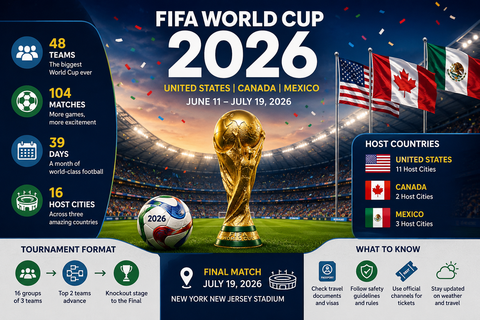
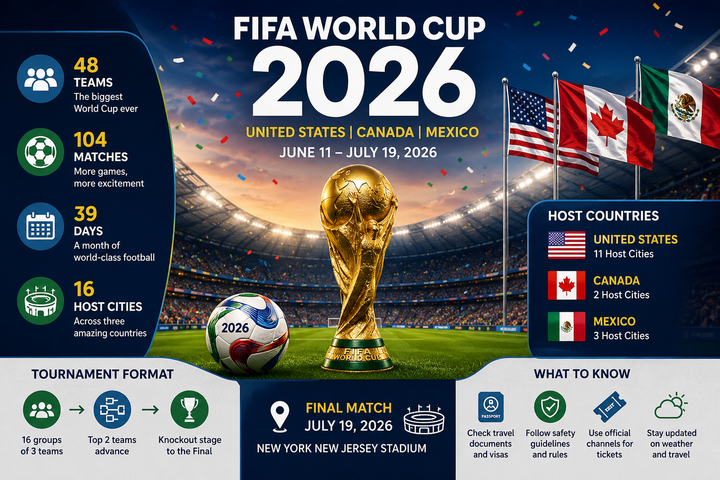
The 2026 edition is especially important because it is different from previous World Cups in two major ways. First, it will be hosted across three countries: the United States, Canada, and Mexico. Second, it will be the first men’s FIFA World Cup with 48 teams and 104 matches. FIFA’s match schedule page confirms the 48-team format and the full 104-match structure for the tournament.
The tournament is scheduled from June 11, 2026, to July 19, 2026. The final will be played at New York New Jersey Stadium on Sunday, July 19, 2026. FIFA confirmed New York New Jersey Stadium as the final venue in its tournament update.
For a general reader, the FIFA World Cup 2026 is not only about football matches. It also connects with travel planning, visitor documents, public safety, digital security, match scheduling, city transport, stadium access, tourism, and international event management.
The event exists to decide the world champion in men’s national-team football, but its wider role is much bigger. It creates a shared global calendar where national identity, sports performance, media rights, fan mobility, and public policy come together.
Why FIFA World Cup 2026 Matters Today
The FIFA World Cup 2026 matters because it is expected to be the largest edition in tournament history. The move from 32 teams to 48 teams means more national teams, more regional representation, and more matches across multiple cities.
This affects many groups:
| Group | Why the Tournament Matters |
|---|---|
| Football fans | More teams, more fixtures, and wider global participation |
| Host cities | Higher visitor movement, venue planning, and public safety coordination |
| National teams | Expanded qualification pathways and larger competitive exposure |
| Broadcasters | Longer tournament coverage and higher audience engagement |
| Travellers | Need for clear visa, passport, transport, and safety information |
| Local authorities | Crowd management, cyber readiness, and emergency planning |
The tournament also solves an important visibility problem for football. By expanding to 48 teams, more countries can participate, which helps football reach regions that may not have appeared regularly in earlier editions. This can increase awareness of emerging football nations and create more balanced global representation.
For host countries, the event brings major planning responsibilities. The United States will host 78 matches across 11 cities, while Mexico and Canada will also host matches in selected cities. FIFA noted this host-city distribution in its November 2025 visa appointment update.
The World Cup also matters for public knowledge. Many people search for basic details such as:
- FIFA World Cup 2026 schedule
- World Cup 2026 host countries
- World Cup 2026 venues
- FIFA travel documents
- World Cup visa information
- Tournament safety guidance
- Football match calendar
- World Cup format explanation
These searches show that the topic is not limited to sports fans. It is also relevant for families, students, travellers, content publishers, sports analysts, and people learning how global events are managed.
Recent Updates and Current Tournament Information
The past year has brought several important FIFA World Cup 2026 updates.
One key update is the confirmed final venue. FIFA announced that New York New Jersey Stadium will host the final on July 19, 2026. This is important because the final venue is usually one of the most searched tournament details.
Another major update relates to travel and visa planning. On November 17, 2025, FIFA announced that ticket holders travelling to the United States would benefit from the FIFA Priority Appointment Scheduling System, known as FIFA PASS. The update stated that the initiative is led by the U.S. Department of State and gives eligible ticket holders access to priority visa interview appointments ahead of the tournament.
FIFA’s travel and visa guidance, published on February 3, 2026, states that travellers entering Canada, Mexico, or the United States must have a valid, unexpired passport and should review the entry requirements for the relevant host country.
Canada also published updated fan and traveller guidance on June 5, 2026. The Government of Canada page includes information on travel documents, airport guidance, border wait times, large-event safety, ticket fraud awareness, health notices, weather tools, and cyber threat awareness for major international sporting events.
The latest tournament structure can be summarized as follows:
| Detail | FIFA World Cup 2026 Information |
|---|---|
| Tournament dates | June 11 to July 19, 2026 |
| Host countries | United States, Canada, Mexico |
| Teams | 48 national teams |
| Matches | 104 matches |
| Final venue | New York New Jersey Stadium |
| Final date | July 19, 2026 |
| Match locations | 16 host cities across North America |
Tournament Scale Snapshot
| Tournament Element | Scale |
|---|---|
| Teams | ████████████████████████████████████████████████ 48 |
| Matches | ████████████████████████████████████████████████████████████████████████████████████████████████████████ 104 |
| Host countries | ███ 3 |
| Host cities | ████████████████ 16 |
This wider structure means that fans and travellers should study the fixture calendar carefully. Different matches may require different travel documents, local transport planning, stadium entry rules, and public safety awareness.
Laws, Policies, and Government Rules
The FIFA World Cup 2026 is affected by multiple rules and public systems because it takes place across three countries. These include immigration rules, passport requirements, event safety planning, ticket fraud awareness, border controls, public transport coordination, and digital security.
The most important legal and policy area for international visitors is entry documentation. FIFA’s travel guidance states that visitors travelling by air, sea, or land to Canada, Mexico, or the United States must have a valid passport and should check the rules of each destination country.
For the United States, ticket holders who need a visa may use FIFA PASS for priority visa interview appointment scheduling, where eligible. FIFA stated that this system was introduced with the U.S. Department of State ahead of the tournament.
For Canada, government guidance highlights travel documents, border readiness, restricted items, airport wait times, health guidance, weather tools, and online ticket fraud awareness. This is important because major events can involve large crowds, high travel volume, and increased risk of fraud attempts.
The policy environment includes:
- Passport validity requirements
- Visa or travel authorization rules
- Stadium entry rules
- Public safety planning
- Emergency communication systems
- Border and customs rules
- Cybersecurity guidance
- Ticket fraud prevention
- Health and weather advisories
- Local transport and crowd-control planning
For readers, the practical lesson is simple: the World Cup is not only a sports schedule. It is a regulated international event. Anyone attending matches should review the official rules for the specific country and city they plan to visit.
Tools and Resources
Several tools and resources can help readers understand and prepare for the FIFA World Cup 2026 in a safe and organized way.
| Tool or Resource | Main Use |
|---|---|
| FIFA match schedule | Check fixtures, venues, and match dates |
| FIFA ticket information page | Review official ticket details |
| FIFA travel and visa page | Understand passport and entry guidance |
| FIFA PASS information | Learn about U.S. visa appointment scheduling |
| Government of Canada fan page | Review travel, safety, weather, and border guidance |
| Weather tools | Check conditions in host cities |
| Stadium maps | Understand venue layout and access points |
| Public transport apps | Plan city movement during match days |
| Travel insurance policy documents | Review travel protection terms |
| Cybersecurity guidance | Learn safe digital practices during large events |
| Calendar planner | Track fixtures by team, city, or date |
| Time zone converter | Convert match times for local viewing |
A simple reader checklist may include:
- Confirm match date and host city
- Check passport validity
- Review visa or travel authorization requirements
- Save official tournament schedule
- Study stadium access guidance
- Review local weather conditions
- Use trusted sources for ticket information
- Keep digital accounts protected
- Understand emergency contact channels
- Track match timing by local time zone
These resources are useful for readers whether they attend the event, watch from home, create content, or study the tournament from a sports business perspective.
FAQs
What is FIFA World Cup 2026?
FIFA World Cup 2026 is the next men’s international football tournament organized by FIFA. It will be hosted by the United States, Canada, and Mexico, and it will feature 48 national teams across 104 matches.
When will FIFA World Cup 2026 take place?
The tournament is scheduled from June 11, 2026, to July 19, 2026. The final will take place on July 19, 2026, at New York New Jersey Stadium.
Why is FIFA World Cup 2026 different from earlier editions?
It is the first men’s FIFA World Cup with 48 teams and three host countries. This expanded format creates more matches, more participating nations, and a wider tournament footprint across North America.
What documents may visitors need for FIFA World Cup 2026?
Visitors generally need a valid, unexpired passport and must check the entry rules for the country they plan to enter. FIFA’s travel guidance says travellers should review requirements for Canada, Mexico, and the United States separately.
What is FIFA PASS?
FIFA PASS is the FIFA Priority Appointment Scheduling System for eligible World Cup ticket holders who need U.S. visa interview appointments. FIFA announced the system with the U.S. Department of State on November 17, 2025.
Conclusion
FIFA World Cup 2026 is a major global sports event with a larger format, wider host structure, and more complex planning requirements than earlier editions. With 48 teams, 104 matches, and host cities across the United States, Canada, and Mexico, it is designed to reach a broader global audience.
The most important facts are clear: the tournament runs from June 11 to July 19, 2026; the final is scheduled for New York New Jersey Stadium; and visitors should carefully review travel documents, visa rules, safety guidance, and official tournament resources.
For general readers, the best approach is to treat the FIFA World Cup 2026 as both a football tournament and a large international event. Understanding the format, schedule, host countries, travel policies, safety tools, and verified resources can make the topic easier to follow and more useful for planning, learning, or publishing educational content.