PPC Strategies to Maximize ROI: Complete Guide, Tips, and Insights
Pay-per-click (PPC) advertising is a digital marketing model where advertisers pay a fee each time a user clicks on their ad.
Understanding PPC and Why It Exists
It is commonly used on search engines and display networks to drive targeted traffic to websites or landing pages. The core idea behind PPC is measurable performance—advertisers can track impressions, clicks, conversions, and return on investment (ROI) with precision.
PPC exists because businesses and publishers need a scalable way to reach users who are actively searching for information. Unlike traditional advertising, which often targets broad audiences, PPC focuses on intent-based marketing. For example, when a user searches for specific terms, search ads appear based on keyword relevance and bidding strategies.
The ecosystem includes advertisers, ad platforms (such as Google Ads), publishers, and users. Advertisers define campaigns, select keywords, set budgets, and optimize performance over time. Platforms use algorithms to determine which ads to display based on quality, relevance, and bid value.
At its core, PPC combines auction mechanics, user behavior analysis, and performance tracking. This makes it a data-driven approach where continuous optimization is essential to achieve better ROI.
Why PPC Strategies Matter Today
The importance of PPC has increased significantly due to rising digital competition and evolving consumer behavior. More users rely on search engines and online platforms to discover information, making PPC a critical channel for visibility.
Several factors explain why PPC strategies matter:
- High competition for keywords: As more advertisers enter the space, bidding efficiency and campaign structure become crucial.
- User intent targeting: PPC allows precise targeting based on search queries, demographics, and behavior.
- Measurable performance: Metrics such as CTR (click-through rate), CPC (cost per click), and conversion rate provide actionable insights.
- Scalability: Campaigns can be adjusted quickly based on performance data.
PPC strategies help address key challenges:
- Reducing wasted ad spend
- Improving conversion quality
- Aligning ads with user intent
- Enhancing landing page relevance
A well-structured PPC strategy focuses on aligning keywords, ad copy, and landing page experience. This alignment improves Quality Score, which influences ad rank and overall performance.
Recent Updates and Trends in PPC
Over the past year, several updates have influenced PPC campaign management and ROI optimization.
Automation and AI integration (2025–2026):
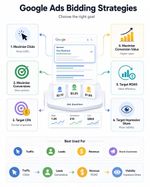
Ad platforms have increased the use of machine learning for bidding strategies such as Target CPA and Target ROAS. These systems analyze historical data and user signals to optimize bids in real time.
Privacy and data tracking changes (2025):
With evolving privacy regulations and reduced reliance on third-party cookies, advertisers are focusing more on first-party data and consent-based tracking.
Search experience enhancements:
Search engines have introduced more dynamic ad formats, including responsive search ads and AI-generated variations. These formats adapt to user queries more effectively.
Performance Max campaigns expansion:
Performance Max campaigns continue to gain adoption, allowing advertisers to access multiple inventory sources (search, display, video) within a single campaign structure.
Increased emphasis on landing page experience:
Page speed, mobile optimization, and content relevance now play a larger role in campaign performance and Quality Score.
Below is a simplified comparison of traditional vs. modern PPC approaches:
| Aspect | Traditional PPC | Modern PPC (2025–2026) |
|---|---|---|
| Bidding | Manual | Automated (AI-driven) |
| Ad format | Static | Dynamic & responsive |
| Targeting | Keyword-based | Intent + audience data |
| Optimization | Periodic | Continuous (real-time) |
| Data usage | Broad analytics | First-party + signals |
These updates highlight the shift toward automation, data privacy, and user-centric optimization.
Regulations and Policy Considerations
PPC advertising operates within a framework of platform policies and regulatory guidelines. Compliance is essential to ensure campaigns remain active and effective.
Advertising platform policies:
Platforms like Google Ads enforce strict rules related to:
- Misrepresentation and misleading claims
- Data privacy and user consent
- Restricted content categories
- Landing page transparency
Advertisers must ensure that ads accurately represent the content users will see after clicking. Any mismatch between ad copy and landing page content can impact Quality Score and policy compliance.
Data protection regulations:
Many countries have introduced laws governing user data collection and usage. Examples include:
- Consent requirements for tracking cookies
- Transparency in data collection practices
- User rights related to data access and deletion
Advertisers should use compliant analytics tools and clearly communicate data usage policies.
Regional guidelines:
Advertising regulations may vary by country. Some regions require additional disclosures or limit certain types of targeting. Understanding local rules helps avoid campaign interruptions.
Tools and Resources for PPC Optimization
Effective PPC management relies on a combination of tools that support keyword research, campaign tracking, and performance analysis.
Keyword Research Tools:
- Google Keyword Planner
- SEMrush
- Ahrefs
- Ubersuggest
These tools help identify high-intent keywords, search volume trends, and competition levels.
Analytics and Tracking Platforms:
- Google Analytics
- Google Ads Dashboard
- Search Console
These platforms provide insights into user behavior, conversion tracking, and campaign performance.
Campaign Optimization Tools:
- Bid management software
- A/B testing platforms
- Heatmap analysis tools
These tools help refine ad copy, landing pages, and bidding strategies.
Landing Page Optimization Resources:
- Page speed testing tools
- UX analysis frameworks
- Conversion tracking templates
Below is a simple representation of PPC performance metrics:
Impressions → Clicks → Conversions → ROI
     ↓          ↓          ↓
  Visibility   CTR     Conversion Rate
Each stage represents an opportunity for optimization.
Frequently Asked Questions
What is ROI in PPC advertising?
ROI (Return on Investment) measures the effectiveness of a campaign by comparing the value generated to the amount spent. It helps determine whether a campaign is achieving its objectives.
How can keyword selection impact PPC performance?
Keyword selection determines when and where ads appear. Using relevant and high-intent keywords improves click quality and increases the likelihood of conversions.
What role does Quality Score play in PPC?
Quality Score is a metric used by ad platforms to evaluate ad relevance, expected CTR, and landing page experience. A higher score can improve ad position and efficiency.
Why is landing page optimization important?
A well-optimized landing page ensures that users find relevant information quickly. This improves user experience and increases conversion rates.
How often should PPC campaigns be optimized?
Campaigns should be monitored regularly. Continuous optimization based on performance data helps maintain efficiency and adapt to changing trends.
Conclusion
PPC strategies for maximizing ROI require a structured, data-driven approach. Understanding the fundamentals of PPC, aligning campaigns with user intent, and adapting to recent trends are essential for sustained performance.
Modern PPC management emphasizes automation, privacy compliance, and user experience. Advertisers who leverage analytics tools, optimize landing pages, and follow platform policies can improve campaign outcomes over time.
The evolving digital landscape makes continuous learning and adaptation critical. By focusing on relevance, transparency, and performance metrics, PPC campaigns can achieve more consistent and measurable results.