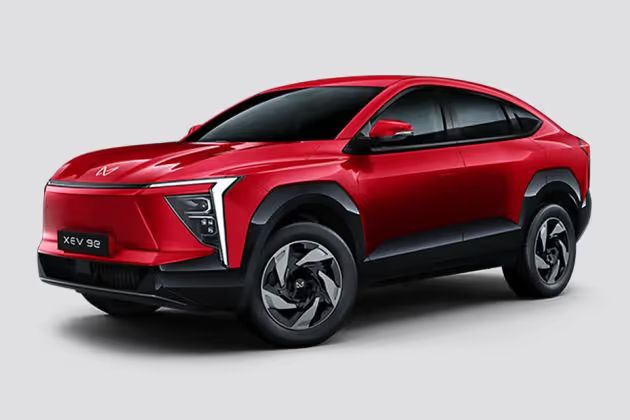
Mahindra XEV 9e Overview: Explore Features, EV Basics And Important Details
Mahindra XEV 9e is an electric-origin SUV coupe developed as part of Mahindra’s new electric SUV range. It exists because the Indian passenger vehicle market is moving from simple fuel-type comparisons toward deeper electric mobility questions: battery chemistry, certified range, public charging, software updates, connected features, safety ratings, and long-term ownership planning.
Mahindra launched the XEV 9e with the BE 6e on 26 November 2024. The company said both vehicles are built on the INGLO electric-origin architecture and powered by MAIA, its automotive intelligence architecture. For readers, this means the XEV 9e is not just a conventional SUV with an electric drivetrain. Its structure, packaging, electronics and user interface have been planned around EV requirements from the beginning.
The XEV 9e focuses on a premium SUV coupe format. The main educational points are battery capacity, range, charging speed, safety score, cabin technology, ADAS, connected apps, and daily usability. Mahindra lists a 79 kWh LFP battery with 656 km certified range under the MIDC P1+P2 cycle for the XEV 9e. Mahindra also mentions fast charging from 20% to 80% in under 20 minutes with a suitable 175 kW fast charger.
Why This Topic Matters Today
The XEV 9e matters because electric SUVs are becoming a major part of India’s premium vehicle discussion. A reader may be comparing EV basics with petrol or diesel SUV habits, checking charging readiness, understanding battery warranty terms, reviewing insurance planning, or learning how ADAS works in real traffic.
This topic affects several groups:
- City commuters who want to understand range and charging behavior
- Apartment residents who need parking and charger permission clarity
- Highway users who depend on public charging infrastructure
- Families who review Bharat NCAP safety information
- Technology-focused readers who compare software, apps and connected car features
- Finance and insurance researchers who study EV ownership variables
The topic solves a common information gap: EV specifications can look simple on paper, but actual usability depends on driving style, traffic, temperature, tyre pressure, air-conditioning use, payload, charger output and route planning. A certified range figure is helpful for comparison, but real-world range should always be interpreted with a practical buffer.
Feature Overview Table
| Area | XEV 9e Information | Reader Benefit |
|---|---|---|
| Platform | INGLO electric-origin architecture | Helps explain battery packaging and vehicle layout |
| Battery | 59 kWh and 79 kWh options in the range | Helps compare range and daily route planning |
| Certified Range | Up to 656 km MIDC P1+P2 for 79 kWh | Useful benchmark for EV comparison |
| Charging | 20% to 80% under 20 minutes with suitable DC hardware | Helps understand highway charging planning |
| Safety | 5-star Bharat NCAP result | Adds verified crash-test context |
| Technology | MAIA, OTA updates, ADAS and triple-screen cockpit | Shows software-led vehicle direction |
| Planning Areas | Insurance, warranty, charging access and finance planning | Helps readers evaluate practical ownership factors |
Certified Range Snapshot
59 kWh battery: 542 km | ████████████████████████
79 kWh battery: 656 km | ██████████████████████████████
The graph above uses Mahindra’s listed MIDC P1+P2 certified range values as a comparison aid. Certified numbers are not fixed daily outcomes, because road and climate conditions change.
Recent Updates And Market Trends
The first major update was the 26 November 2024 launch, when Mahindra introduced the XEV 9e and BE 6e as Electric Origin SUVs. The company described the XEV 9e as part of a new EV direction built on INGLO and MAIA. It also highlighted LFP battery technology, the 656 km certified range for the 79 kWh XEV 9e, lifetime battery warranty terms for eligible first registered private owners, fast charging capability, over-the-air updates, ADAS Level 2+, wide triple display, augmented-reality head-up display and Harman Kardon audio with Dolby Atmos.
On 16 January 2025, Mahindra announced that XEV 9e and BE 6 had achieved 5-star Bharat NCAP ratings. The XEV 9e recorded 32 out of 32 for Adult Occupant Protection and 45 out of 49 for Child Occupant Protection. Bharat NCAP’s own rating list also shows the XEV 9e base rating from January 2025 onward with 32.00/32.00 adult and 45.00/49.00 child scores.
On 5 February 2025, Mahindra shared the wider availability timeline for XEV 9e and BE 6 variants. The company stated that the complete lineup would open from 14 February 2025, with Pack Three deliveries planned from mid-March 2025 and other packs between June and August 2025.
On 1 March 2026, Mahindra unveiled the XEV 9e Cineluxe Edition. It added Satin Black and Satin White exterior themes, Chestnut Brown and Nocturne Black smooth-grain leatherette interiors, triple HD display, 16-speaker Harman Kardon audio with Dolby Atmos, Infinity Roof and ambient lighting themes. For a neutral overview, this update shows how EVs are also becoming design and cabin-experience products, not only battery-range products.
The wider market trend is clear: EV articles now need to explain software-defined vehicles, ADAS, battery warranty, public charging networks, insurance planning, finance planning and safety ratings together. Readers should avoid relying on only one metric, because a good EV decision depends on the full ecosystem.
Laws, Policies And Government Programs In India
India’s EV ecosystem is shaped by taxation, charging infrastructure guidelines, safety assessment and central electric mobility programs. These policy points matter because they affect EV adoption, charging access and the type of information readers should check before choosing an electric SUV.
The GST background is important. The Press Information Bureau stated that GST on all electric vehicles was reduced from 12% to 5%, and GST on chargers or charging stations for electric vehicles was reduced from 18% to 5%, effective from 1 August 2019. This remains a key tax-policy reference in India’s EV discussion.
PM E-DRIVE is another important program. The official portal states that the scheme was launched through Gazette notification S.O. 4259(E) on 29 September 2024 and implemented from 1 October 2024 to 31 March 2026. The listed eligible categories include e-2 wheelers, e-3 wheelers, e-ambulances, e-trucks, e-buses, charging infrastructure and testing-agency upgrades. Private electric cars are not listed on that eligible-category summary, so readers should verify the official portal before making assumptions about any direct central incentive.
Charging infrastructure rules are also relevant. PIB stated that the Ministry of Power issued the “Guidelines for installation and operation of Electric Vehicle Charging Infrastructure 2024” on 17 September 2024. A later PIB update said EV charging stations are an unlicensed activity and that eligible institutions, manufacturers and private entities can set up, operate and maintain EV charging stations across India under the applicable guidelines.
Tools And Resources For Research
Readers can use the following resources to understand the XEV 9e in a practical and policy-aware way.
| Resource | Purpose | What To Check |
|---|---|---|
| Mahindra official XEV 9e page | Model information | Battery, features, brochure notes |
| Mahindra brochure | Technical reference | Certified range, charging, warranty notes |
| Bharat NCAP website | Safety research | Adult and child occupant scores |
| PM E-DRIVE portal | Policy context | Eligible categories and scheme dates |
| GST Council or PIB archive | Tax background | EV and charger tax-rate history |
| Public charger locator apps | Route planning | Connector type, uptime and payment mode |
| Insurance comparison checklist | Risk planning | Battery cover, roadside help and claim terms |
| EV finance calculator | Budget planning | EMI estimate, interest rate and tenure impact |
| Home charging checklist | Apartment readiness | Parking access, meter load and permission |
| Maintenance log template | Ownership tracking | Tyres, brake fluid, software updates and battery notes |
Practical Checklist For General Readers
Before evaluating an electric SUV like the XEV 9e, readers can review these points:
- Daily commute distance and weekly driving pattern
- Fixed parking location and charger access
- Apartment permission or workplace charging availability
- Public charging points on regular routes
- Certified range versus expected real-world range
- Battery warranty terms and ownership transfer rules
- EV insurance coverage details
- ADAS availability and driver understanding
- Tyre size, braking behavior and replacement planning
- Bharat NCAP safety rating and variant applicability
- Software update policy and connected feature access
Common Questions
What is Mahindra XEV 9e?
Mahindra XEV 9e is an electric-origin SUV coupe based on Mahindra’s INGLO architecture. It is part of Mahindra’s new electric SUV portfolio and focuses on EV range, cabin technology, ADAS, connected features and safety.
What is the certified range of Mahindra XEV 9e?
Mahindra lists 542 km MIDC P1+P2 certified range for the 59 kWh version and 656 km MIDC P1+P2 certified range for the 79 kWh version in its XEV 9e brochure. Certified range is useful for comparison, while real-world range varies by road, traffic, speed and climate conditions.
Does XEV 9e have a Bharat NCAP rating?
Yes. Bharat NCAP lists the Mahindra XEV 9e with a 5-star result, including 32.00 out of 32.00 for Adult Occupant Protection and 45.00 out of 49.00 for Child Occupant Protection from the January 2025 base rating onward.
What charging basics should readers know?
Readers should check charger type, rated output, connector compatibility, battery temperature and state of charge. Mahindra’s launch information mentions 20–80% fast charging in under 20 minutes with suitable high-power DC hardware, but actual timing can vary by charger and conditions.
Does PM E-DRIVE directly list private electric cars?
The official PM E-DRIVE portal lists e-2 wheelers, e-3 wheelers, e-ambulances, e-trucks, e-buses, charging infrastructure and testing-agency upgrades. Private electric cars are not shown in that listed eligible-category summary, so readers should verify the official portal for the latest category information.
Conclusion
Mahindra XEV 9e is a useful topic for readers because it brings together several important EV concepts in one vehicle: electric-origin architecture, LFP battery technology, certified range, fast charging, ADAS, Bharat NCAP safety results, connected car systems, EV insurance, finance planning and charging infrastructure.
The best way to understand the XEV 9e is to look beyond a single specification. Range, safety, charging access, warranty terms, software features and policy context all matter. A clear overview helps readers understand the vehicle without exaggeration and gives them a practical framework for studying India’s changing electric SUV market.