Table of Contents

Mahindra BE 6 Overview: Explore Features, EV Basics And Important Details

Mahindra BE 6 Overview: Explore Features, EV Basics And Important Details

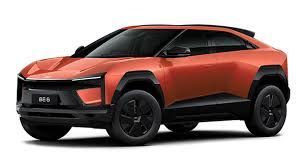
Mahindra BE 6 is an electric-origin SUV from Mahindra’s BE portfolio. It is built around the INGLO architecture, which means the vehicle is planned as an EV from the base structure rather than as a conversion from a petrol or diesel platform. Mahindra introduced BE 6e and XEV 9e on 26 November 2024, describing them as Electric Origin SUVs based on INGLO and powered by the MAIA technology architecture.

The topic exists because electric SUVs in India are becoming more complex. Earlier EV discussions were often limited to range and charging. Now, readers also need to understand battery chemistry, software-defined vehicle architecture, ADAS, crash safety, connected features, public charging, home charging readiness, insurance, taxation, and battery warranty.

For general readers, the BE 6 can be understood through six simple areas: design, battery, range, charging, safety, and digital experience. Mahindra’s brochure lists MIDC P1+P2 certified range figures of 557 km for the 59 kWh version and 683 km for the 79 kWh version. Mahindra also mentions 500+ km real-world metro driving range with AC on for the 79 kWh battery under stated test conditions.

Importance: Why Mahindra BE 6 Matters Today

Mahindra BE 6 matters because India’s EV market is entering a stage where consumers compare electric SUVs with traditional SUVs on design, safety, comfort, digital cockpit quality, insurance planning, and highway usability. This topic affects urban families, daily commuters, apartment residents, technology-focused drivers, EV researchers, and readers tracking clean mobility in India.

The most important problem it helps explain is the gap between certified range and practical range. A certified figure is measured through a defined test cycle, while daily range depends on traffic, speed, temperature, air-conditioning use, tyre pressure, road type, and driving style. This is why readers should treat range as a planning number, not as a fixed daily outcome.

Charging readiness is also important. A large-battery EV can be convenient when the user has predictable parking and charging access. Public charging is improving, but route planning still matters for longer drives. For apartment users, charging permission, metering, electrical load, and parking location should be checked before depending fully on an EV.

Safety is another major point. Electric vehicles are heavier than many comparable petrol vehicles because of battery packs. That makes structure, braking, stability control, tyre quality, and ADAS calibration important. Bharat NCAP gives readers a structured safety reference because it rates vehicles through controlled laboratory tests.

Mahindra BE 6 Feature Snapshot

Feature AreaKey DetailWhy It Matters For Readers
EV PlatformINGLO electric-origin architectureHelps explain packaging and battery placement
Battery Options59 kWh and 79 kWh LFP battery packsBattery size affects range and warranty focus
Certified Range557 km and 683 km MIDC P1+P2Useful for comparison, not a fixed daily number
Charging20% to 80% fast charging in about 20 minutes with suitable DC hardwarePublic charging quality affects highway planning
SafetyBharat NCAP adult score 31.97/32 and child score 45/49Helps compare crash safety using an Indian rating program
TechnologyMAIA, OTA capability, ADAS, digital cockpitShows how EVs are becoming software-led vehicles

Recent Updates And Market Trends

Mahindra’s BE 6 journey began with the launch announcement on 26 November 2024. The company highlighted INGLO architecture, MAIA, LFP battery technology, up to 210 kW power, 20% to 80% fast charging in under 20 minutes with a 175 kW fast charger, and a lifetime battery warranty for eligible first registered private owners. For later owners, Mahindra mentioned 10 years or 200,000 km from first delivery, whichever comes earlier.

On 16 January 2025, the BE 6 received a Bharat NCAP safety result with 31.97 out of 32 for Adult Occupant Protection and 45 out of 49 for Child Occupant Protection. Bharat NCAP’s own page lists these scores for the Mahindra BE 6, making it one of the strongest safety data points for this vehicle.

On 5 February 2025, Mahindra announced the wider BE 6 and XEV 9e line-up timeline. The company stated that Pack Three deliveries would begin from mid-March 2025, while other packs were planned between June and August 2025.

On 4 July 2025, Mahindra announced that BE 6 and XEV 9e Pack Two would begin reaching customers from end-July, with both 59 kWh and 79 kWh battery options. The update was important because it expanded long-range battery access beyond the top configuration. Mahindra also listed Level 2 ADAS, 16-speaker Harman Kardon audio with Dolby Atmos, a full glass roof, and the race-ready Digital Cockpit for BE 6 Pack Two.

On 26 November 2025, Mahindra introduced the BE 6 Formula E Edition, linking the BE 6 identity with motorsport culture. For an educational article, this update is useful because it shows how EV branding in India is moving beyond battery and range toward design themes, software-led identity, and youth-focused automotive culture.

Laws, Policies And Government Programs In India

The Mahindra BE 6 exists within India’s broader electric mobility policy environment. One important policy area is GST. The GST Council had recommended reducing GST on all electric vehicles from 12% to 5%, and reducing GST on chargers or charging stations for electric vehicles from 18% to 5%. This policy background continues to shape the wider EV market discussion.

PM E-DRIVE is another important program. The official PM E-DRIVE portal states that the scheme was notified through Gazette notification S.O. 4259(E) on 29 September 2024 and was implemented from 1 October 2024 to 31 March 2026. The eligible categories listed by the portal include e-2 wheelers, e-3 wheelers, e-ambulances, e-trucks, e-buses, charging infrastructure, and testing agency upgrades. This means readers should not assume that every private electric car automatically receives a central demand incentive under the current listing.

Charging rules also affect EV adoption. A Press Information Bureau update says that setting up electric vehicle charging stations is an unlicensed activity, and that the Ministry of Power issued the “Guidelines for Installation and Operation of Electric Vehicle Charging Infrastructure–2024” on 17 September 2024. This matters because wider charging infrastructure can improve confidence for long-distance EV travel.

Bharat NCAP is another policy-linked area. Bharat NCAP states that it is designed to provide a fair, meaningful, and objective assessment of crash safety performance through standard laboratory tests under AIS 197. For vehicles like the BE 6, this gives readers a country-specific safety reference instead of depending only on brand statements.

Tools And Resources For Mahindra BE 6 Research

ResourceHow It HelpsWhat To Check
Mahindra BE 6 official pageGives model-level informationDesign, pack details, official brochure
Mahindra BE 6 brochureHelps understand range, battery and feature notesCertified range, charging, disclaimers
Bharat NCAP vehicle pageGives crash safety scoresAdult and child occupant ratings
PM E-DRIVE portalExplains national EV program categoriesEligible vehicle types and e-voucher rules
GST Council archiveExplains EV tax-rate backgroundEV and charger tax treatment
Charging locator appsHelp map nearby public chargersConnector type, uptime, payment method
Personal EV checklistHelps compare daily use needsParking, charging access, commute, insurance, range buffer

A simple EV checklist can improve decision-making:

  • Daily driving distance and weekly route pattern
  • Home or workplace charging access
  • Apartment permission and electrical load
  • Public charging availability on regular routes
  • Certified range versus expected practical range
  • Battery warranty terms and ownership transfer rules
  • Tyre, brake, and insurance planning
  • ADAS availability and driver understanding
  • Bharat NCAP safety rating
  • Software update and connected feature clarity

FAQs

What is Mahindra BE 6?

Mahindra BE 6 is an electric-origin SUV from Mahindra’s BE range. It is based on the INGLO EV architecture and includes modern EV themes such as large battery options, connected technology, ADAS, digital cockpit features, and safety-focused engineering.

What are the battery and range basics of Mahindra BE 6?

Mahindra’s brochure lists two battery options: 59 kWh and 79 kWh. The listed MIDC P1+P2 certified range is 557 km for the 59 kWh battery and 683 km for the 79 kWh battery. Mahindra also states 500+ km real-world metro driving range with AC on for the 79 kWh battery under defined internal test conditions.

Does Mahindra BE 6 support fast charging?

Yes. Mahindra states that BE 6 supports 20% to 80% fast charging in about 20 minutes when connected to suitable high-power DC charging hardware. Actual charging time can vary based on charger output, battery temperature, battery state of charge, and charging station condition.

Is Mahindra BE 6 safety rated in India?

Yes. Bharat NCAP lists the Mahindra BE 6 with 31.97 out of 32 for Adult Occupant Protection and 45 out of 49 for Child Occupant Protection. This gives readers an India-specific safety reference for the vehicle.

Does PM E-DRIVE directly apply to Mahindra BE 6?

Readers should check the official PM E-DRIVE portal before making any assumption. The current portal lists eligible categories such as e-2 wheelers, e-3 wheelers, e-ambulances, e-trucks, e-buses, charging infrastructure, and testing agency upgrades. Private electric cars are not listed as a direct demand incentive category on that page.

Conclusion

Mahindra BE 6 is important because it brings together many modern EV topics in one vehicle: electric-origin architecture, LFP battery packs, certified range, fast charging, software-led cockpit features, ADAS, Bharat NCAP safety data, insurance planning, and India’s evolving EV policy environment.

For a general reader, the best way to understand the BE 6 is not through one headline feature, but through a balanced view of battery, range, charging access, safety, warranty, and daily usability. A neutral overview helps readers avoid confusion between certified range and real-world driving, understand why charging infrastructure matters, and see how government programs shape the wider EV ecosystem.

author-image

Saurabh Chawla

We are a performance-driven media buying team focused on scaling brands through smart, data-backed advertising strategies

June 25, 2026 . 8 min read