Jump to a Chapter

MG Tomahawk EV Overview – Explore Key Details and Information

MG Tomahawk EV Overview – Explore Key Details and Information

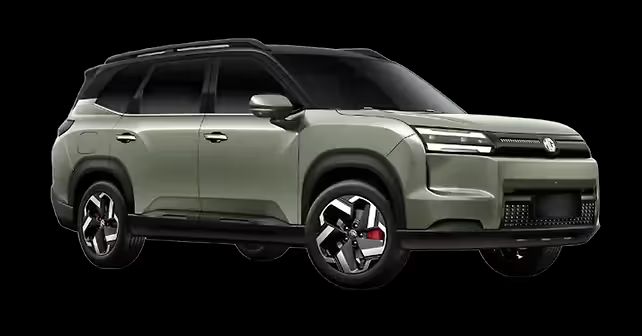
The MG Hector Tomahawk EV is an electric SUV introduced in India by JSW MG Motor India. It represents a new direction for the Hector name because the vehicle has been developed around an electrified architecture rather than simply adding an electric powertrain to the conventional Hector.

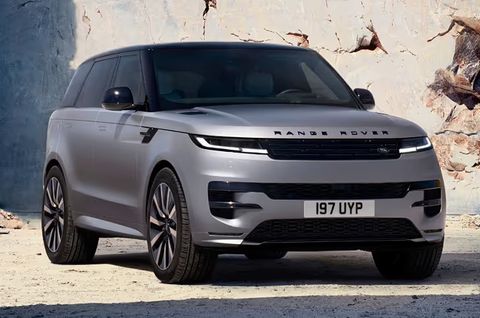
JSW MG Motor introduced the Hector Tomahawk in India on August 26, 2026, with both battery-electric and plug-in hybrid powertrain configurations. The electric version uses the company’s new ADAPT architecture, short for Advance Drive Architecture Platform Technology. The architecture is designed to support multiple electrified propulsion systems.

This development is relevant to the broader electric SUV market because many earlier electric vehicles were either compact urban models or two-row crossovers. The Hector Tomahawk EV is available in both five-seat and seven-seat configurations, placing it in the emerging category of larger family-oriented electric vehicles.

Its layout also demonstrates how dedicated EV architecture can influence interior packaging. MG states that the vehicle has a 2,810 mm wheelbase and flexible five- and seven-seat configurations. The flat-floor-oriented architecture is intended to improve usable cabin space.

MG Tomahawk EV Battery, Motor and Range Information

The electric vehicle battery is one of the most important components for understanding any EV. The Hector Tomahawk EV uses a 69.2 kWh battery pack connected to a front-mounted permanent-magnet synchronous electric motor.

The motor develops approximately 150 kW, equivalent to around 204 hp, along with 310 Nm of torque. The vehicle is front-wheel drive. MG states a claimed driving range of 517 km, while independent real-world range figures may vary according to temperature, traffic, driving speed, terrain, climate-control usage and battery condition.

The difference between laboratory or certification range and everyday electric car range is important. Range figures are primarily useful as standardized comparison points. Actual energy consumption changes continuously depending on operating conditions.

Technical AreaMG Hector Tomahawk EV Information
Battery capacity69.2 kWh
Electric motorPermanent-magnet synchronous motor
Maximum output150 kW / approximately 204 hp
Maximum torque310 Nm
DrivetrainFront-wheel drive
Claimed range517 km
DC charging supportUp to 90 kW
Seating configurations5-seat and 7-seat
Wheelbase2,810 mm
Ground clearanceApproximately 230 mm

MG states that the vehicle supports 90 kW DC charging. DC charging speed should not be interpreted as a constant rate throughout a charging session. Battery temperature, state of charge, charger capability and the vehicle’s battery-management system determine the actual charging curve.

The company also highlights battery protection and testing as important parts of the platform. Its official information refers to approximately 230 mm of ground clearance, more than 2,000 bench tests and over 490 vehicle validation procedures. These figures are manufacturer-provided information rather than independent durability assessments.

Why This Electric SUV Matters

The Hector Tomahawk EV arrives while India’s electric passenger vehicle market is expanding beyond compact city-focused models. Larger electric SUVs create different engineering requirements because battery capacity, cabin space, highway range, thermal management and EV charging infrastructure become increasingly important.

For families, seating flexibility is particularly relevant. The five-seat configuration provides substantially more luggage volume, while the seven-seat configuration prioritizes an additional seating row. Autocar India reports 610 litres of luggage capacity in the five-seat version and 192 litres in the seven-seat configuration when all seating rows are being used.

The vehicle also highlights the growing importance of software-defined cabin functions. The official specification information includes connected features, multiple cabin modes, smartphone connectivity, gesture-based controls and vehicle-to-load functionality.

Another significant development is Vehicle-to-Load, or V2L, which allows stored battery energy to power compatible external equipment. MG also describes Vehicle-to-Home functionality, or V2H, which is intended to allow stored vehicle energy to support compatible household electrical applications. Actual implementation depends on compatible hardware, electrical installation requirements and applicable technical standards.

Interior Technology and Connected Features

Digital interfaces are becoming an important differentiator among modern electric vehicles.

The Hector Tomahawk EV includes a 39.6 cm, approximately 15.6-inch central display, while the driver receives a separate digital information screen. The official vehicle information also lists wireless smartphone connectivity and a wireless charging pad.

Higher equipment configurations include features such as a panoramic sunroof, ventilated front seats and a 10-speaker Infinity audio system. Autocar India also reports powered front seating, driver-seat memory and a 50W wireless charging system among the equipment available on the vehicle.

MG additionally promotes a GenAI-enabled infotainment function with karaoke integration. Since artificial-intelligence features depend heavily on software implementation, language support and connectivity, users should evaluate these features based on the current software version rather than assuming identical functionality throughout the vehicle's lifecycle.

The cabin also includes configurable modes such as Pet Mode, Valet Mode, Camp Mode and Energise Mode. For example, Pet Mode is designed to maintain a selected cabin temperature, while Camp Mode configures selected vehicle functions for stationary outdoor use.

Safety and Driver Assistance Technology

Modern EV research should include more than battery capacity and electric car range. Structural safety, active safety systems, braking behavior and driver-assistance technology are equally important.

Reported safety equipment for the Hector Tomahawk EV includes six airbags, tyre-pressure monitoring, a 360-degree camera system and Level 2 ADAS. The camera system can also provide an under-bonnet-style view to help the driver understand obstacles near the front of the vehicle.

ADAS means Advanced Driver Assistance Systems. Depending on configuration, systems in this category may assist with functions such as lane monitoring, adaptive speed management or collision-risk detection.

Level 2 terminology does not mean autonomous driving. The driver remains responsible for observing traffic, maintaining control and responding to changing road conditions. ADAS performance can also be affected by weather, road markings, camera visibility and traffic conditions.

Recent MG Tomahawk EV Updates

The Hector Tomahawk EV moved from development sightings to its Indian introduction within a relatively short period during 2026.

DateDevelopment
July 30, 2026Reports identified an India-bound electric SUV related to the Wuling Starlight 560 architecture
August 13, 2026Hector Tomahawk name and India plans became clearer
August 16, 2026Undisguised vehicles were reported before the formal introduction
August 26, 2026JSW MG Motor India introduced the Hector Tomahawk EV
September 2026Initial EV deliveries were scheduled to begin

Autocar India documented the July and August development timeline, while the formal August 26 introduction confirmed the 69.2 kWh battery, 517 km claimed range and multiple seating layouts.

The same ADAPT platform also supports a Hector Tomahawk plug-in hybrid configuration. This is significant because MG is using one architecture to accommodate different forms of electrification rather than relying on one propulsion format alone.

Electric Vehicle Rules and Policies in India

Electric vehicles operate within several central and state-level policy frameworks in India.

One important national measure is GST treatment. The GST Council reduced the GST rate applicable to electric vehicles to 5%. EV chargers and charging stations also received a 5% GST classification under the announced framework.

Battery-operated vehicles are also exempt from certain central registration certificate fees. The Ministry of Road Transport and Highways states that the exemption applies to the issue or renewal of a registration certificate and assignment of a new registration mark.

India also uses distinctive registration plates for battery-operated vehicles. For non-transport battery vehicles, the registration mark uses white characters on a green background, while battery-operated transport vehicles use yellow characters on green.

State-level road-tax rules and EV policies can differ, so readers should verify the current position through their state transport department or the Parivahan ecosystem rather than applying one state’s policy nationally.

The PM E-DRIVE programme continues to support electric mobility and EV charging infrastructure. However, privately used electric passenger cars such as the Hector Tomahawk EV are not among the direct demand-incentive vehicle categories listed on the programme portal. The programme currently lists electric two-wheelers, three-wheelers, ambulances, trucks, buses and charging infrastructure among supported categories.

The programme has been extended to March 31, 2028 for applicable segments, subject to category-specific timelines and amendments.

Useful EV Tools and Information Resources

For someone researching the MG Tomahawk EV, electric vehicle insurance, EV charging stations or long-distance EV planning, reliable information sources are more useful than promotional claims.

  • MG EV Trip Planner: useful for identifying charging points and planning longer electric journeys.
  • MG EV Charger Locator: provides charging-location information within MG’s ecosystem.
  • Parivahan and VAHAN: useful for vehicle registration information and transport-related records.
  • State Transport Department Portals: useful for checking state-specific EV road-tax rules and registration policies.
  • PM E-DRIVE Portal: provides official information about central EV policy, eligible vehicle categories and EV charging infrastructure.
  • GST Council Portal: useful for confirming applicable GST notifications.
  • Google Maps and established charging-location platforms: useful for checking nearby EV charging stations, although charger status should be confirmed before long-distance travel.
  • Electric vehicle insurance documentation: useful for understanding battery-related protection, roadside assistance terms and EV-specific policy conditions.

MG’s own website currently provides links to an EV trip planner, charger locator and owner documentation.

Frequently Asked Questions

What is the claimed range of the MG Hector Tomahawk EV?

MG states a claimed range of 517 km from its 69.2 kWh battery. Real-world range can be different because speed, temperature, traffic, driving style and climate-control usage influence energy consumption.

Is the MG Hector Tomahawk EV a seven-seater?

It is available in both five-seat and seven-seat configurations. This gives users a choice between additional luggage space and a third seating row.

What type of fast charging does it support?

The EV supports DC charging at up to 90 kW according to launch information. Actual charging power can vary during the charging session.

Does the Hector Tomahawk EV have ADAS?

Yes. Level 2 ADAS is included in the vehicle’s reported safety and driver-assistance package. It assists the driver but does not make the vehicle autonomous.

Is the MG Hector Tomahawk EV covered by PM E-DRIVE passenger-car incentives?

The current PM E-DRIVE eligible-category list does not include privately used electric passenger cars within its direct vehicle demand-incentive categories. The programme does, however, include support for EV public charging infrastructure and several other electric vehicle categories.

Conclusion

The MG Hector Tomahawk EV reflects the transition of India’s electric vehicle market toward larger, technology-focused family SUVs. Its 69.2 kWh battery, claimed 517 km range, five- and seven-seat layouts, 90 kW DC charging capability, connected cabin technology and Level 2 ADAS illustrate how newer electric SUVs combine battery technology with digital and driver-assistance systems.

For general EV research, the most useful approach is to evaluate claimed range together with charging infrastructure, battery capacity, seating requirements, electric vehicle insurance terms, state EV policies and everyday driving conditions. Manufacturer specifications provide a useful technical baseline, while real-world energy efficiency and charging performance can vary. The Hector Tomahawk EV therefore provides another reference point for understanding how electric SUV technology is developing in India during 2026.

author-image

Saurabh Chawla

We are a performance-driven media buying team focused on scaling brands through smart, data-backed advertising strategies

August 31, 2026 . 9 min read