Table of Contents

Kia Carens EV Overview: Explore Features, EV Basics And Important Details

Kia Carens EV Overview: Explore Features, EV Basics And Important Details

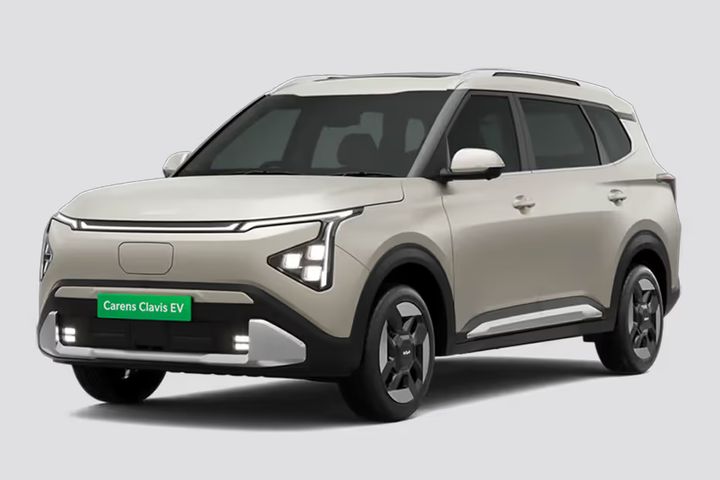
Kia Carens EV is commonly searched as a simple name, but the official India model is listed as Kia Carens Clavis EV. It is an electric family-focused vehicle based on the Carens Clavis format, designed for readers who want to understand electric mobility through a practical six- or seven-seat vehicle rather than only through compact EVs or premium electric SUVs.

Kia India’s official page lists the model as The Carens Clavis EV and highlights key EV features such as regenerative braking paddle shifters, ADAS Level 2, Vehicle-to-Load, fast charging and an extended-range 51.4 kWh battery pack.

This topic exists because electric vehicles in India are no longer only about battery size or driving range. A general reader now needs a wider explanation of battery type, certified range, charging time, safety equipment, connected car technology, EV insurance, finance planning, home charging readiness and public charging infrastructure.

For family vehicle research, the Carens EV topic is especially useful because it connects EV basics with cabin space, seating flexibility and daily-use planning. Kia states that the Carens Clavis EV is available in both six-seat and seven-seat layouts across standard and extended battery range packs.

Why This Topic Matters Today

The Kia Carens EV matters because India’s EV market is expanding beyond small city cars. Many readers now want to understand whether an electric family vehicle can handle daily commuting, school routes, office travel, weekend trips, airport runs and intercity movement with proper charging planning.

This topic affects:

  • Families comparing petrol, diesel, hybrid and electric vehicle basics
  • Apartment residents checking charging readiness
  • Daily commuters studying range and charging time
  • EV insurance researchers reviewing battery-related coverage
  • Readers tracking ADAS, connected car technology and safety features
  • Finance planning readers comparing regular vehicle finance with battery-linked models
  • General EV learners who want simple information without sales language

The main problem this topic solves is confusion around EV range. ARAI-certified range is useful for comparison, but daily driving range can change because of road speed, air-conditioning use, traffic, outside temperature, terrain, passenger load and driving style. Kia also notes that real-life range can reduce depending on driving style, speed, temperature, topography and electrical-device use.

Another important problem is charging confidence. A vehicle with a large battery becomes easier to understand when readers know the difference between AC home charging, DC fast charging, route planning and charger compatibility.

Kia Carens EV Feature Overview

AreaKey InformationReader Value
Official nameKia Carens Clavis EVHelps readers match search name with official model
Battery packs42 kWh and 51.4 kWhHelps compare standard and extended range basics
Battery typeLithium-ion NMC battery packUseful for battery knowledge and warranty research
Certified range404 km and 490 km ARAI MIDC full rangeHelps with EV comparison and route planning
Charging standardCCS2Important for public charging compatibility
DC charging10–80% in 39 minutes through suitable 100 kW DC hardwareUseful for highway planning
AC charging10–100% in 4 hours or 4 hours 45 minutes through 11 kW AC hardwareUseful for home and workplace charging planning
Safety package18 standard safety featuresImportant for family vehicle research
ADASLevel 2 with 20 autonomous featuresUseful for technology and safety awareness

Kia’s brochure lists the 42 kWh and 51.4 kWh battery packs, NMC battery type, 404 km and 490 km ARAI MIDC full range, CCS2 charging, 11 kW AC charging times and 100 kW DC charging time.

Range Comparison Graph

42 kWh battery: 404 km
████████████████████

51.4 kWh battery: 490 km
████████████████████████

This graph is only a simple visual comparison. The official certified range is a reference value, while real-world results depend on driving and environmental conditions.

Recent Updates And EV Market Trends

A major recent update came on 15 July 2025, when Kia Carens Clavis EV was introduced in India as Kia’s locally manufactured electric family vehicle. Automotive reports from that date noted two battery options and a family-oriented electric MPV/SUV-style format for the Indian market.

Kia’s official information now lists two battery capacities: a 42 kWh pack with 404 km claimed range and a 51.4 kWh pack with 490 km claimed range. The official FAQ also states that the 42 kWh battery can charge through 11 kW AC hardware in 4 hours, while the 51.4 kWh battery can charge in 4 hours and 45 minutes under stated conditions.

The Carens EV also reflects a broader trend in India: EVs are becoming software-linked products. The brochure mentions OTA map and system updates, Kia Connect, remote charging functions, energy consumption details, charge limit setting, scheduled charging and range alerts.

Another trend is advanced driver assistance. Kia lists ADAS Level 2 with 20 autonomous features, including front collision warning, lane keeping assist, smart cruise control, blind spot collision warning, rear cross traffic warning and safe exit warning.

EVs are also becoming more utility-focused. The Carens EV includes Vehicle-to-Load in selected configurations, which means the vehicle battery can power compatible external or internal devices. This is useful knowledge for readers studying EV battery use beyond driving.

Laws, Policies And Government Programs In India

India’s EV ecosystem is affected by taxation, charging infrastructure policy, manufacturing policy and public charging guidelines. These areas matter because they influence vehicle planning, public charger availability and long-term EV adoption.

One important tax reference is GST. The Press Information Bureau stated that the GST Council recommended reducing GST on all electric vehicles from 12% to 5%, and GST on EV chargers or charging stations from 18% to 5%, effective from 1 August 2019.

PM E-DRIVE is another key policy area. The official portal states that the PM Electric Drive Revolution in Innovative Vehicle Enhancement Scheme was notified on 29 September 2024 and implemented from 1 October 2024 to 31 March 2026. The listed eligible categories include e-2 wheelers, e-3 wheelers, e-ambulances, e-trucks, e-buses, charging infrastructure and testing agency upgrades.

This means readers should not assume that every private electric car is directly covered under central demand incentives. For a family EV article, PM E-DRIVE is mainly relevant because of its role in charging infrastructure and the wider electric mobility ecosystem.

Public charging policy also matters. A PIB update from 20 December 2024 stated that the Ministry of Power issued the “Guidelines for Installation and Operation of Electric Vehicle Charging Infrastructure-2024” on 17 September 2024, with standards and protocols for connected and interoperable EV charging infrastructure.

A later PIB update from 1 August 2025 stated that 29,277 public EV charging stations had been installed across India based on Ministry of Power inputs. It also said ₹2,000 crore had been allocated under PM E-DRIVE to support public EV charging infrastructure for different EV categories.

Tools And Resources For Kia Carens EV Research

Tool Or ResourceHow It HelpsWhat To Check
Kia official model pageBasic model informationBattery, seating, range, ADAS, charging
Kia brochureTechnical detailsBattery type, ARAI range, charging standard
EV route plannerTrip planningCharging points along the route
K-Charge AppPublic charging accessCharger location and network availability
EV insurance checklistRisk planningBattery cover, claim terms, add-on clarity
Finance planning calculatorBudget planningEMI structure, tenure, interest impact
Home charging checklistDaily convenienceMeter load, parking access, charger type
Public charging mapTravel planningCCS2 availability, uptime, payment method
Battery warranty notesLong-term clarityCoverage period and distance limit
Owner manualFeature learningADAS use, warning lights, charging steps

Kia states that its K-Charge App connects with over 11,000 charger infrastructure points, while the brochure explains an EV route planner that displays charging stations along a selected route.

Practical EV Checklist

Before studying Kia Carens EV in detail, readers can check:

  • Daily driving distance
  • Weekly highway use
  • Fixed parking availability
  • Home charger feasibility
  • Public charging points on regular routes
  • Battery warranty terms
  • EV insurance coverage details
  • Finance planning structure
  • Seating need: six-seat or seven-seat layout
  • ADAS availability by configuration
  • Real-world range buffer
  • Tyre and brake maintenance planning
  • Software update and connected feature access

FAQs

What is Kia Carens EV called officially in India?

The official model name listed by Kia India is Kia Carens Clavis EV. Many readers may search it as Kia Carens EV, but the full official name helps avoid confusion during research.

What are the battery and range basics?

Kia lists two battery packs: 42 kWh and 51.4 kWh. The 42 kWh pack has a 404 km ARAI MIDC full range, while the 51.4 kWh extended range pack has a 490 km ARAI MIDC full range.

How long does Kia Carens EV take to charge?

Kia’s official FAQ states that the 42 kWh battery can charge through 11 kW AC hardware in 4 hours, while the 51.4 kWh battery can charge in 4 hours and 45 minutes. The brochure also lists 10–80% DC charging in 39 minutes through suitable 100 kW DC hardware.

Does Kia Carens EV have ADAS?

Yes. Kia lists ADAS Level 2 with 20 autonomous features. The brochure includes systems such as front collision warning, lane keeping assist, smart cruise control, blind spot warning, rear cross traffic warning, safe exit warning, 360-degree camera and blind view monitor.

What battery warranty information is listed?

Kia’s brochure lists 8 years or 1,60,000 km coverage for the high-voltage battery and 3 years or unlimited km vehicle warranty. Warranty details should always be checked with the latest official document because terms may vary by condition and configuration.

Conclusion

Kia Carens EV, officially Kia Carens Clavis EV, is an important topic for readers because it combines family vehicle practicality with electric mobility basics. It includes two battery options, ARAI-certified range figures, CCS2 charging, AC and DC charging information, ADAS Level 2, connected car functions, Vehicle-to-Load and six- or seven-seat layouts.

For an educational overview, the most useful approach is to study the vehicle through range, charging, safety, warranty, insurance, finance planning and policy context together. This avoids overreliance on one headline specification and gives readers a clearer understanding of how an electric family vehicle fits into India’s changing EV ecosystem.

author-image

Saurabh Chawla

We are a performance-driven media buying team focused on scaling brands through smart, data-backed advertising strategies

June 25, 2026 . 8 min read