Industrial Systems Guide With Manufacturing Insights And Operational Knowledge
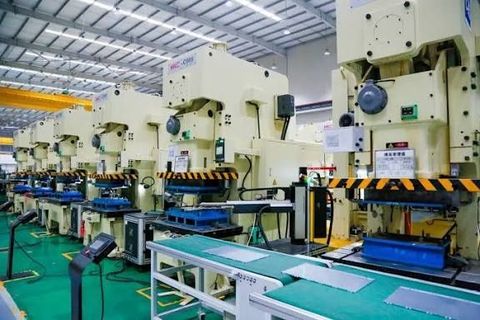
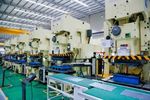
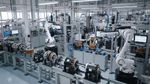
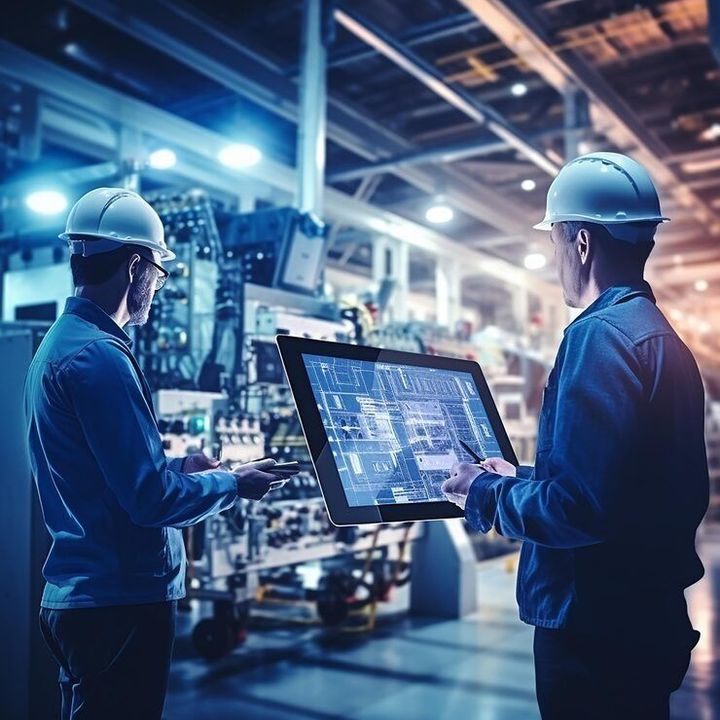
Industrial systems are connected combinations of machines, equipment, software, people, processes, and control technologies used to produce goods or manage industrial operations. They can range from a single automated production cell to a large manufacturing facility containing robotics, production lines, sensors, industrial networks, and monitoring platforms.
The main purpose of an industrial system is to coordinate different activities so that production can operate in a controlled, repeatable, and measurable way. Traditional systems relied heavily on mechanical equipment and manual monitoring. Modern systems increasingly combine automation, data collection, artificial intelligence, Industrial Internet of Things (IIoT) technology, and advanced analytics.
A typical industrial system may include:
- Production machinery and automated equipment
- Sensors and measurement devices
- Programmable logic controllers
- Industrial robots and motion-control systems
- Manufacturing execution systems
- Enterprise and production databases
- Industrial communication networks
- Monitoring and visualization platforms
- Safety and quality-control systems
- Maintenance and asset-management processes
These components work together to create a flow of information and physical activity across manufacturing operations.
Why Industrial Systems Matter Today
Manufacturing environments are becoming more connected and data-driven. Companies and industrial organizations need better visibility into production, equipment condition, quality, energy use, and operational performance.
Modern industrial systems help address several common challenges.
Better Production Visibility
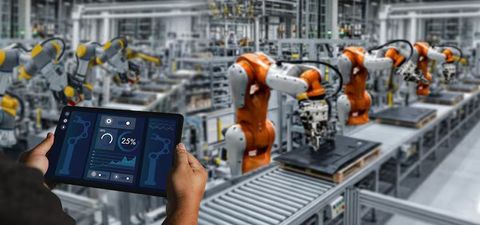
Sensors and monitoring systems can collect information from machines and production processes. Operators can use dashboards and reports to understand production conditions without relying entirely on manual observations.
This information can support decisions about machine performance, production schedules, maintenance planning, and quality control.
Automation and Process Control
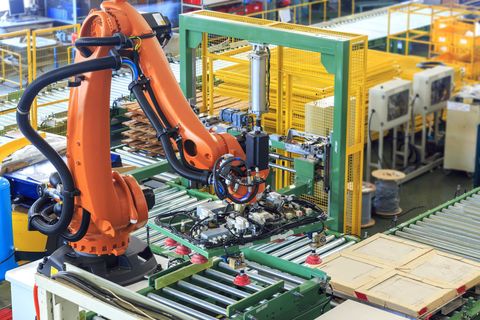
Industrial automation can perform repetitive operations with consistent control. PLCs, robotic systems, machine vision, and automated material-handling equipment are examples of technologies used in modern production environments.
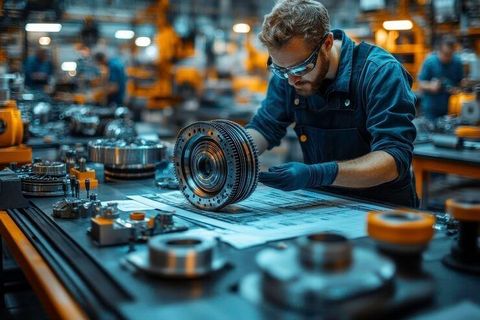
Automation does not eliminate the importance of people. Instead, it changes how workers interact with equipment, data, and production processes.
Predictive Maintenance
Maintenance is another important area of industrial systems. Sensors can monitor vibration, temperature, pressure, current, or other operating conditions.
When this information is analyzed over time, unusual patterns may indicate that equipment requires inspection. Predictive maintenance can therefore support better planning and reduce unexpected interruptions when implemented correctly.
Quality Management
Industrial systems can also support quality monitoring by recording production parameters and inspection information.
For example, a manufacturing system may connect machine settings with inspection results. This creates a historical record that can help identify process variations and investigate recurring quality issues.
Key Technologies Used in Industrial Systems
Industrial systems are not based on one technology. They normally combine several technologies according to the needs of a particular facility.
| Technology | Common Industrial Role |
|---|---|
| PLCs | Machine and process control |
| IIoT sensors | Equipment and process data collection |
| Robotics | Automated movement and production tasks |
| AI and ML | Prediction, classification, and analysis |
| Digital twins | Simulation and virtual representation |
| MES | Production tracking and coordination |
| Edge computing | Local data processing |
| Cloud platforms | Data storage and broader analytics |
| Machine vision | Automated inspection and identification |
| Industrial networks | Communication between equipment and systems |
The most useful architecture depends on factors such as production scale, equipment age, data requirements, safety considerations, and integration needs.
Recent Manufacturing Technology Updates
Industrial technology has developed rapidly during 2025 and 2026. Artificial intelligence, digital twins, advanced robotics, edge computing, and industrial data platforms have received increased attention.
In July 2026, the U.S. National Institute of Standards and Technology published a roadmap covering AI and machine learning for smart manufacturing. It highlighted industrial data analytics, advanced sensing, autonomous systems, digital twins, robotics, logistics optimization, sustainable manufacturing, explainable AI, and reliability as important areas for future development.
Digital twins have also become an important research and development area. A 2026 review of robot digital twin systems examined how artificial intelligence, IIoT, edge and cloud computing, 5G, simulation, and robotics can work together in manufacturing applications.
Another significant development came in July 2026, when NIST published a report based on workshops focused on digital twins for manufacturing. The report identified interoperability, cybersecurity, verification, validation, uncertainty, and workforce readiness as important challenges.
Industry research published in June 2026 also indicates that manufacturers are moving beyond small technology experiments toward broader AI and data-platform adoption. At the same time, data quality and cybersecurity remain major concerns.
These developments show that the next stage of industrial automation is not simply about adding more machines. It is increasingly about connecting equipment, data, software, and human decision-making.
Digital Twins and Operational Knowledge
A digital twin is a digital representation of a physical machine, process, production line, or broader industrial system.
It can combine information from sensors, engineering models, historical data, and simulations. Depending on its design, a digital twin can help users understand how a physical system behaves under different conditions.
Digital twins are being explored for:
- Equipment monitoring
- Production planning
- Process simulation
- Predictive maintenance
- Robotics
- Factory layout analysis
- Product development
- Energy management
- Quality improvement
However, a digital twin is only as useful as its data and underlying model. Interoperability and reliable data remain important challenges. Recent research also emphasizes the importance of standardization and trustworthy implementation.
Industrial AI and Smart Manufacturing
Artificial intelligence is becoming more relevant to manufacturing because industrial facilities generate large amounts of operational data.
AI and machine learning can be applied to areas such as:
- Anomaly detection
- Predictive maintenance
- Visual inspection
- Production forecasting
- Process optimization
- Energy analysis
- Demand planning
- Equipment classification
- Industrial data analysis
However, AI should not automatically replace established control systems. Industrial environments often involve safety requirements, physical constraints, legacy equipment, and complex operating conditions.
The 2026 NIST roadmap specifically identifies trustworthy, explainable, reliable, and scalable AI as important considerations for smart manufacturing.
Laws, Standards, and Policies in India
Industrial systems in India can be affected by several areas of regulation, including workplace safety, environmental requirements, electrical standards, data protection, cybersecurity, product standards, and sector-specific rules.
The exact requirements depend on the industry, facility, equipment, location, and type of operation. Organizations should therefore evaluate applicable central and state requirements rather than assuming that one framework covers every manufacturing environment.
Government programs are also supporting industrial modernization. In April 2025, the Ministry of Heavy Industries reported activities under SAMARTH Udyog Bharat 4.0, including smart manufacturing demonstrations, digital maturity assessments, and Industry 4.0 initiatives.
In July 2025, the Department of Public Enterprises highlighted the use of technologies such as AI, IoT, digital twins, 3D printing, and 5G-enabled infrastructure in discussions about Industry 4.0 adoption across Central Public Sector Enterprises.
In May 2026, DPIIT released implementation guidelines for the BHAVYA Scheme, focused on developing integrated industrial infrastructure and strengthening India's manufacturing ecosystem.
Industrial organizations should also pay attention to cybersecurity because connecting operational technology with information technology can introduce additional risks. Recent cybersecurity research has emphasized vulnerabilities associated with connected factories, IIoT, AI systems, and IT-OT integration.
Tools and Resources for Understanding Industrial Systems
People learning about industrial systems can use several categories of tools and educational resources.
Industrial Planning Tools
Useful tools include:
- Process-flow mapping software
- Production planning templates
- Equipment maintenance logs
- Asset registers
- Risk assessment worksheets
- Production KPI dashboards
Engineering and Simulation Tools
Simulation and modeling platforms can help users study machines and production processes before making physical changes.
Common applications include:
- Factory layout modeling
- Process simulation
- Robotics simulation
- Digital twin development
- Mechanical system modeling
- Energy-flow analysis
Data and Analytics Tools
Industrial data can be examined using:
- Spreadsheet applications
- Statistical analysis software
- Database systems
- Visualization dashboards
- Machine learning platforms
- Time-series monitoring tools
Learning Resources
Beginners can learn industrial systems through:
- Manufacturing technology courses
- Automation fundamentals
- PLC programming materials
- Industrial networking guides
- Robotics tutorials
- Engineering textbooks
- Government manufacturing programs
- Technical standards documentation
A useful learning approach is to understand basic manufacturing processes first and then study automation, sensors, industrial networks, data analytics, and AI.
Frequently Asked Questions
What is an industrial system?
An industrial system is a combination of equipment, software, people, processes, controls, and information technologies used to manage manufacturing or other industrial activities.
What is Industry 4.0?
Industry 4.0 describes a manufacturing approach based on connected systems, automation, data exchange, intelligent analysis, cyber-physical systems, and technologies such as IIoT and digital twins.
How does AI support manufacturing?
AI can analyze industrial data to identify patterns, detect anomalies, support predictive maintenance, assist quality inspection, and improve planning. Its effectiveness depends on reliable data and appropriate implementation.
What is a digital twin?
A digital twin is a digital representation of a physical asset, process, or system. It can use operational data and models to support monitoring, simulation, analysis, and decision-making.
Why is cybersecurity important in industrial systems?
Industrial systems increasingly connect machines, networks, software, and external platforms. Strong cybersecurity helps protect operational data, connected equipment, control systems, and production continuity from unauthorized activity.
Conclusion
Industrial systems are evolving from isolated machines into connected environments where equipment, software, data, and people work together. Automation remains important, but modern manufacturing increasingly depends on information management, intelligent analysis, interoperability, cybersecurity, and operational knowledge.