Industrial Rubber Recycling Machines Guide: Technology, Applications & Waste Management
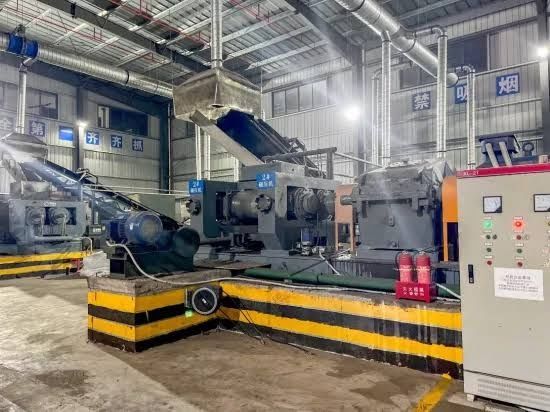
Industrial rubber recycling machines are specialized systems designed to process discarded tires, rubber components, production scrap, conveyor belts, hoses, and other rubber-based materials. Instead of allowing rubber waste to accumulate in landfills or uncontrolled disposal streams, recycling technology separates and transforms it into useful secondary materials.
Rubber is challenging to manage because many products contain vulcanized rubber. During vulcanization, chemical cross-links improve strength, elasticity, and durability, but they also make the material difficult to remold. Modern rubber recycling technology therefore uses several approaches depending on the type and quality of the incoming material.
A typical industrial rubber recycling line may include:
- Tire or rubber pre-cutting equipment
- Primary and secondary shredders
- Granulators and rubber grinders
- Magnetic steel separators
- Fiber separation systems
- Screening equipment
- Crumb rubber processing units
- Devulcanization equipment
- Dust collection systems
- Material conveying and storage equipment
The process generally begins with size reduction. Large rubber products are cut or shredded into smaller pieces. Steel wires and textile fibers can then be separated. Further grinding produces rubber granules or fine crumb rubber.
For selected waste streams, devulcanization can be used to partially break sulfur cross-links so that the rubber becomes more workable. Another pathway is pyrolysis, where rubber is thermally decomposed in an oxygen-limited environment to produce products such as oil, gas, solid carbonaceous material, and recovered steel.
The choice of technology depends on feedstock composition, desired output, contamination levels, energy requirements, environmental controls, and applicable regulations.
Importance
Rubber waste management has become increasingly important as vehicle use, industrial manufacturing, and infrastructure development generate large quantities of end-of-life rubber materials.
Waste tires are particularly difficult because they are durable and can occupy substantial storage space. Poorly managed tire stockpiles can also create environmental and fire-related concerns.
Industrial recycling systems address several challenges at the same time. They can reduce the volume of rubber waste entering disposal pathways while recovering materials that may have further industrial applications.
Supporting circular material use
A major objective of modern recycling is moving from a linear model toward a circular economy. Instead of treating discarded rubber only as waste, processing systems can recover materials for additional applications.
Recovered rubber can be processed into different grades of crumb rubber. Depending on its characteristics, it may be incorporated into rubber products, modified materials, flooring components, construction-related applications, or other industrial products.
Recovered steel can enter established metal recycling streams, while separated textile fibers may have more specialized applications.
Improving waste management efficiency
Automated machinery can provide more consistent processing than manual handling of large volumes of rubber waste. Size reduction, magnetic separation, screening, and conveying can be integrated into a continuous production line.
Important performance considerations include:
- Feedstock size and composition
- Throughput requirements
- Particle-size distribution
- Steel and fiber separation efficiency
- Dust management
- Energy consumption
- Equipment maintenance
- Output quality
Major recycling technologies
| Technology | Main Function | Typical Output |
|---|---|---|
| Shredding | Reduces large rubber items | Rubber chips |
| Granulation | Produces smaller particles | Rubber granules |
| Fine grinding | Produces smaller rubber particles | Crumb rubber |
| Magnetic separation | Removes steel | Recovered steel |
| Fiber separation | Removes textile components | Separated fiber |
| Devulcanization | Alters cross-linked rubber structure | Reclaimed/devulcanized rubber |
| Pyrolysis | Thermally decomposes rubber | Oil, gas, char, steel |
No single machine is appropriate for every waste stream. Industrial rubber recycling equipment is normally selected as part of a process chain.
Recent Updates
Rubber recycling research has continued to advance during 2025 and 2026, particularly around material recovery, devulcanization, pyrolysis, process integration, and circular-economy applications.
A 2025 review published in Materials Advances examined mechanical grinding, pyrolysis, devulcanization, and applications of recycled tire materials in construction, civil engineering, energy recovery, and manufacturing. The research also highlighted the continuing importance of environmental performance and regulatory frameworks.
Another 2025 research direction focused on thermochemical recycling. Researchers have been investigating different reactor configurations and process conditions to improve the recovery and quality of pyrolysis products. Developments include catalytic approaches, alternative reactor designs, and integration with other waste materials.
Devulcanization has also received significant attention. Newer approaches include microwave-assisted and ultrasonic techniques intended to improve selective disruption of sulfur cross-links while limiting damage to the rubber polymer structure. Hybrid mechanical and thermo-mechanical processes are another area of investigation.
In 2026, research has increasingly emphasized combining mechanical recycling, devulcanization, and pyrolysis instead of relying on a single technology. Current studies also examine catalysts, process optimization, product quality, life-cycle assessment, and improved integration between different recycling stages.
Recovered carbon materials are another developing area. Research published during 2025 examined the use of pyrolysis-derived recovered carbon black in polymer composites, reflecting growing interest in converting tire-derived materials into higher-value secondary materials.
These developments indicate that industrial rubber recycling is moving toward more integrated systems, better separation, improved material quality, and data-driven process optimization.
Laws or Policies
Regulations differ by country, so rubber recycling facilities need to follow the waste-management and environmental requirements applicable to their location.
In India, waste tires are regulated through the Hazardous and Other Wastes (Management and Transboundary Movement) Rules, including provisions introduced through the 2022 amendment framework for Extended Producer Responsibility, or EPR.
The Central Pollution Control Board identifies recycled outputs including reclaimed rubber, crumb rubber, crumb-rubber-modified bitumen, recovered carbon black, and certain pyrolysis products.
India's EPR framework places obligations on relevant producers and waste-tyre importers. For producers, the framework established recycling targets that reached 100% of the relevant reference quantity from the 2024–25 period onward, subject to the applicable rules.
The framework also contains specific provisions concerning waste-tyre importation and recycling. For example, the CPCB FAQ states that importing waste tires for producing pyrolysis oil or char is prohibited under the applicable framework.
In January 2025, the CPCB announced an extension concerning quarterly and annual return filing for registered entities under the Waste Tyre EPR Portal for FY 2023–24, illustrating the continuing administrative development of India's EPR system.
For facilities using thermal technologies, environmental controls are particularly important. Research on thermochemical rubber treatment emphasizes the need to control potentially harmful pollutants, including certain organic compounds and heavy metals, depending on the process and feedstock.
Businesses and organizations planning industrial rubber recycling operations should therefore review:
- Applicable waste-management legislation
- EPR registration requirements
- Environmental permissions
- Emission-control requirements
- Waste transportation rules
- Recordkeeping and reporting obligations
- Occupational safety requirements
- Rules governing recovered materials
Regulations can change, so current national and local requirements should always be checked before establishing or modifying a recycling operation.
Tools and Resources
Several general tools can help organizations understand and manage industrial rubber recycling programs.
Material assessment tools
Feedstock assessment worksheets can record:
- Rubber type
- Tire or product category
- Estimated contamination
- Steel content
- Textile content
- Moisture
- Particle size
- Expected recovery streams
These records help determine which recycling technology is appropriate.
Capacity calculators
Throughput calculators can estimate the quantity of rubber that a recycling line needs to process per hour or per operating day.
A basic calculation can consider:
Required throughput = Total material to be processed ÷ Available operating hours
Such calculations should also account for downtime, maintenance, cleaning, and material variability.
Particle-size analysis
Screening data and particle-size distribution measurements help determine whether recycled rubber meets the requirements of a particular application.
Environmental assessment tools
Life-cycle assessment software can be used to compare environmental impacts across different recycling pathways. Such assessments may consider electricity consumption, transportation, emissions, material recovery, and downstream applications.
Learning resources
Useful educational resources include:
- Government waste-management portals
- Environmental regulation databases
- Recycling technology manuals
- Academic research databases
- Material safety documentation
- Equipment operating manuals
- Waste classification guides
- EPR reporting templates
- Environmental monitoring worksheets
These resources can support better planning without relying on a single recycling technology or application.
FAQs
What are industrial rubber recycling machines?
Industrial rubber recycling machines are equipment systems used to reduce, separate, process, and recover materials from discarded rubber products. Common equipment includes shredders, granulators, grinders, magnetic separators, fiber separators, screens, and devulcanization systems.
What materials can rubber recycling machines process?
Depending on machine design, systems can process end-of-life tires, rubber production scrap, conveyor belts, hoses, seals, mats, and other rubber products. The feedstock must be assessed because different rubber compositions and embedded materials require different processing methods.
What is crumb rubber?
Crumb rubber is rubber that has been mechanically processed into small particles. Particle size can vary considerably depending on the grinding and screening process. It can be used in selected rubber, construction, infrastructure, and manufacturing applications.
How does tire pyrolysis work?
Tire pyrolysis uses controlled heating in an oxygen-limited environment to thermally decompose rubber. The process can generate liquid, gaseous, and solid products, along with recovered steel. Product characteristics depend on feedstock composition and operating conditions.
Is devulcanization the same as rubber recycling?
Not exactly. Recycling is a broad term covering different recovery methods. Devulcanization is a specific process intended to alter the cross-linked structure of vulcanized rubber so that the material becomes more processable. It is one pathway within the broader rubber recycling field.
Conclusion
Industrial rubber recycling machines play an important role in modern rubber waste management by converting difficult waste streams into recoverable materials. Shredding, grinding, screening, magnetic separation, fiber separation, devulcanization, and pyrolysis each address different parts of the recycling process.