Industrial Production Machine Manufacturers and Equipment Guide
Industrial production machines support modern manufacturing processes. They help factories transform raw materials into finished products through different operations, including cutting, forming, assembling, packaging, and processing. Industrial machinery suppliers and manufacturers provide equipment designed for specific production requirements.
These machines are used in industries such as automotive, food processing, textiles, electronics, pharmaceuticals, construction materials, and metal fabrication. Understanding their types, functions, and applications helps businesses identify machinery suitable for their manufacturing activities.
Understanding Industrial Production Machines
Industrial production machines are mechanical, electrical, or automated systems used to perform manufacturing tasks. Some machines handle a single operation, while others form part of a connected production line.
Industrial production equipment manufacturers develop machinery according to factors such as material type, product dimensions, production capacity, and operating conditions. Equipment may be manually operated, semi-automated, or fully automated, depending on the complexity of the process.
Industrial manufacturing machines can include basic workshop equipment as well as large processing systems. Their main purpose is to carry out repeatable operations within a planned manufacturing workflow.
Importance of Industrial Production Machines
Production machinery plays an important role in organizing manufacturing activities. It supports consistent processes and helps factories manage different stages of production.
Process consistency: Machines can repeat defined operations under controlled settings, supporting uniform manufacturing processes.
Production capacity: Suitable equipment helps factories handle planned production volumes and operational requirements.
Material processing: Specialized machinery performs tasks such as cutting, shaping, mixing, heating, and forming.
Workplace safety: Properly designed equipment, protective guards, and operating procedures help manage workplace risks.
Production planning: Machinery specifications help manufacturers plan workflow, equipment placement, and production schedules.
The actual performance of a machine depends on its design, operating conditions, maintenance, and the skills of the people using it.
Types of Industrial Production Machines
Industrial machinery includes many categories, each designed for particular manufacturing activities. The following types are commonly used across different industries.
Cutting and Machining Machines
Cutting and machining machines remove material or shape workpieces according to required dimensions. Examples include CNC machines, laser cutting machines, milling machines, drilling machines, and industrial lathes.
These machines are used in metal fabrication, automotive component manufacturing, aerospace production, and general engineering. CNC systems use programmed instructions to control machining movements and operations.
Forming and Molding Machines
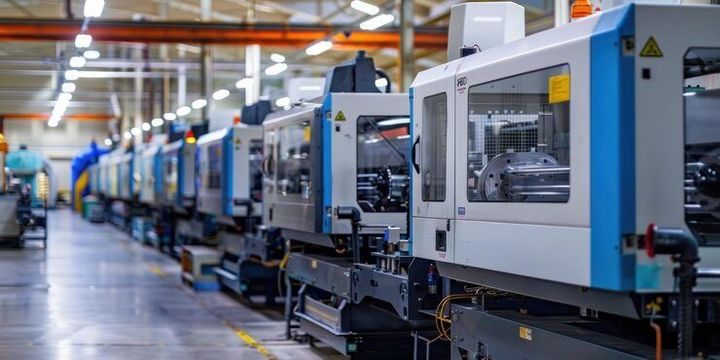
Forming machines change the shape of materials through pressure, heat, or mechanical force. Examples include hydraulic presses, injection molding machines, blow molding machines, and metal stamping equipment.
Plastic manufacturing uses molding machines to produce components, containers, and other molded products. Metalworking facilities use presses and stamping systems to form sheets and other metal materials.
Industrial Processing Machines
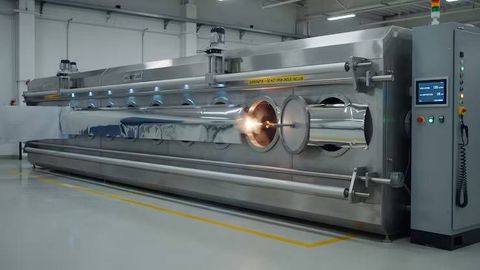
Industrial processing machinery performs operations such as mixing, grinding, heating, cooling, filtering, and separating materials. Food processing, chemical manufacturing, agriculture, and material production facilities use different processing systems.
Examples include industrial mixers, grinders, dryers, reactors, filtration systems, and material handling equipment. The machine design depends on the material being processed and the required operating conditions.
Assembly Machines
Assembly machines bring individual components together to create finished products or subassemblies. They may use mechanical fastening, welding, pressing, adhesive application, or other joining methods.
Automotive, electronics, appliance, and machinery manufacturers use assembly equipment in production operations. Some systems are designed for one specific product, while others can accommodate different product configurations.
Packaging Machines
Packaging machines prepare products for storage, transportation, and distribution. Common examples include filling machines, sealing machines, labeling machines, wrapping systems, and carton packaging equipment.
Food, beverage, cosmetics, pharmaceutical, and consumer goods manufacturers use packaging machinery. Equipment selection depends on product characteristics, packaging materials, container types, and required production speed.
Common Applications Across Industries
Industrial production machines are used in many manufacturing sectors. Their functions vary according to the materials, products, and processes involved.
| Industry | Common Machinery | Main Applications |
|---|---|---|
| Automotive | CNC machines, presses, welding systems | Component manufacturing and assembly |
| Food Processing | Mixers, grinders, filling machines | Processing and packaging food products |
| Textiles | Spinning, weaving, knitting machines | Fabric and textile production |
| Electronics | Pick-and-place machines, soldering systems | Circuit board assembly |
| Plastics | Injection and blow molding machines | Manufacturing plastic components |
| Metal Fabrication | Cutting, bending, and drilling machines | Shaping and processing metal |
| Construction Materials | Crushers, mixers, batching systems | Processing construction materials |
These examples provide a general overview. Actual machinery requirements depend on the production method and the specifications of each facility.
Automated Production Machinery
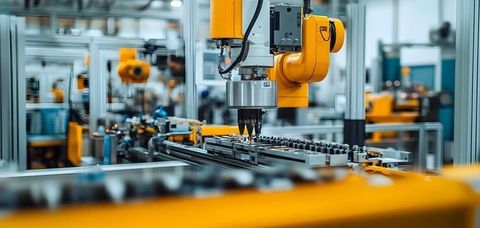
Automated production machinery uses control systems, sensors, programmed instructions, and mechanical components to perform manufacturing tasks with limited manual intervention.
Automation can be applied to individual machines or integrated across an entire production line. Common examples include robotic arms, conveyor systems, automated inspection equipment, and programmable logic controllers.
Automated systems can support repetitive operations and coordinate different production stages. However, they require appropriate installation, programming, monitoring, and maintenance. Workers also need training to operate equipment and respond to technical issues.
How to Choose Industrial Production Machines
Selecting machinery requires an understanding of the production process and the facility's operating requirements. Industrial machine suppliers and manufacturers may provide different configurations, so comparing technical specifications is important.
Production Requirements
Identify the operation the machine must perform, including cutting, forming, processing, assembling, or packaging. Consider the expected production volume and the range of products being manufactured.
Material Compatibility
Check whether the machine is designed to handle the materials used in production. Material thickness, weight, temperature, hardness, and chemical properties can influence equipment suitability.
Capacity and Technical Specifications
Review operating speed, processing capacity, power requirements, dimensions, and accuracy specifications. These details help determine whether the machinery fits the planned production workflow.
Automation Requirements
Consider whether manual, semi-automated, or fully automated equipment is appropriate. The decision should reflect production complexity, workforce skills, available infrastructure, and process requirements.
Maintenance and Safety
Review maintenance schedules, replacement component requirements, protective systems, and operator training needs. Equipment should also meet applicable workplace safety and regulatory requirements.
Maintenance of Industrial Production Equipment
Regular maintenance helps keep industrial machinery in suitable operating condition. It can also help identify developing problems before they interrupt production activities.
Common maintenance practices include:
Inspecting machine components and connections regularly.
Lubricating moving parts according to manufacturer instructions.
Checking electrical systems, sensors, and control panels.
Cleaning equipment and removing accumulated production materials.
Replacing worn or damaged components when required.
Recording inspections, repairs, and maintenance activities.
Training operators to recognize abnormal machine conditions.
Maintenance procedures should follow the equipment manufacturer's instructions and the facility's safety requirements.
Frequently Asked Questions
What are industrial production machines?
Industrial production machines are equipment systems used to manufacture, process, shape, assemble, or package products in industrial facilities.
What are examples of industrial manufacturing machines?
Examples include CNC machines, injection molding machines, industrial mixers, hydraulic presses, packaging machines, conveyor systems, and automated assembly equipment.
What do industrial machinery suppliers provide?
Industrial machinery suppliers may provide equipment for manufacturing, processing, material handling, packaging, and other industrial operations. Available machinery depends on the supplier's product range.
What are automated production machines?
Automated production machines use programmed controls and mechanical systems to perform manufacturing tasks with reduced manual intervention.
How should manufacturers select production machinery?
Manufacturers should consider production requirements, material compatibility, capacity, technical specifications, automation needs, maintenance, and workplace safety.
Conclusion
Industrial production machines support manufacturing activities across a wide range of industries. Cutting, molding, processing, assembly, and packaging equipment each perform different functions within production workflows.
Understanding machinery types, applications, and selection factors helps manufacturers plan suitable production systems. Equipment compatibility, regular maintenance, operator training, and safety procedures remain important considerations for reliable industrial operations.