Industrial Automation Explained: Automation Technologies, Control Systems, Robotics, Manufacturing Processes and Industrial Applications
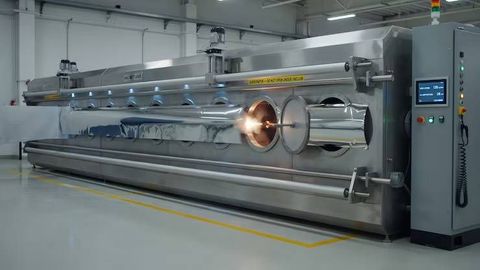
Industrial automation refers to the use of control systems, sensors, software, robotics, machines, and communication technologies to automate industrial processes with limited direct manual intervention. It is widely used in manufacturing, automotive production, food processing, pharmaceuticals, electronics, chemicals, logistics, energy, and other industrial sectors.
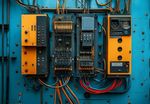
Modern automation systems can combine programmable logic controllers (PLCs), supervisory control and data acquisition (SCADA), human-machine interfaces (HMIs), industrial robots, machine vision, motion control, sensors, industrial networks, and software platforms.
Why Industrial Automation Matters
Industrial processes often require consistent production, precise control, repeatable operations, and continuous monitoring. Automation systems coordinate machinery and process equipment according to programmed instructions and real-time sensor data.
Automation can be applied to individual machines or integrated across an entire production line. The architecture depends on production requirements, process complexity, safety requirements, product variation, and facility infrastructure.
Common objectives include:
Process consistency
Automated monitoring
Precise machine control
Production data collection
Reduced manual handling
Improved equipment coordination
Flexible production
Industrial Automation Technologies
Programmable Logic Controllers
PLCs are industrial control computers designed to monitor inputs and control machines, motors, valves, sensors, and other equipment. They are widely used for sequencing and real-time industrial control.
SCADA Systems
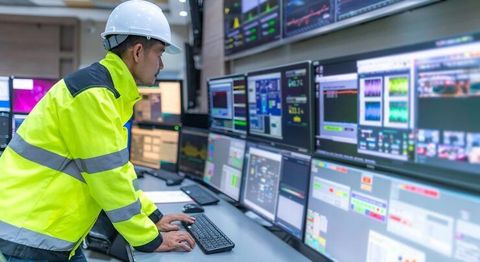
Supervisory control and data acquisition systems provide centralized monitoring and supervisory control. SCADA platforms can collect information from PLCs, remote devices, sensors, and process equipment.
Human-Machine Interfaces
HMIs provide graphical interfaces through which operators can monitor processes, adjust parameters, acknowledge alarms, and review operating information.
Industrial Sensors
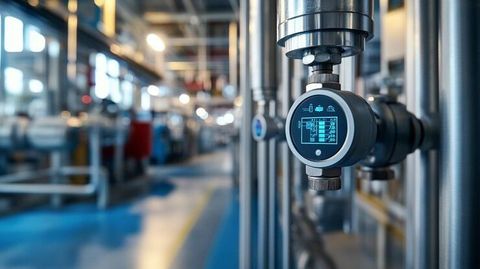
Sensors measure variables such as temperature, pressure, flow, position, vibration, level, proximity, and force. Their signals provide the information required for automated control.
Variable-Frequency Drives
VFDs regulate motor speed and torque by controlling electrical frequency and voltage. They are commonly used in pumps, fans, conveyors, compressors, and other motor-driven equipment.
Industrial Robotics
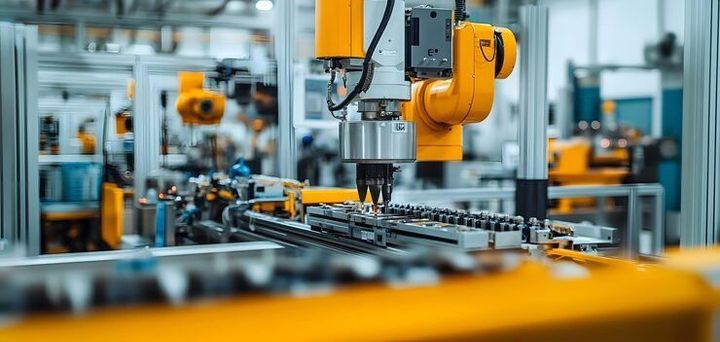
Industrial robots automate repetitive or precision-oriented physical tasks.
Common robot configurations include:
Articulated robots
SCARA robots
Delta robots
Cartesian robots
Collaborative robots
Mobile industrial robots
Robots can perform welding, assembly, material handling, palletizing, machine tending, painting, inspection, and packaging.
Robot selection depends on payload, reach, speed, accuracy, workspace, tooling, safety requirements, and production cycle time.
Industrial Control Systems
Industrial control systems combine controllers, sensors, actuators, communication networks, and software to regulate machines and processes.
| Control Technology | Typical Function |
|---|---|
| PLC | Machine and sequence control |
| SCADA | Supervisory monitoring |
| HMI | Operator interaction |
| DCS | Continuous process control |
| VFD | Motor speed control |
| Motion controller | Precise movement control |
| Safety PLC | Machine safety functions |
Distributed control systems are frequently associated with continuous or large-scale process operations, while PLC architectures are common in discrete manufacturing and machine automation.
Automation Manufacturing Process
Industrial automation equipment itself involves several engineering and manufacturing stages.
1. Process Analysis
Engineers identify production steps, machine requirements, material movement, control points, safety conditions, and desired automation functions.
2. System Design
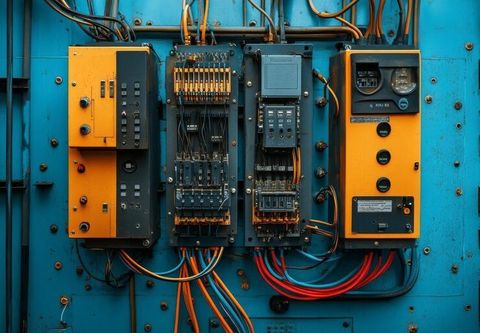
The automation architecture is developed around controllers, sensors, actuators, robots, drives, networking equipment, electrical panels, and software.
3. Component Integration
Control hardware, motors, sensors, robotic equipment, safety devices, and communication components are assembled into the automation system.
4. Software Programming
PLC logic, HMI screens, robot programs, motion sequences, alarms, and communication functions are configured according to the process requirements.
5. Testing and Commissioning
Factory acceptance testing and site commissioning can verify machine sequences, safety functions, communication, sensor operation, and production performance.
6. Production Integration
The completed system is connected to production machinery and plant-level systems. Data interfaces can connect automation equipment with manufacturing execution and enterprise systems.
Smart Factory and Industry 4.0 Automation
Modern industrial automation increasingly connects physical equipment with digital systems.
Industrial IoT technologies can collect information from machines and sensors. Edge computing can process selected information close to the equipment, while cloud or centralized platforms can support broader analytics.
Digital twins, predictive maintenance, machine learning, and production analytics can further extend automation capabilities.
A connected factory may monitor machine status, production rates, energy consumption, quality indicators, and equipment conditions in near real time.
Industrial Automation Comparison
| Automation Level | Typical Characteristics |
|---|---|
| Fixed automation | Dedicated repetitive production |
| Programmable automation | Production controlled through programmed instructions |
| Flexible automation | Faster adaptation between products |
| Integrated automation | Multiple machines and processes connected |
| Smart automation | Connected equipment with data analytics |
Industrial Automation Cost Factors
The cost of an industrial automation system depends on system complexity, number of machines, PLC and control hardware, robotics, sensors, drives, electrical panels, software, networking, safety equipment, engineering, installation, and commissioning.
A single automated machine typically has different requirements from a complete production line. Advanced systems incorporating robotics, machine vision, MES integration, digital monitoring, and custom software can require additional engineering and integration.
Other considerations include maintenance, operator training, spare parts, system upgrades, and facility modifications.
Global Manufacturers and Suppliers
The industrial automation market includes automation equipment manufacturers, robotics companies, control-system suppliers, software providers, electrical equipment companies, distributors, and system integrators.
When evaluating an industrial automation supplier or system integrator, important factors include:
Controller compatibility
Robot capabilities
Communication protocols
Safety architecture
Software compatibility
Machine integration
Scalability
Maintenance requirements
Technical support
Documentation and training
For complex projects, compatibility between automation components is particularly important because PLCs, robots, drives, sensors, HMIs, and plant-level software must communicate reliably.
Industrial Applications
Industrial automation is used across many industries:
Automotive manufacturing
Electronics production
Food and beverage processing
Pharmaceutical manufacturing
Chemical processing
Plastics manufacturing
Metal fabrication
Packaging
Warehousing and logistics
Semiconductor manufacturing
Energy production
General manufacturing
Automotive factories, for example, can use robots for welding, painting, assembly, and material handling. Food-processing plants can use automated conveyors, filling systems, inspection equipment, and packaging machinery.
How to Select an Industrial Automation System
Before selecting an automation architecture, evaluate:
Production volume
Process complexity
Required precision
Machine interfaces
Sensor requirements
Robot requirements
Safety requirements
Data and communication needs
Future scalability
Maintenance capabilities
The system should be designed around the complete production workflow rather than individual components. Compatibility, communication, safety, and future expansion should be considered during the engineering stage.
Frequently Asked Questions
What is industrial automation?
Industrial automation uses control systems, software, sensors, robotics, and machinery to perform and monitor industrial processes with reduced direct manual intervention.
What are the main industrial automation technologies?
Common technologies include PLCs, SCADA, HMIs, industrial robots, sensors, VFDs, motion controllers, machine vision, industrial networks, and automation software.
What is the role of PLCs in automation?
PLCs receive signals from industrial inputs, execute programmed control logic, and operate connected equipment such as motors, valves, actuators, and machines.
How are robots used in industrial automation?
Industrial robots perform tasks such as assembly, welding, material handling, palletizing, machine tending, painting, inspection, and packaging.
What is Industry 4.0 automation?
Industry 4.0 automation connects industrial equipment with digital technologies such as industrial IoT, analytics, edge computing, cloud platforms, machine learning, and connected manufacturing systems.
Conclusion
Industrial automation combines control systems, robotics, sensors, software, electrical equipment, and communication technologies to automate manufacturing and process operations. PLCs, SCADA, HMIs, industrial robots, machine vision, motion control, and industrial networks form important parts of modern automation architectures.
The development of smart factories is further connecting machines with production data, analytics, and enterprise systems. Selecting an appropriate automation system requires consideration of production requirements, control architecture, safety, equipment compatibility, data connectivity, scalability, and long-term maintenance.