Industrial Sensors Explained: Sensor Types, Sensing Technologies, Manufacturing Processes, Automation Systems, Global Manufacturers, Suppliers and Industrial Applications
Industrial sensors are devices used to detect, measure, and monitor physical or chemical conditions within machines, production lines, process plants, and automated facilities. Industrial sensors can measure variables such as temperature, pressure, flow, level, position, proximity, vibration, force, humidity, and gas concentration.
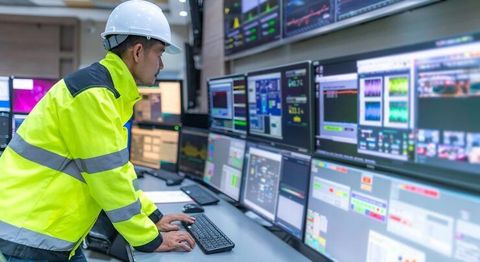
Modern manufacturing increasingly combines sensors with programmable controllers, industrial networks, robotics, machine vision, and data platforms. This allows production equipment to respond to changing operating conditions while generating data for monitoring, quality control, and maintenance.
What Are Industrial Sensors?
Industrial sensors convert a physical or chemical property into an electrical or digital signal that can be interpreted by a control system. Depending on the technology, a sensor may detect an object, measure a process variable, identify a position, or monitor equipment condition.
A typical industrial sensing system includes:
Sensing element
Signal conditioning circuit
Transmitter or output interface
Power supply
Communication interface
Controller or automation system
Monitoring software
Sensors may provide analog outputs such as 4–20 mA or voltage signals, or digital outputs through industrial communication protocols.
Why Industrial Sensors Matter
Industrial sensors provide the measurement layer required by automated production systems. Without reliable sensing, controllers and machines have limited information about what is happening in a process.
Common functions include:
Process monitoring
Machine control
Product inspection
Position detection
Safety monitoring
Equipment condition monitoring
Energy management
Production measurement
Quality control
Automated feedback control
Sensor data can also be combined with historical production information to identify abnormal operating conditions and support predictive maintenance programs.
Types of Industrial Sensors
Industrial sensors are available in many configurations because industrial processes require different measurement principles.
Temperature Sensors
Temperature sensors monitor thermal conditions in equipment and processes.
Common technologies include:
RTDs
Thermocouples
Thermistors
Infrared sensors
Digital temperature sensors
They are used in furnaces, boilers, refrigeration systems, chemical processes, motors, compressors, and manufacturing equipment.
Pressure Sensors
Pressure sensors measure pressure in gases and liquids.
Applications include:
Hydraulic systems
Pneumatic equipment
Process pipelines
Pumps
Compressors
Industrial tanks
Process control systems
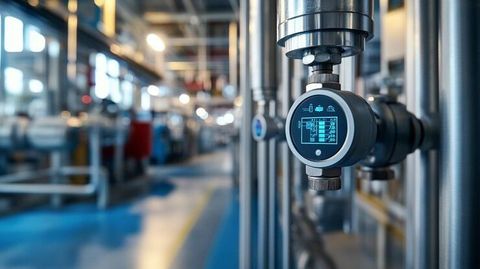
Pressure transmitters are frequently integrated with industrial control systems for continuous monitoring.
Proximity Sensors
Proximity sensors detect the presence or position of objects without requiring physical contact.
Common types include:
Inductive proximity sensors
Capacitive proximity sensors
Magnetic proximity sensors
Ultrasonic proximity sensors
They are widely used in automated assembly, conveyors, packaging machines, robotics, and material handling systems.
Photoelectric Sensors
Photoelectric sensors use light to detect objects or changes in a process.
They can be configured for:
Through-beam detection
Retroreflective detection
Diffuse reflection
Background suppression
These sensors are common in packaging, conveyor systems, counting applications, and automated inspection.
Level Sensors
Level sensors measure the amount or position of liquids, powders, granules, or other materials inside containers and process equipment.
Technologies include:
Ultrasonic level sensing
Radar level sensing
Capacitive sensing
Conductive sensing
Float-based sensing
Differential-pressure measurement
Flow Sensors
Flow sensors measure the movement of liquids, gases, or steam.
Major technologies include:
Electromagnetic flowmeters
Coriolis flowmeters
Ultrasonic flowmeters
Vortex flowmeters
Thermal mass flowmeters
Differential-pressure flow measurement
Vibration Sensors
Vibration sensors monitor mechanical movement and vibration levels in rotating and reciprocating equipment.
They are used with:
Motors
Pumps
Gearboxes
Compressors
Fans
Turbines
Industrial machinery
Accelerometers are commonly used for machine-condition monitoring.
Force and Load Sensors
Force sensors measure mechanical forces, while load cells measure weight or load.
Applications include:
Industrial weighing
Robotic assembly
Material testing
Press machines
Packaging
Conveyor weighing
Automated production equipment
Major Sensing Technologies
Different sensing technologies are selected according to the material, measurement range, environmental conditions, accuracy requirements, and control architecture.
| Technology | Typical Measurement | Common Applications |
|---|---|---|
| Inductive | Metal presence/position | Automation |
| Capacitive | Materials and level | Process equipment |
| Ultrasonic | Distance/level | Tanks and automation |
| Radar | Level/distance | Process industries |
| Optical | Object detection | Packaging |
| Magnetic | Position/speed | Machines |
| Infrared | Temperature/object detection | Inspection |
| Piezoelectric | Vibration/force | Machine monitoring |
| Electromagnetic | Flow | Fluid processing |
| Coriolis | Mass flow/density | Process control |
Industrial Sensor Manufacturing Process
The manufacturing process varies according to sensor type, but many industrial sensors follow a structured production sequence.
1. Material Selection
Manufacturers select sensing elements, metals, polymers, ceramics, semiconductor materials, cables, connectors, and protective materials according to the application.
2. Sensing Element Production
The sensing element is produced using processes appropriate to its technology. Semiconductor fabrication, precision machining, thin-film deposition, ceramic processing, and coil manufacturing may be involved.
3. Electronic Circuit Manufacturing
Signal-conditioning electronics and processing circuits are assembled using printed circuit boards and electronic components.
4. Mechanical Housing
Sensor housings are manufactured from materials such as stainless steel, aluminum, engineered polymers, or specialized alloys.
5. Assembly
The sensing element, electronics, housing, connector, cable, and sealing components are assembled.
6. Calibration
Sensors are calibrated against known reference conditions. Calibration may cover temperature, pressure, distance, force, flow, or another measured variable.
7. Environmental Testing
Sensors may undergo testing for:
Temperature
Humidity
Vibration
Shock
Dust
Water exposure
Electromagnetic interference
8. Electrical Testing
Electrical characteristics, signal outputs, insulation, communication interfaces, and power requirements are verified.
9. Accuracy Verification
Measurements are compared against reference standards to determine accuracy, repeatability, linearity, and response characteristics.
10. Final Inspection
Completed sensors undergo visual, mechanical, electrical, and functional inspection before packaging and documentation.
Industrial Sensors and Automation Systems
Industrial sensors form a fundamental part of automated control architectures.
A typical architecture can follow this sequence:
Sensor → Signal Processing → PLC or Controller → Industrial Network → Actuator → Process
For example, a proximity sensor can detect a component on a conveyor. The controller receives the sensor signal and commands a robotic system or actuator to perform the next operation.
Sensors can also communicate with higher-level systems such as:
SCADA
Manufacturing execution systems
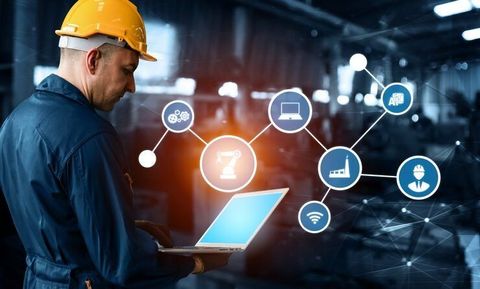
Industrial IoT platforms
Edge computing systems
Production monitoring platforms
Asset management systems
Smart Industrial Sensors
Smart sensors combine traditional sensing hardware with embedded processing and communication capabilities.
Features may include:
Digital signal processing
Self-diagnostics
Remote configuration
Condition monitoring
Digital communication
Event detection
Data logging
Sensor health information
These capabilities can simplify integration with modern industrial automation networks.
Wireless Industrial Sensors
Wireless sensors can transmit measurements without conventional signal cables.
Wireless technologies may include:
Industrial Wi-Fi
Bluetooth-based industrial communication
Wireless sensor networks
Low-power industrial communication
Specialized industrial radio systems
Wireless sensing can be useful where cable installation is difficult or where additional measurement points are needed.
Industrial IoT Sensors
Industrial IoT sensors connect physical equipment to digital monitoring and analytics systems.
A typical Industrial IoT architecture may include:
Sensor → Edge Device → Industrial Network → IoT Platform → Analytics → Dashboard
This architecture can provide centralized visibility into machine conditions, production parameters, energy use, and equipment performance.
Sensor Integration With Robotics
Robotic systems depend on sensors for position, object detection, force measurement, safety, and process feedback.
Common robotic sensing technologies include:
Proximity sensors
Vision sensors
Force-torque sensors
Encoders
Laser distance sensors
Safety sensors
Sensor feedback allows robotic systems to adapt their operation to changing physical conditions.
Industrial Sensor Testing
Testing is an important part of sensor manufacturing and system integration.
Typical tests include:
Accuracy Testing
Determines how closely sensor measurements correspond to reference values.
Repeatability Testing
Evaluates whether a sensor produces consistent measurements under repeated conditions.
Response-Time Testing
Measures how quickly a sensor responds to changes in the measured variable.
Environmental Testing
Evaluates operation under temperature, humidity, vibration, dust, and other environmental conditions.
Communication Testing
Checks analog, digital, Ethernet, fieldbus, or wireless communication performance where applicable.
Global Industrial Sensor Manufacturers and Suppliers
The industrial sensor market includes companies specializing in automation sensors, process instrumentation, measurement equipment, machine vision, safety systems, and Industrial IoT technologies.
Supplier categories include:
Industrial automation sensor manufacturers
Process instrumentation manufacturers
Temperature sensor manufacturers
Pressure sensor manufacturers
Proximity sensor manufacturers
Flow measurement manufacturers
Level measurement manufacturers
Machine vision companies
Industrial IoT technology providers
Sensor distributors
Industrial automation system integrators
When evaluating suppliers, organizations commonly examine technical specifications, compatibility, certifications, documentation, communication interfaces, environmental ratings, and long-term product availability.
Industrial Applications of Sensors
Industrial sensors are used throughout manufacturing and process industries.
Manufacturing
Sensors monitor production equipment, assembly operations, machine positions, temperatures, pressures, and production conditions.
Automotive Production
Sensors support robotic assembly, welding, material handling, inspection, and automated production lines.
Food and Beverage
Sensors monitor temperature, pressure, flow, level, packaging, and production hygiene conditions.
Chemical Processing
Pressure, temperature, flow, level, and gas sensors are used for process monitoring and control.
Oil and Gas
Industrial sensors support pipeline monitoring, pressure measurement, flow measurement, tank monitoring, and equipment condition monitoring.
Pharmaceutical Manufacturing
Sensors are used for temperature, pressure, flow, humidity, process control, and environmental monitoring.
Energy
Power generation and distribution facilities use sensors to monitor equipment and operating conditions.
Warehousing and Logistics
Sensors support conveyor automation, package detection, sorting, positioning, weighing, and automated material handling.
Factors to Consider When Selecting Industrial Sensors
Sensor selection depends on both measurement requirements and operating conditions.
Important considerations include:
Measurement variable
Measurement range
Accuracy
Repeatability
Response time
Environmental conditions
Installation method
Output type
Communication protocol
Power requirements
Housing material
Protection rating
Temperature range
Maintenance requirements
Automation compatibility
Practical Industrial Sensor Selection Workflow
1. Define the Measurement Requirement
Determine exactly what needs to be detected or measured, such as temperature, pressure, position, vibration, flow, level, or object presence.
2. Establish the Measurement Range
Identify minimum and maximum operating values to prevent selecting a sensor outside its suitable measurement range.
3. Evaluate the Environment
Consider temperature, moisture, dust, chemicals, vibration, mechanical impact, and electromagnetic conditions.
4. Select the Sensing Technology
Choose an appropriate technology based on the target material, distance, process characteristics, and required measurement performance.
5. Determine the Output
Select analog, digital, pulse, Ethernet, fieldbus, or wireless communication according to the automation architecture.
6. Check Mechanical Integration
Review mounting dimensions, connector configuration, housing design, cable requirements, and installation space.
7. Review Automation Compatibility
Confirm compatibility with PLCs, controllers, SCADA systems, robots, industrial networks, and other equipment.
8. Verify Testing and Documentation
Review calibration information, technical specifications, environmental ratings, certifications, and test documentation.
Industrial Sensor Technology Comparison
| Sensor Type | Main Function | Typical Industrial Use |
|---|---|---|
| Temperature | Thermal measurement | Process control |
| Pressure | Pressure measurement | Hydraulic systems |
| Proximity | Object detection | Machine automation |
| Photoelectric | Optical detection | Packaging |
| Level | Material level | Tanks |
| Flow | Fluid measurement | Process plants |
| Vibration | Machine condition | Rotating equipment |
| Force | Mechanical force | Robotics |
| Vision | Image-based inspection | Quality control |
| Gas | Gas detection | Process safety |
Future Trends in Industrial Sensors
Industrial sensing is increasingly connected with automation, edge computing, artificial intelligence, and Industrial IoT architectures.
Emerging developments include:
Smaller sensing devices
Wireless industrial networks
Embedded diagnostics
Edge-based processing
AI-assisted condition monitoring
Multi-parameter sensors
Machine vision integration
Digital twins
Remote sensor management
Advanced predictive maintenance systems
The combination of sensing hardware and industrial software is also expanding the role of sensors from simple measurement devices into connected sources of operational data.
Frequently Asked Questions
What are industrial sensors used for?
Industrial sensors detect or measure physical and chemical conditions such as temperature, pressure, flow, level, vibration, position, force, and object presence.
What are the main types of industrial sensors?
Common types include temperature, pressure, proximity, photoelectric, level, flow, vibration, force, load, vision, gas, and position sensors.
How do industrial sensors connect to automation systems?
Sensors can connect through analog signals, digital outputs, industrial Ethernet, fieldbus networks, wireless technologies, or specialized communication interfaces.
What is a smart industrial sensor?
A smart industrial sensor combines sensing hardware with processing, diagnostics, configuration, and communication capabilities.
Where are industrial sensors used?
They are used in manufacturing, automotive production, chemical processing, food and beverage, pharmaceuticals, energy, oil and gas, logistics, and automated warehouses.
Conclusion
Industrial sensors provide the measurement and detection foundation for modern automation systems. Technologies ranging from inductive and photoelectric sensing to radar, ultrasonic, vibration, vision, and Industrial IoT sensing allow manufacturers to monitor machines and processes with increasing levels of automation.
Selecting the appropriate sensor requires consideration of the measured variable, range, accuracy, environment, communication interface, mechanical integration, and automation architecture. As industrial facilities become more connected, sensors will continue to play an important role in process control, equipment monitoring, robotics, quality inspection, and data-driven manufacturing.