Industrial Mixers and Blenders Guide: Smart Mixing Technology, Types & Applications
Industrial mixers and blenders are mechanical processing machines designed to combine two or more materials into a consistent mixture. They are used across industries where raw materials, powders, liquids, pastes, granules, or other substances need controlled mixing.
Unlike simple household mixing equipment, industrial mixing systems are designed for larger production environments and specific processing requirements. Their design can vary according to material properties, batch size, mixing speed, temperature, viscosity, and the desired final consistency.
These machines play an important role in industries such as food processing, pharmaceuticals, chemicals, cosmetics, plastics, construction materials, agriculture, and specialty manufacturing.
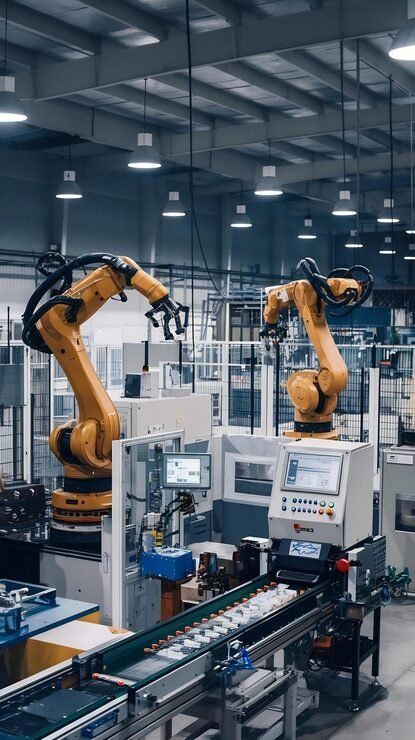
Modern industrial mixing technology increasingly combines mechanical engineering with automation, process monitoring, and digital controls. This allows operators to monitor important parameters such as speed, temperature, mixing duration, and equipment status.
Why Industrial Mixing Technology Exists
Many manufacturing processes require materials to be distributed evenly before the next production stage. Manual mixing may become difficult when materials are heavy, highly viscous, abrasive, reactive, or required in large quantities.
Industrial mixers and blenders help create controlled and repeatable mixing conditions. Depending on the equipment design, they can support:
- Powder-to-powder blending
- Liquid-to-liquid mixing
- Solid-to-liquid dispersion
- High-viscosity material processing
- Granule blending
- Paste and slurry preparation
- Continuous or batch processing
- Temperature-controlled mixing
The appropriate machine depends on the physical and chemical characteristics of the materials involved.
Why Industrial Mixers and Blenders Matter Today
Consistent material preparation is important for product quality, process efficiency, workplace safety, and production planning. A poorly mixed material can create variations that affect later manufacturing stages.
For example, food processing may require uniform distribution of ingredients, while pharmaceutical manufacturing may require controlled blending of active and inactive components. Chemical processing can require precise dispersion, while construction materials may need consistent distribution of additives.
Industries Using Industrial Mixing Equipment
Industrial mixing systems can be found in many sectors, including:
- Food and beverage processing
- Pharmaceutical manufacturing
- Chemical processing
- Paint and coating production
- Cosmetics and personal care manufacturing
- Plastics and polymers
- Construction materials
- Agricultural products
- Waste processing
- Water and wastewater treatment
- Specialty materials manufacturing
Problems Industrial Mixers Help Address
Modern mixing equipment can address several common processing challenges:
- Uneven material distribution
- Long manual mixing cycles
- Inconsistent batch quality
- Difficult handling of high-viscosity materials
- Dust generation during powder handling
- Excessive material exposure
- Temperature variations
- Repetitive operator activities
- Difficult process monitoring
The objective is not simply to mix materials faster. A suitable system should provide the required level of uniformity while matching the material characteristics and production process.
Major Types of Industrial Mixers and Blenders
Industrial equipment is available in many configurations because different materials require different mixing mechanisms.
Ribbon Blenders:
Ribbon blenders use horizontal agitators with ribbon-shaped elements. They are commonly associated with powders, granules, and dry material blending.
Paddle Mixers:
Paddle mixers use broad blades to move materials through a mixing chamber. They can be used for powders, granules, and materials requiring gentle movement.
High-Shear Mixers:
High-shear mixing systems create intense mechanical forces and are commonly used where rapid dispersion, emulsification, or particle-size reduction is required.
Planetary Mixers:
Planetary mixers use rotating blades that move through a mixing vessel while also rotating around their own axis. They are particularly useful for viscous materials, pastes, adhesives, and specialty compounds.
Drum Blenders:
Drum or tumble blenders rotate a container to move materials through different positions. They can be suitable for relatively gentle dry blending applications.
Vertical Mixers:
Vertical mixing systems use an upright vessel and an agitator designed around vertical material movement. Their configuration can be useful where floor space and process layout are important.
Continuous Mixers:
Continuous mixers receive materials continuously and produce a mixed stream. They can be integrated into automated production lines where steady material flow is required.
Understanding Smart Mixing Technology
Industrial automation is changing how mixing equipment is monitored and controlled. Modern systems can integrate sensors, programmable controls, variable-speed drives, and digital monitoring.
Automation and Process Control
Automated mixing systems can control parameters such as:
- Mixing speed
- Operating time
- Temperature
- Material feed rate
- Agitator operation
- Motor status
- Equipment alarms
These controls can improve process repeatability when correctly configured.
Variable-frequency drives can also allow operators to adjust motor speed according to processing requirements. This can be useful when a material behaves differently during different stages of mixing.
Sensors and Digital Monitoring
Sensors can provide information about equipment conditions and process variables. Temperature sensors, load monitoring, speed sensors, and other instrumentation can support better process visibility.
Some advanced manufacturing environments connect mixing equipment to broader industrial automation platforms. Data can then be used for production monitoring, maintenance planning, and process analysis.
Recent Developments in Industrial Mixing
Industrial machinery safety and automation have received increased regulatory and technological attention during 2025 and 2026.
In India, the Machinery and Electrical Equipment Safety (Omnibus Technical Regulation) framework has been an important development. The Ministry of Heavy Industries issued a 2025 amendment stating that the regulation would apply from September 1, 2026 to machines and electrical equipment listed in its first schedule.
The Bureau of Indian Standards has also expanded guidance around machinery safety certification under Scheme-X. Its information published in 2026 includes machine-category-specific certification guidance and technical documentation requirements.
Another relevant development is the growing focus on machinery integration and risk assessment. A 2025 BIS draft aligned with ISO 11161:2025 addressed safety requirements for integrating machinery into manufacturing systems, including risk assessment, space requirements, task zones, and risk-reduction measures.
These developments demonstrate a broader movement toward documented risk assessment, machine safeguarding, technical files, and standardized safety practices.
Technology Trends for 2026
Current industrial mixing technology is increasingly influenced by:
- Automated batch control
- Digital process monitoring
- Variable-speed motor systems
- Sensor-based condition monitoring
- Recipe-based production controls
- Improved machine guarding
- Data collection for maintenance
- Energy-aware equipment operation
- Integration with industrial automation systems
The exact technology required depends on the application rather than simply choosing the newest equipment.
Laws, Policies, and Safety Considerations in India
Industrial mixers and blenders may be affected by several layers of Indian regulations and standards depending on their design, application, electrical configuration, and industry.
The Machinery and Electrical Equipment Safety (Omnibus Technical Regulation) Order, 2024 and subsequent amendments are particularly relevant to covered machinery. The 2025 amendment specified an implementation date of September 1, 2026 for listed machines and electrical equipment.
BIS Scheme-X is associated with safety certification for machinery covered by the applicable regulatory framework. BIS provides registration information for domestic and foreign manufacturers and publishes relevant certification guidance.
Important Safety Practices
Regardless of regulatory classification, industrial mixing equipment should be assessed for hazards associated with moving components, electrical systems, pressure, temperature, material exposure, and cleaning activities.
Important considerations include:
- Machine guarding
- Emergency stopping arrangements
- Electrical protection
- Safe access for inspection
- Lockout and isolation procedures
- Clear operating instructions
- Appropriate warning labels
- Risk assessment
- Preventive maintenance
- Operator training
Applicable Indian Standards should always be checked for the specific machine and application because requirements can differ between equipment categories.
Tools and Resources for Industrial Mixing
Several general tools can help engineers, plant managers, operators, and researchers understand or plan mixing processes.
Mixing Calculation Tools
Engineering calculators can help estimate parameters such as:
- Vessel volume
- Material density
- Batch capacity
- Motor power requirements
- Agitator speed
- Mixing time
- Flow characteristics
Actual equipment selection should consider laboratory testing, material characteristics, engineering calculations, and applicable standards rather than relying on a single calculator.
Process Monitoring Tools
Digital monitoring platforms can track:
- Temperature
- Speed
- Operating time
- Motor load
- Batch information
- Alarm conditions
- Equipment status
Standards and Compliance Resources
For Indian applications, the BIS Know Your Standard platform allows users to search standards by IS number or product keyword and access related documents, amendments, notifications, testing information, and laboratory details.
Technical manuals, risk-assessment templates, preventive-maintenance checklists, equipment manuals, and standard operating procedures can also help organizations establish consistent processes.
How to Choose an Industrial Mixer or Blender
Selecting a mixer should begin with the material rather than the machine name.
Consider:
- Material type
- Particle size
- Density
- Viscosity
- Moisture level
- Required mixing uniformity
- Batch size
- Processing temperature
- Mixing duration
- Cleaning requirements
- Production environment
- Automation requirements
- Safety requirements
For powders, dry blending equipment may be appropriate, while viscous materials may require planetary or high-shear technology.
The vessel design, agitator geometry, motor arrangement, discharge mechanism, and control system should all match the intended process.
Frequently Asked Questions
What is an industrial mixer?
An industrial mixer is a machine designed to combine materials under controlled mechanical movement. It can process liquids, powders, granules, pastes, slurries, or combinations of different materials.
What is the difference between a mixer and a blender?
The terms are often used interchangeably, but their applications can differ. Mixing commonly describes combining materials through mechanical agitation, while blending often refers to achieving a uniform distribution, particularly with dry materials.
Which industries use industrial blenders?
Industrial blenders are used in food processing, pharmaceuticals, chemicals, cosmetics, plastics, construction materials, agriculture, coatings, and several other manufacturing sectors.
Are industrial mixers automated?
Some industrial mixers operate manually, while advanced systems can include automated controls, sensors, programmable recipes, variable-speed drives, and digital monitoring. The level of automation depends on the production process.
What safety factors should be considered?
Important factors include moving-part protection, electrical safety, emergency stopping, equipment isolation, operator access, temperature or pressure hazards, cleaning procedures, maintenance, and applicable machinery standards.
Conclusion
Industrial mixers and blenders are important components of modern manufacturing because they help create controlled and repeatable material-processing conditions. Their applications range from dry powder blending to high-viscosity processing and liquid dispersion.