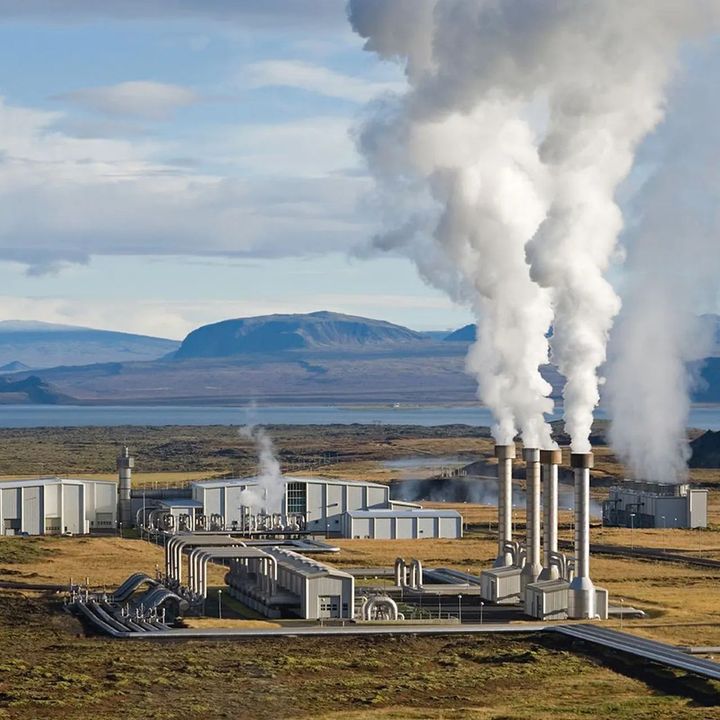
Geothermal Power Heating: Explore Modern Heating Technology
Geothermal power heating uses heat stored naturally beneath the Earth's surface to provide heating for buildings, communities, and some industrial applications. Unlike conventional heating systems that create heat by burning fuel, geothermal systems transfer naturally available underground heat to where it is needed.
One of the most widely used technologies is the geothermal heat pump, also called a ground-source heat pump. These systems use the relatively stable temperature below ground to provide heating during colder periods and cooling during warmer periods.
Geothermal heating can use different resources depending on location and temperature. Shallow ground systems are commonly associated with heat pumps, while deeper geothermal resources can provide direct heat for buildings, district heating networks, greenhouses, and industrial processes.
A typical geothermal heating system contains several important components:
- Ground or underground heat exchanger
- Heat pump unit
- Water or heat-transfer fluid circulation system
- Indoor distribution equipment
- Temperature controls
- Pumps and monitoring equipment
The basic process is straightforward. A ground loop transfers thermal energy between the building and the ground. The heat pump raises or moves that thermal energy to a useful temperature for indoor heating.
During summer, the process can often be reversed to provide cooling. This makes geothermal heating technology relevant to buildings that require year-round temperature control.
Why Geothermal Heating Matters Today
Energy efficiency has become an important consideration for homes, commercial buildings, campuses, and industrial facilities. Heating and cooling can represent a significant portion of building energy demand, so technologies that use heat more efficiently are receiving increased attention.
Geothermal heat pumps are particularly interesting because underground temperatures remain comparatively stable throughout the year. This gives the system a different operating environment from air-source equipment, which exchanges heat with outdoor air that can vary considerably.
Geothermal technology can support several applications:
- Residential heating and cooling
- Commercial buildings
- Schools and universities
- Hospitals and institutional buildings
- District heating networks
- Greenhouses
- Industrial heat applications
- Community energy systems
Geothermal heating can also complement other renewable energy technologies. For example, an electrically powered heat pump can operate alongside solar or wind generation.
Another important advantage is that geothermal systems can provide predictable thermal performance when properly designed for local geological and building conditions. However, performance depends on factors such as ground conditions, system design, building insulation, equipment selection, and installation quality.
The technology therefore should not be viewed as a universal solution for every building. A proper assessment of the site and heating demand is important before selecting a system.
Geothermal Heating Technology at a Glance
| Technology | Main Heat Source | Typical Application |
|---|---|---|
| Ground-source heat pump | Shallow ground | Homes and buildings |
| Direct geothermal heating | Hot groundwater | District and building heating |
| Geothermal district network | Shared underground resources | Communities and campuses |
| Thermal energy network | Ground and other thermal sources | Multi-building heating and cooling |
| Enhanced geothermal systems | Engineered underground reservoirs | Larger-scale energy applications |
The International Renewable Energy Agency has reported strong historical growth in geothermal heating and cooling, with geothermal heat pumps representing a major part of installed geothermal heating and cooling capacity.
Recent Developments in Geothermal Heating
Geothermal heating technology is evolving beyond traditional ground-source heat pumps. Current research increasingly focuses on larger thermal networks, improved drilling methods, advanced geothermal resources, digital monitoring, and integration with electricity systems.
In July 2026, the U.S. Department of Energy highlighted geothermal heating and cooling, thermal energy networks, geothermal direct use, and geothermal heat pumps as important areas of development.
Thermal Energy Networks are particularly notable because they can connect multiple buildings to shared thermal resources. Instead of every building operating a completely independent heating and cooling system, a network can distribute thermal energy across a wider area.
Another developing area is geothermal integration with large electricity users. In July 2026, the U.S. Department of Energy highlighted geothermal applications related to data centers, where growing electricity demand has increased interest in reliable energy resources.
Research is also expanding into deeper and more technically challenging geothermal resources. In February 2026, the U.S. Department of Energy announced a funding opportunity of up to $171.5 million for next-generation geothermal field tests and exploration drilling.
In September 2026, the Department of Energy also announced a Geothermal Center of Excellence intended to connect geothermal research organizations and national laboratories and support technological development.
These developments indicate that geothermal energy is increasingly being considered not only for traditional power generation but also for heating, cooling, thermal networks, and broader energy-system applications.
Laws, Policies, and Government Programs
Geothermal heating is influenced by different laws and policies depending on the country, state, and project type. Regulations can cover drilling, groundwater protection, environmental assessment, building standards, electrical equipment, land use, and energy efficiency.
The International Energy Agency recommends that governments support geothermal heating through better heat-demand mapping, energy-system planning, district infrastructure, research programs, improved data, and streamlined permitting.
In the United States, geothermal heat pump policies can include federal and state-level incentives, technical assistance, building programs, and research funding. The exact eligibility and provisions can change over time, so current government guidance should be checked before making planning decisions.
A significant policy development occurred in January 2026 when the U.S. Department of Energy announced a 15-state Geothermal Power Accelerator. The initiative focuses on geothermal goals, resource mapping, technical support, and addressing regulatory barriers. Alaska and Washington subsequently joined the participating states.
Policies in other countries vary considerably. Some regions focus on district heating, while others emphasize heat pumps, renewable energy integration, drilling regulations, or industrial applications.
For any geothermal project, relevant authorities may include:
- Building regulation departments
- Environmental agencies
- Water and groundwater authorities
- Energy departments
- Local planning authorities
- Electrical safety regulators
- Geological and land-management agencies
Understanding these requirements early can help prevent delays during project planning.
Tools and Resources for Geothermal Heating
Several general tools can help users understand geothermal heating technology without requiring advanced engineering knowledge.
A heat-load calculator can estimate the heating requirement of a building based on factors such as floor area, insulation, climate, windows, and occupancy.
A ground-temperature map can provide information about typical underground temperatures in different geographical areas.
A geothermal resource map can help identify areas with potentially useful geothermal resources.
A heat-pump performance calculator can help compare expected heating output with electricity consumption under different operating conditions.
Other useful resources include:
- Building energy assessment templates
- Heating-load worksheets
- Ground-loop sizing tools
- Energy-monitoring dashboards
- Geothermal feasibility checklists
- Government energy-efficiency databases
- Geological resource databases
- Building energy modeling software
- Technical training materials
- Renewable-energy planning guides
For larger projects, geological surveys and engineering assessments are generally more important than simple online calculators because underground conditions can vary significantly from one location to another.
Key Factors When Evaluating Geothermal Heating
A geothermal heating system should be evaluated according to the specific site rather than relying on a single performance figure.
Important considerations include:
- Local ground temperature
- Geological conditions
- Available land area
- Building heating demand
- Cooling requirements
- Soil and groundwater conditions
- Drilling requirements
- Heat-pump efficiency
- Building insulation
- Local regulations
- Long-term maintenance requirements
The type of ground loop also matters. Horizontal loops can require substantial land area, while vertical systems can use deeper boreholes where available land is limited.
For larger facilities, thermal energy networks can provide another approach by connecting several buildings or thermal loads to shared infrastructure.
Frequently Asked Questions
How does geothermal heating work?
Geothermal heating transfers thermal energy from the ground or underground water to a building. A geothermal heat pump increases or moves this heat to a useful temperature for indoor heating.
Is geothermal heating the same as geothermal electricity generation?
No. Geothermal electricity generation generally uses higher-temperature underground resources to produce electricity. Geothermal heating can use lower-temperature resources or shallow ground temperatures directly through heat pumps.
Can geothermal systems provide cooling?
Yes. Many geothermal heat pump systems can reverse their operation and provide cooling during warmer periods. This makes them suitable for buildings requiring both heating and cooling.
Does geothermal heating work in every climate?
Geothermal heat pumps can operate in many climates because underground temperatures are generally more stable than outdoor air temperatures. However, system design must account for local ground conditions, building demand, and climate.
What are thermal energy networks?
Thermal energy networks connect multiple buildings or energy sources through shared infrastructure for heating and cooling. They can use geothermal resources alongside other thermal sources depending on the design.
The Future of Geothermal Heating Technology
The future of geothermal power heating is increasingly connected with building efficiency, renewable electricity, district heating, thermal energy networks, and advanced geothermal technologies.
Recent government and international initiatives show growing interest in improving geothermal resource assessment, reducing technical barriers, strengthening workforce capabilities, and developing new applications. In 2026, the U.S. Department of Energy also launched programs addressing geothermal workforce development and research collaboration.
At the same time, geothermal heating still faces challenges. Drilling requirements, geological uncertainty, project planning, permitting, specialized expertise, and upfront infrastructure requirements can affect whether a particular project is appropriate.
For this reason, geothermal technology is best understood as part of a broader modern heating strategy rather than a single solution for every situation.
Conclusion
Geothermal power heating uses naturally available underground thermal energy to support heating and, in many systems, cooling. Ground-source heat pumps, direct-use geothermal systems, and thermal energy networks are expanding the ways this resource can be applied.